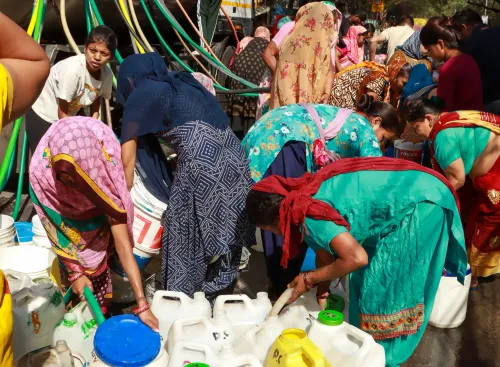
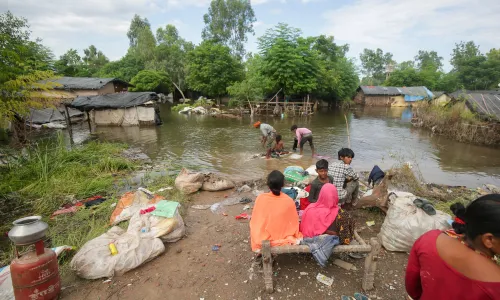
Are 117 Blocks in Punjab Facing a Severe Groundwater Crisis?
Synopsis
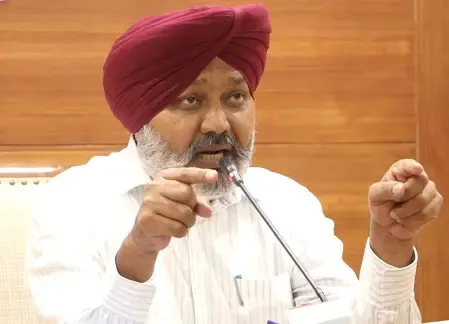
In a crucial announcement, Punjab's Finance Minister Harpal Cheema revealed that 117 blocks in the state are facing a severe groundwater crisis, urging NABARD's support for sustainable solutions. This highlights the urgent need for action amidst a looming water scarcity issue.
Key Takeaways
117 blocks in Punjab are facing severe groundwater depletion.
The State Focus Paper projects a credit potential of Rs 3,08,66,614 lakh.
NABARD is crucial in supporting Punjab’s agricultural and social sectors.
Efforts to revitalize groundwater include canal irrigation and small water channels.
Crop diversification is essential for sustainable water use.
Chandigarh, Feb 20 (NationPress) In a significant announcement, state Finance Minister Harpal Cheema revealed that 117 blocks in Punjab are grappling with a serious groundwater crisis. This statement was made during the unveiling of NABARD’s (National Bank for Agriculture and Rural Development) State Focus Paper for 2026-27 at a seminar held in Mohali.
During the seminar, he presented a comprehensive credit strategy aimed at fostering growth in various sectors including agriculture, MSMEs, infrastructure, renewable energy, and social development.
Minister Cheema emphasized, “NABARD has been instrumental in bolstering Punjab’s economy and propelling advancements in crucial sectors. Through diverse lending and credit programs, it has augmented growth in agriculture, education, and social initiatives within the state.”
The finance chief noted that the State Focus Paper anticipates a total priority sector credit potential of Rs 3,08,66,614 lakh for Punjab.
“The projections encompass farm credit, agricultural infrastructure, allied activities, micro, small, and medium enterprises, export financing, education, housing, social infrastructure, renewable energy, and beyond. This extensive roadmap is designed to synchronize institutional credit with the developmental needs of the state,” he explained.
Highlighting Punjab’s historic contribution to national food security, Minister Cheema stated, “Punjab has been pivotal in achieving self-sufficiency in food production for the nation. However, this achievement has led to significant challenges, particularly the depletion of groundwater resources. Currently, 117 out of 151 blocks in Punjab are classified as dark zones due to excessive groundwater extraction.”
Commenting on the initiatives by the Bhagwant Mann government, Cheema said, “Our administration is vigorously advocating for canal irrigation and the establishment of small water channels, termed ‘khalas’, to aid farmers in replenishing groundwater levels. Crop diversification is vital for conserving water resources, and we encourage NABARD to provide enhanced support for such initiatives.”
Reiterating the state government's commitment to fostering a business-friendly environment, Minister Cheema remarked, “A recent meeting involving top police officials and the Punjab State Traders’ Commission was convened to send a clear message to anti-social elements and to ensure a secure and stable business landscape in the state.”
Point of View
This situation in Punjab underscores a growing concern regarding groundwater management in India, reflecting a larger trend of resource depletion that could impact food security and economic stability. Addressing these challenges is crucial for sustainable development.
NationPress
5 Oct 2026
Frequently Asked Questions
What is causing the groundwater crisis in Punjab?
The groundwater crisis in Punjab is primarily due to the over-extraction of water resources for agricultural purposes.
How many blocks in Punjab are affected?
A total of 117 out of 151 blocks in Punjab have been declared dark zones due to severe groundwater depletion.
What initiatives are being taken to address the issue?
The Punjab government is promoting canal irrigation and constructing small water channels, alongside encouraging crop diversification.
What is NABARD's role in this situation?
NABARD plays a critical role in providing financial support for agricultural and developmental initiatives aimed at addressing the groundwater crisis.
How can the public help mitigate the groundwater crisis?
The public can contribute by adopting water conservation practices, supporting crop diversification, and participating in local water management initiatives.