Is Punjab's water crisis a threat to the nation's food security?

Synopsis
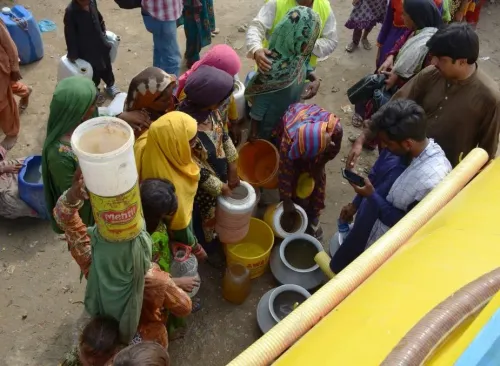
Punjab, the heart of India's agricultural landscape, faces an unprecedented water crisis. Raghav Chadha passionately advocates for urgent government intervention to restore the state's water resources, highlighting the dire need to address toxic water and groundwater depletion. Discover how Punjab's struggles could impact national food security and what actions are being proposed.
Key Takeaways
Punjab is facing a severe water quality and quantity crisis.
The region has the highest uranium pollution levels in the country.
Groundwater depletion is reaching alarming rates.
The rivers are heavily polluted due to industrial waste.
Immediate government intervention is crucial for restoration efforts.
New Delhi, Dec 3 (NationPress) Guru Nanak Dev Ji imparted wisdom that the wind serves as the Guru, water is the father, and earth is the mother. Coming from Punjab, famously referred to as the land of five rivers, I am acutely aware of the challenges we face today regarding water quality and quantity,” stated Raghav Chadha of the Aam Aadmi Party on Wednesday.
During a discussion on the “Statutory Resolution” initiated by Union Minister Bhupender Yadav under Article 252(1) of the Constitution, which aims to apply the Water (Prevention and Control of Pollution) Amendment Act, 2024 to Manipur, Chadha highlighted Punjab's dire situation.
“I urge you to convey my message to the Minister. Punjab has historically been there for the nation, embarking on the Green Revolution when hunger loomed large. However, today, that same hero faces immense struggles. The practices that once supported the nation have rendered our water toxic and the water table depleted,” he emphasized in the Upper House.
Chadha identified toxic water as a critical issue.
“According to the Government of India's 2025 Groundwater Quality Report, Punjab leads in uranium pollution. Uranium, a radioactive heavy metal, leads to severe health issues such as kidney damage, cancer, and long-term disabilities. Alarmingly, 62.5% of post-monsoon groundwater samples exceed safe limits, with metals like arsenic, lead, cadmium, and chromium surpassing WHO guidelines, especially in the Malwa region,” he pointed out.
He raised concerns about the notorious ‘Cancer Train’, Train No. 14703, which travels from Bhatinda to Bikaner, transporting cancer patients rather than pilgrims.
Chadha continued, “The second major issue is the depletion of groundwater. Producing just one kilogram of rice consumes 5,000 liters of water. Although rice is not part of the traditional Punjabi diet, farmers grow it to fulfill national needs. Consequently, 113 out of 117 blocks are experiencing over-exploitation. In 1970, the average water table was at 20 feet; today, it has plummeted to 500 feet, as indicated by NASA's GRACE satellite data.”
Lastly, he addressed the pollution of rivers like the Sutlej, Beas, and Ghaggar, which suffer from industrial waste, chemicals, and untreated sewage. Data from the CPCB reveals that 76% of Punjab's rivers rank among the most polluted in India.
Chadha concluded with an urgent plea for help from the central government, stating, “This is not about charity but a call for justice. For over 50 years, Punjab has been the backbone of the nation’s food security, and now it is time for the nation to stand by Punjab.”
He proposed launching the Punjab Water Restoration Mission, implementing 24/7 digital monitoring of industrial waste, applying modern ecological engineering to rejuvenate rivers, ensuring universal access to safe drinking water, and conducting independent foreign audits.
Point of View
It is crucial to recognize Punjab's vital role in our national food security. The current water crisis, compounded by toxic conditions and depletion of resources, calls for immediate attention and action from the government. This isn't merely a local issue; it reflects on our national commitment to sustainable agriculture and health.
NationPress
4 Oct 2026
Frequently Asked Questions
What is causing the water crisis in Punjab?
The water crisis in Punjab is primarily due to toxic pollution from industrial waste and excessive groundwater extraction for water-intensive crops like rice.
How does uranium pollution affect health?
Uranium pollution can lead to serious health issues, including kidney damage, cancer, and potential disabilities in future generations.
What is the current status of Punjab's groundwater table?
The groundwater table in Punjab has significantly declined from 20 feet in 1970 to approximately 500 feet today.
What actions are being proposed to address Punjab's water issues?
Proposed actions include launching the Punjab Water Restoration Mission, 24/7 monitoring of industrial waste, and ensuring universal access to safe drinking water.
Why is Punjab referred to as the 'land of five rivers'?
Punjab is called the 'land of five rivers' due to its geographical location, which includes five major rivers that historically provided water resources.