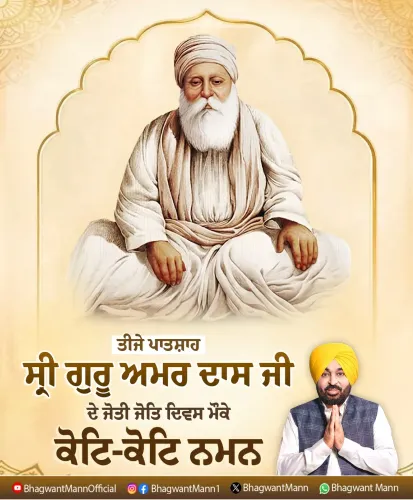
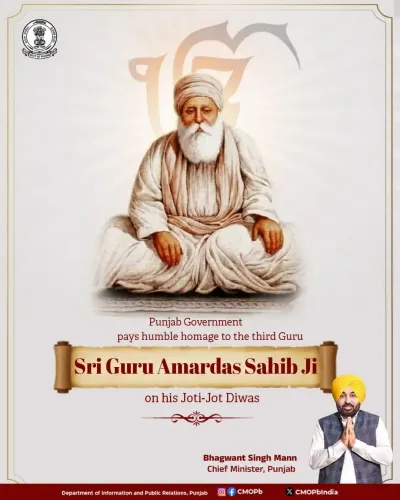
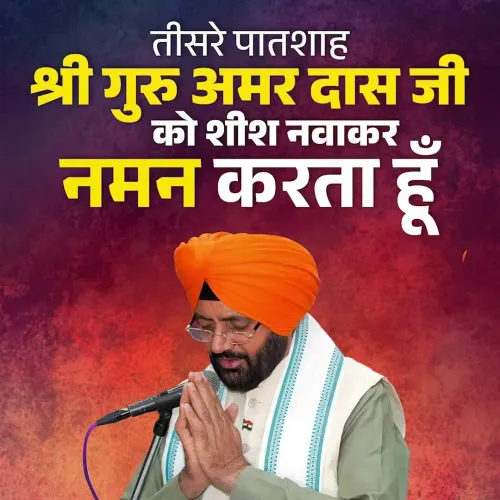
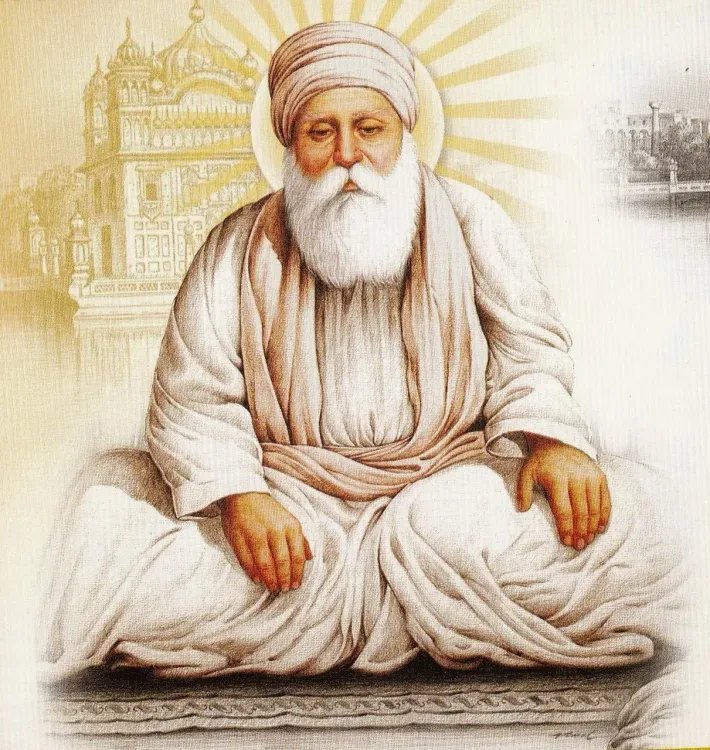
Puri pays tribute to Guru Amar Das Ji on Jyoti Jyot Diwas
Synopsis
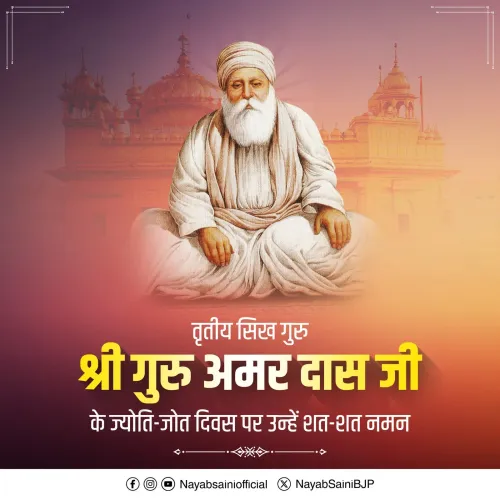
Union Petroleum Minister Hardeep Singh Puri marked Jyoti Jyot Diwas on 26 September 2026 with a bilingual tribute to Sri Guru Amar Das Ji, the Third Sikh Guru, honouring his foundational langar tradition and the egalitarian principle of 'Pehle pangat, pachhe sangat.'
Key Takeaways
Hardeep Singh Puri posted a bilingual Punjabi-Hindi tribute on 26 September 2026 to mark Jyoti Jyot Diwas of Sri Guru Amar Das Ji.
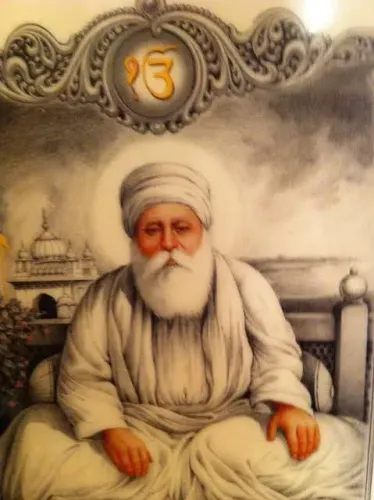
Sri Guru Amar Das Ji was the Third Sikh Guru, who led the faith from 1552 to 1574 .
The minister specifically highlighted the Guru's principle of 'Pehle pangat, pachhe sangat' — sitting together for a meal before joining the congregation — as a cornerstone of equality.
Guru Amar Das Ji is credited with formalising the Guru Ka Langar tradition, ensuring every person in need an equal place in the Guru's house.
Indian political leaders across parties routinely issue public tributes on major Sikh commemorative days, citing langar and service as shared national values.
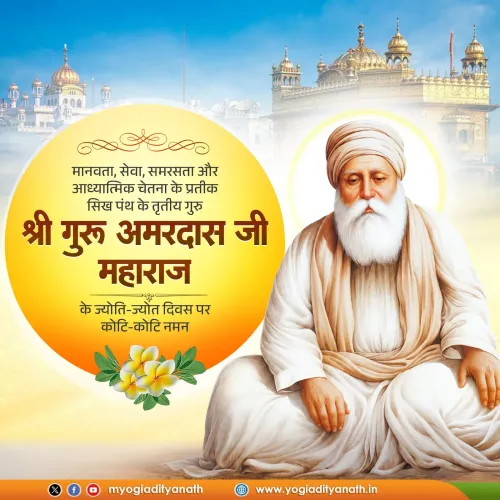
On the solemn occasion of Jyoti Jyot Diwas — the day marking the eternal union of a Guru's light with the divine — Union Petroleum Minister Hardeep Singh Puri offered a heartfelt tribute to Sri Guru Amar Das Ji, the Third Sikh Guru, on Saturday, 26 September 2026.
Posting in both Punjabi and Hindi, Minister Puri quoted the sacred verse 'Bhale Amardas gun tere, teri upma tohi ban aave' — ('Blessed are your virtues, O Amar Das; only you can truly praise yourself') — before offering kotan koti pranam, or countless salutations, to the revered Guru on this day of remembrance.
The Guru who made equality a lived practice
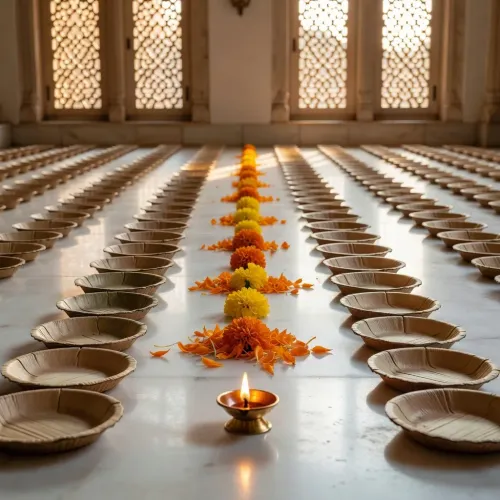
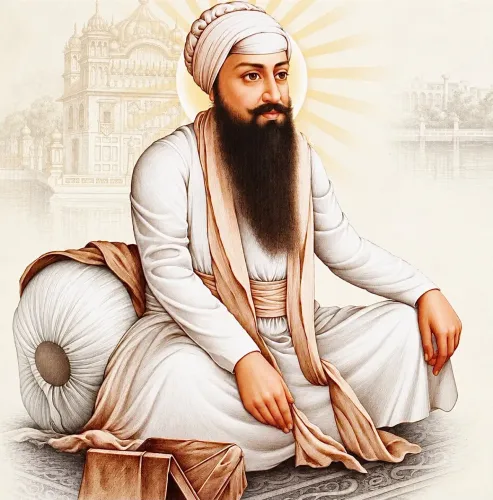
Sri Guru Amar Das Ji, who led the Sikh faith from 1552 to 1574, is remembered not merely as a spiritual teacher but as a social revolutionary who institutionalised dignity through practice. He formalised the tradition of Guru Ka Langar — the community kitchen that has fed the hungry irrespective of caste, creed, or class for centuries — and anchored it in the uncompromising principle of 'Pehle pangat, pachhe sangat': 'First sit in the shared row for a meal, then join the congregation.'
The message embedded in that sequence was radical for its era. No visitor — commoner or king — could enter the Guru's presence without first sharing a meal as an equal among equals. The minister's post specifically highlighted how this principle ensured that every person in need found an equal place in the Guru's house.
A tribute that echoes a national pattern
Indian political leaders across the spectrum regularly mark major Sikh commemorative days with public statements, and the themes they invoke — langar, equality, selfless service — have long transcended religious boundaries to become touchstones of a broader shared heritage. Minister Puri, a senior BJP leader and former career diplomat, framed his tribute in the same spirit: not as a sectarian gesture, but as a salute to a universal teaching about human dignity.
The langar tradition, strengthened under Guru Amar Das Ji, today feeds millions across gurdwaras worldwide — a living institution whose scale and reach make it one of the world's largest voluntary community-feeding systems.
On a day when devotees gather to mark the Guru's passing into eternal light, the minister's words serve as a reminder that the most enduring legacies are measured not in years of reign, but in the hunger relieved and the hierarchies dissolved.
Point of View
Sustained outreach to Sikh communities through the language and symbolism of faith. By centering the langar's egalitarian ethic rather than any partisan framing, the minister situates the tribute within a broad, inclusive national-heritage narrative. Such observances, consistent across India's political class, signal that Sikh Gurpurabs have become significant dates on the political calendar — moments where leaders compete to demonstrate cultural fluency and reverence. The specific invocation of 'Pehle pangat, pachhe sangat' also carries an implicit contemporary resonance: equality-before-service as a governing value.
NationPress
26 Sept 2026
Frequently Asked Questions
What is Jyoti Jyot Diwas?
Jyoti Jyot Diwas is the Sikh observance marking the day a Guru's earthly light merged with the divine eternal light — in essence, the anniversary of a Guru's passing. For Sri Guru Amar Das Ji, it commemorates his departure from the mortal world after a lifetime of spiritual and social service.
Who was Sri Guru Amar Das Ji?
Sri Guru Amar Das Ji was the Third of the ten Sikh Gurus, who led the Sikh faith from 1552 to 1574. He is revered for formalising the Guru Ka Langar community kitchen and championing radical social equality through the principle of 'Pehle pangat, pachhe sangat.'
What does 'Pehle pangat, pachhe sangat' mean?
'Pehle pangat, pachhe sangat' translates as 'First sit in the common row for a meal, then join the congregation.' Guru Amar Das Ji made this the rule at the Guru's house, ensuring that no visitor — regardless of caste or status — could be received without first sharing an equal meal with all others.
Why did Hardeep Singh Puri post about Guru Amar Das Ji?
Union Petroleum Minister Hardeep Singh Puri posted a tribute on the occasion of Jyoti Jyot Diwas of Sri Guru Amar Das Ji, offering his respects in both Punjabi and Hindi. Indian political leaders regularly mark major Sikh commemorative days with such public tributes.
What is Guru Ka Langar and who formalised it?
Guru Ka Langar is the Sikh tradition of a free community kitchen that serves meals to everyone equally, regardless of religion, caste, or class. Sri Guru Amar Das Ji is credited with formalising and strengthening this institution, making it a central pillar of Sikh community life.