CM Bhagwant Mann pays tribute on Guru Amar Das Ji's Joti Jot Divas
Synopsis
Punjab Chief Minister Bhagwant Mann marked Guru Amar Das Ji's Joti Jot Divas on September 26, 2026, paying tribute to the Third Sikh Guru and calling on people to uphold his foundational teachings of equality, simran, and seva through the enduring principle of 'Pehle Pangat Paache Sangat'.
Key Takeaways
Punjab CM Bhagwant Mann offered tribute on Guru Amar Das Ji's Joti Jot Divas on September 26, 2026 .
He invoked the Guru's celebrated teaching 'Pehle Pangat Paache Sangat' — sit together in the langar before the congregation.
Guru Amar Das Ji (1479–1574) was the Third Guru of Sikhism who institutionalised the langar as a tool of social equality.
CM Mann urged citizens to make equality, simran, and seva the foundation of daily life.
Paying public tribute on Sikh Gurpurabs and Joti Jot anniversaries is a long-standing tradition among Punjab Chief Ministers across party lines.
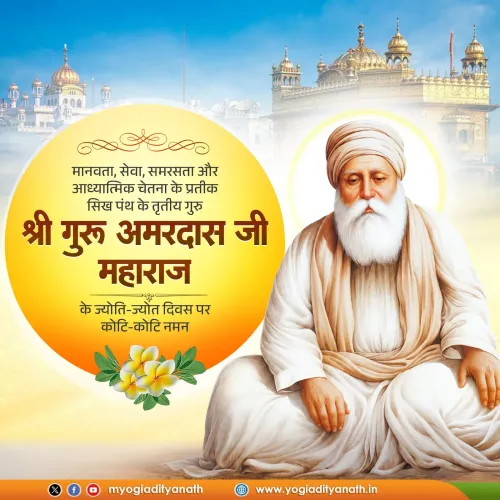
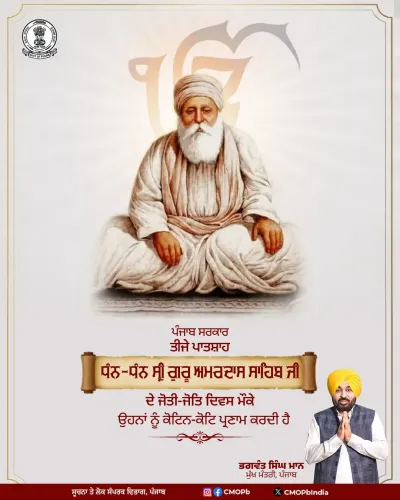
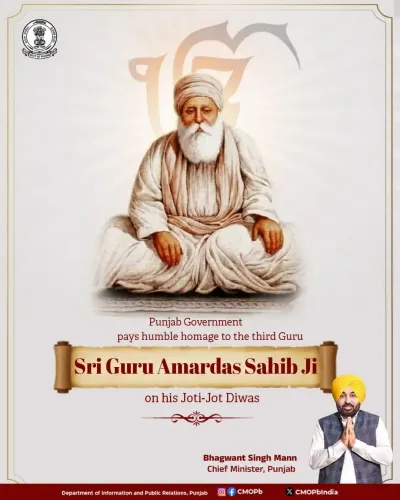
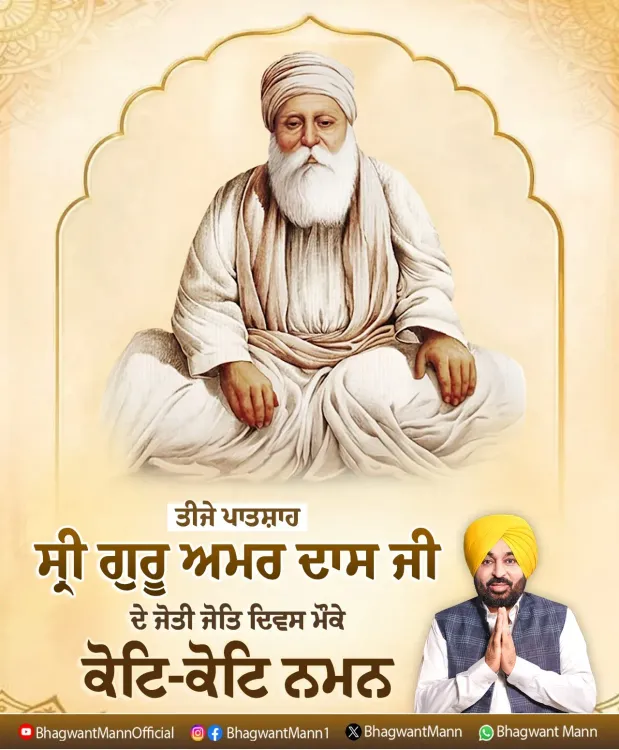
On the solemn observance of Guru Amar Das Ji's Joti Jot Divas, Punjab Chief Minister Bhagwant Mann offered reverential homage to the Third Guru of Sikhism on Saturday, September 26, 2026, invoking the Guru's timeless teachings on equality, meditation, and selfless service as a guiding light for all.
Writing in Punjabi, CM Mann bowed in koti-koti pranam — countless salutations — at the Guru's feet, and called upon the faithful to walk the path shown by Guru Sahib. He specifically cited the celebrated teaching 'Pehle Pangat Paache Sangat' — 'first sit together in the langar, then assemble in the congregation' — urging people to make equality (samanta), simran (meditation), and seva (service) the very foundation of their lives.
The Guru who put equality before congregation
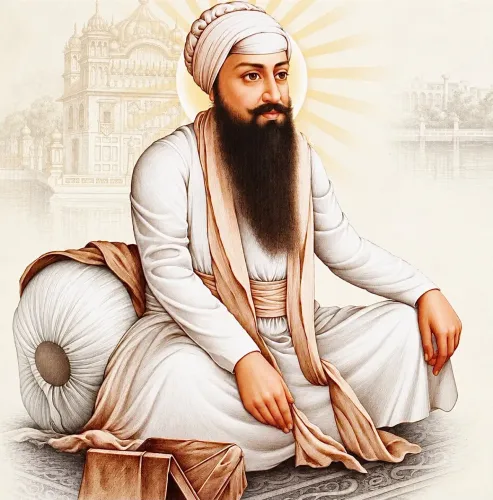
Guru Amar Das Ji, who lived from 1479 to 1574, was the Third of the ten Sikh Gurus and one of the most transformative voices of his era. It was he who institutionalised the langar system — the community kitchen where people of every caste, creed, and station sit shoulder to shoulder to share a meal — as a prerequisite for entering the Guru's presence.
The principle of 'Pehle Pangat Paache Sangat' was a radical social leveller in sixteenth-century India: no one could seek an audience without first breaking bread as an equal. The Guru's insistence on this practice struck directly at caste hierarchies, making the langar not merely a charitable act but a lived, daily declaration of human dignity.
A ritual of remembrance Punjab's leaders have long observed
Public tributes on Sikh Gurpurabs and Joti Jot anniversaries are a deeply rooted practice among Punjab's Chief Ministers, across parties and generations. For a state where Sikhism shapes culture, calendar, and civic life, these observances carry weight well beyond formality — they reaffirm the continuity between Guru-era values and contemporary governance ideals such as welfare, inclusion, and community service.
CM Mann's message lands at a moment when themes of social equality and grassroots seva are central to his government's public communication, lending the tribute a resonance that extends from the spiritual to the political.
On a day when Sikh households across Punjab and the global diaspora pause to remember Guru Amar Das Ji's departure from this world, the Chief Minister's call to live by pangat, sangat, and seva is a reminder that the Guru's most radical idea — that every human being deserves an equal seat — remains unfinished work.
Point of View
Signalling alignment with the state's majority faith community. By centring the specific teaching of 'Pehle Pangat Paache Sangat,' Mann draws a line from sixteenth-century Guru-era egalitarianism to his government's emphasis on welfare and social inclusion. The invocation of seva and simran also resonates with AAP's broader governance branding around grassroots service delivery. For a party still consolidating its hold on Punjab, anchoring its leader in the Sikh spiritual tradition is as much a cultural statement as a religious one.
NationPress
26 Sept 2026
Frequently Asked Questions
What is Joti Jot Divas of Guru Amar Das Ji?
Joti Jot Divas marks the death anniversary of a Sikh Guru — the day their divine light ('joti') merged with the eternal light ('jot'). Guru Amar Das Ji, the Third Sikh Guru, passed away in 1574, and his Joti Jot Divas is observed annually by the Sikh community with prayers and remembrance.
What does 'Pehle Pangat Paache Sangat' mean?
'Pehle Pangat Paache Sangat' translates as 'first sit in the langar row, then join the congregation.' Instituted by Guru Amar Das Ji, this principle required all visitors — regardless of caste or status — to eat together in the community kitchen before meeting the Guru, making equality a lived practice.
Who was Guru Amar Das Ji?
Guru Amar Das Ji (1479–1574) was the Third Guru of Sikhism. He is celebrated for institutionalising the langar system, championing gender equality, opposing caste discrimination, and embedding the principle of selfless service (seva) at the heart of Sikh practice.
Why did Bhagwant Mann post about Guru Amar Das Ji?
Punjab Chief Minister Bhagwant Mann posted a tribute on Guru Amar Das Ji's Joti Jot Divas — a solemn Sikh observance — invoking the Guru's teachings on equality, meditation, and service. Punjab's Chief Ministers across parties have long issued such messages to honour major Sikh commemorations.
What is the langar system and who started it?
The langar is a free community kitchen where people of all castes, religions, and backgrounds sit together and share a meal. While rooted in the teachings of Guru Nanak Dev Ji, it was Guru Amar Das Ji who made langar a mandatory institution — requiring every visitor to partake before entering the congregation.