Puri recalls working with 'Missile Man' Kalam on birth anniversary
Synopsis
Union Petroleum Minister Hardeep Singh Puri paid tribute to Dr APJ Abdul Kalam on his birth anniversary, sharing personal memories of working alongside him at the Ministry of Defence and receiving him as President during a 2005 Geneva visit.
Key Takeaways
October 15 marks the birth anniversary of former President and Bharat Ratna Dr APJ Abdul Kalam , born in 1931 in Rameswaram, Tamil Nadu.
Union Petroleum Minister Hardeep Singh Puri shared two personal encounters: as Joint Secretary in the Ministry of Defence when Kalam served as Scientific Adviser to the Raksha Mantri, and in Geneva in 2005 when Puri was India's Permanent Representative to the UN.
Dr Kalam served as Scientific Adviser to the Defence Minister from 1992 and led the DRDO , overseeing India's Integrated Guided Missile Development Programme.
Kalam served as the 11th President of India from 2002 to 2007 and was awarded the Bharat Ratna in 1997 .
Puri described Kalam as embodying 'the idea of India — its diversity, aspirations and boundless possibilities.'
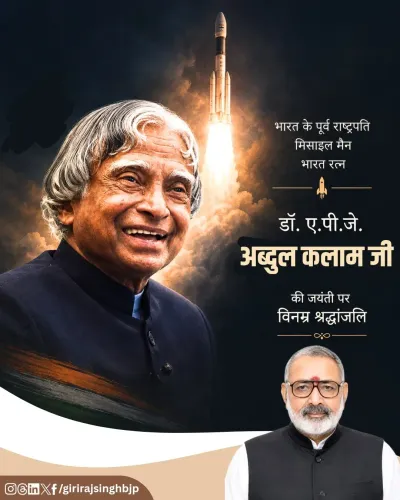
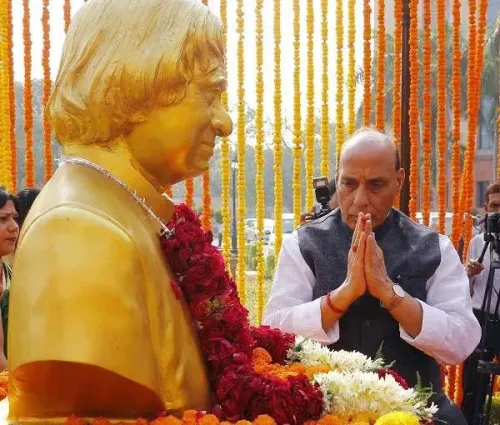
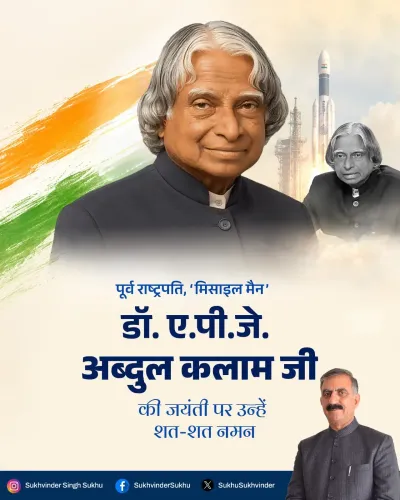
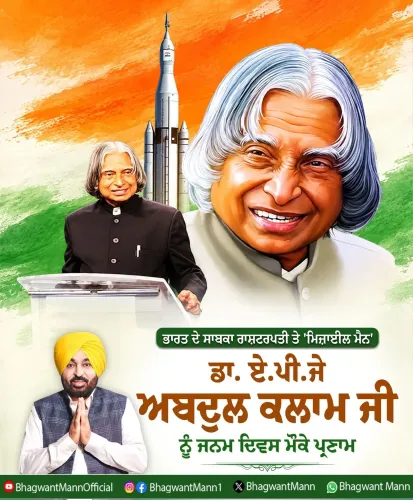
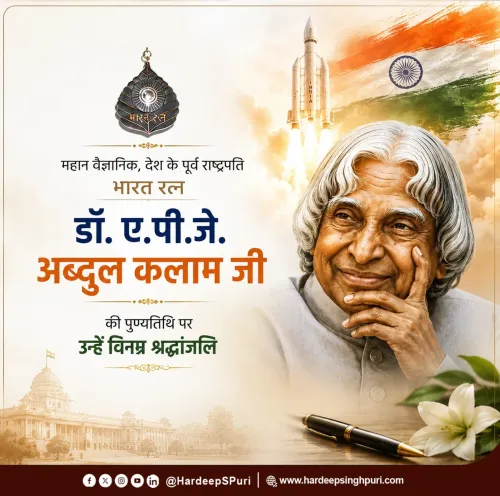
On what would have been his 95th birth anniversary, Dr APJ Abdul Kalam — scientist, dreamer, and the 11th President of India — is being remembered across the nation with the same reverence that defined his extraordinary life. Union Petroleum Minister Hardeep Singh Puri paid tribute on Thursday, October 15, reaching back into his own career to share two rare personal encounters with the man the country called its 'Missile Man'.
Puri wrote that Dr Kalam 'embodied the idea of India — its diversity, aspirations and boundless possibilities,' describing him as 'a scientist of extraordinary vision and a President who touched hearts, and inspired generations.' The tribute carried a personal weight uncommon in routine anniversary posts: Puri worked alongside Kalam directly — first in South Block, then on the diplomatic circuit in Europe.
Two meetings across two decades: from South Block to Geneva
The first encounter was institutional. When Dr Kalam served as Scientific Adviser to the Raksha Mantri — a role he took up in 1992, also heading the DRDO — Puri was posted as Joint Secretary in the Ministry of Defence. Working closely with Kalam inside the ministry gave Puri a ringside view of the scientist-administrator who was then architecting India's missile and strategic programmes.
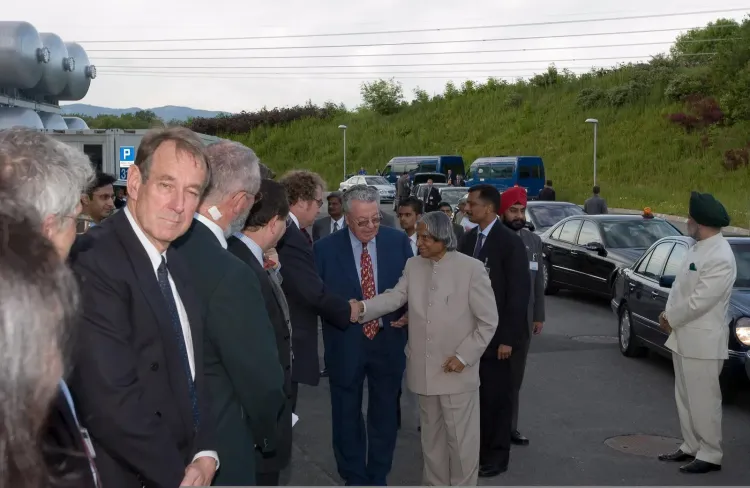
The second meeting came a decade later, on a very different stage. In 2005, with Kalam now President of India (he served from 2002 to 2007), Puri — by then India's Permanent Representative to the UN in Geneva — had the honour of receiving him on an official visit. The image of a career diplomat welcoming a former missile scientist turned head of state captures something essential about Kalam's arc: the man moved through every room of the Indian Republic.
The legacy that makes October 15 a national moment
Dr Kalam was born on October 15, 1931, in Rameswaram, Tamil Nadu. His journey from a modest family in a small temple town to leading India's Integrated Guided Missile Development Programme (IGMDP) — the programme that produced Agni, Prithvi, Akash, Trishul and Nag — became the most-told story of meritocracy in independent India. The Bharat Ratna, the country's highest civilian honour, was conferred on him in 1997.
His presidency from Rashtrapati Bhavan (2002–2007) was defined by his accessibility to students and his relentless message to India's youth: dream large, work harder. He passed away on July 27, 2015, mid-sentence during a lecture at IIM Shillong — the kind of exit that felt scripted by myth. Every October 15 since, India pauses to take the measure of what he left behind.
Puri's post is a reminder that Kalam's influence ran not only through laboratories and classrooms but through the corridors of the defence establishment and the floors of international diplomatic missions — threading together India's strategic, scientific, and foreign-policy worlds in a single life.
Point of View
Presidential, and diplomatic establishments — a breadth that few public figures have spanned. For senior BJP leaders like Puri, invoking Kalam carries both genuine sentiment and political utility: Kalam's legacy is deliberately non-partisan, making him the rare figure all sides claim. Puri's decision to ground the tribute in specific, verifiable personal encounters — rather than generic platitudes — elevates it above the routine October 15 cycle and speaks to the overlapping institutional worlds that shaped modern India's strategic culture.
NationPress
15 Oct 2026
Frequently Asked Questions
Why is October 15 celebrated in India?
October 15 is the birth anniversary of former President Dr APJ Abdul Kalam , born in 1931 in Rameswaram, Tamil Nadu. It is observed as a day of national tribute to his contributions to science, defence technology, and youth inspiration.
What did Hardeep Singh Puri say about APJ Abdul Kalam?
Hardeep Singh Puri described Kalam as embodying 'the idea of India — its diversity, aspirations and boundless possibilities,' and recalled working with him at the Ministry of Defence and receiving him in Geneva in 2005 as India's Permanent Representative to the UN.
What was APJ Abdul Kalam's role in the Ministry of Defence?
Dr Kalam served as Scientific Adviser to the Raksha Mantri (Defence Minister) from 1992 and headed the DRDO , where he oversaw India's Integrated Guided Missile Development Programme (IGMDP) — producing missiles including Agni and Prithvi.
When did APJ Abdul Kalam serve as President of India?
Dr Kalam served as the 11th President of India from 2002 to 2007 . He passed away on July 27, 2015 , while delivering a lecture at IIM Shillong .
What is Hardeep Singh Puri's diplomatic background?
Hardeep Singh Puri is a former career diplomat who served as India's Permanent Representative to the United Nations in Geneva and in other senior postings before entering politics as a senior BJP leader and Union Minister of Petroleum and Natural Gas .