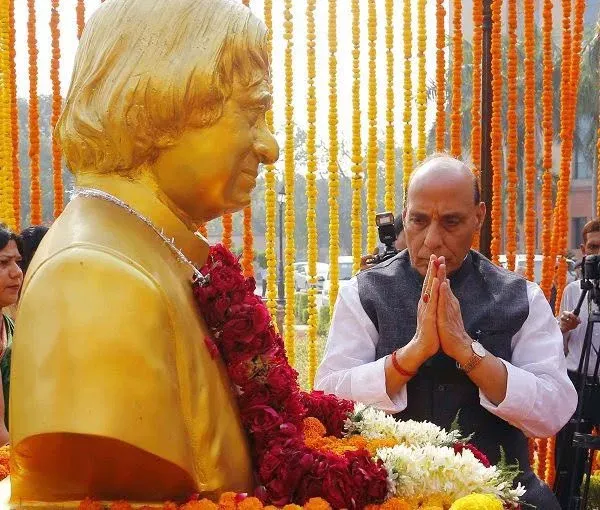
Rajnath Singh pays tribute to Dr. Kalam on birth anniversary
Synopsis
Union Defence Minister Rajnath Singh on 15 October 2026 honoured Dr. A.P.J. Abdul Kalam on his birth anniversary, saluting the former President's unforgettable role in India's defence self-reliance, his vision for a developed India, and his lifelong dedication to inspiring the nation's youth.
Key Takeaways
Union Defence Minister Rajnath Singh paid tribute to Dr.
Abdul Kalam on his birth anniversary, 15 October 2026 .
Singh called Kalam's contribution to India's defence self-reliance 'unforgettable' ( avisamaraniya ).
Kalam directed the Integrated Guided Missile Development Programme (IGMDP) launched in 1983 , overseeing the Prithvi and Agni missile systems.
Kalam served as President of India from 2002 to 2007 and was renowned for his closeness to children and young people.
Singh highlighted Kalam's vision of a 'Viksit Bharat' (Developed India) and his effort to foster scientific thinking among youth as enduring legacies.
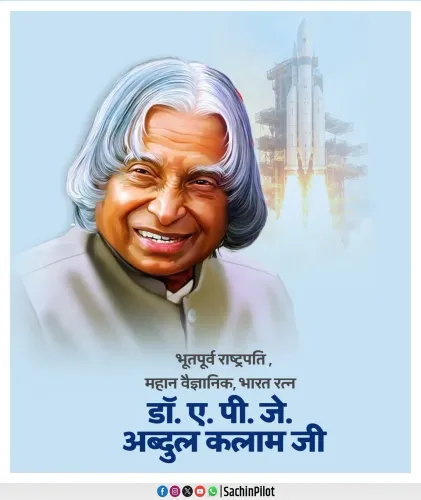
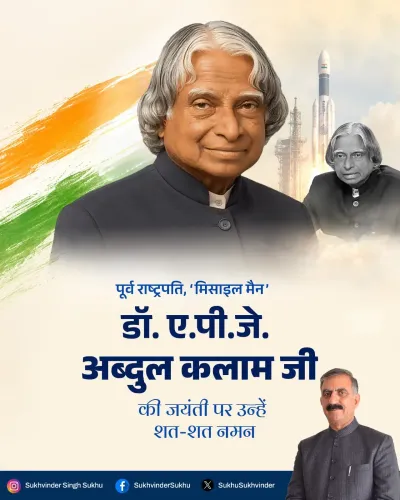
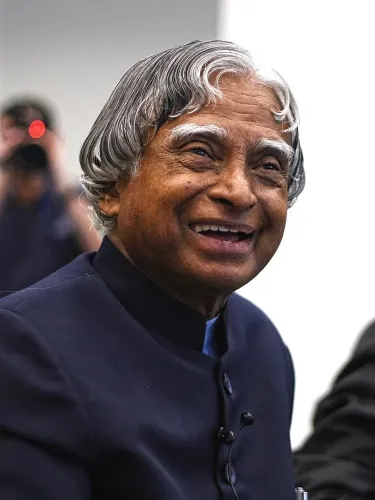
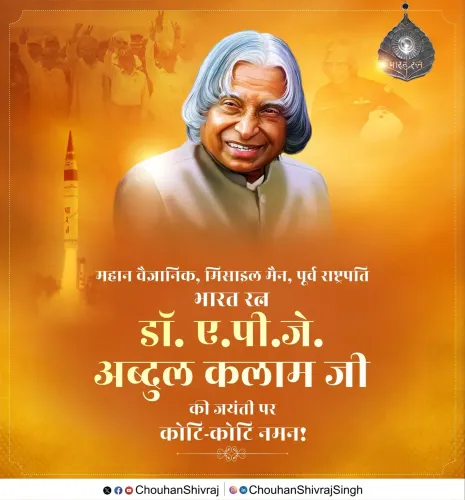
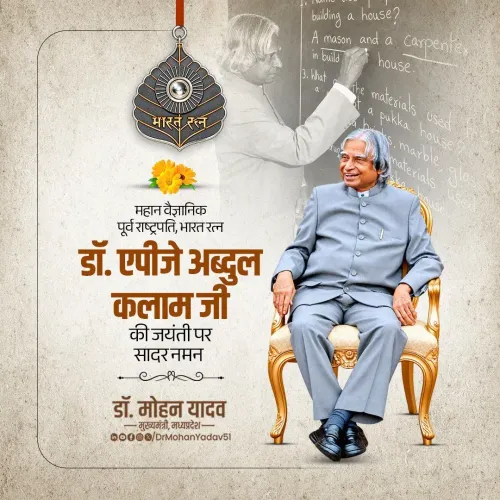
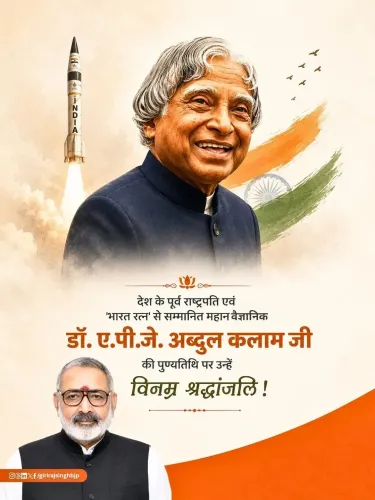
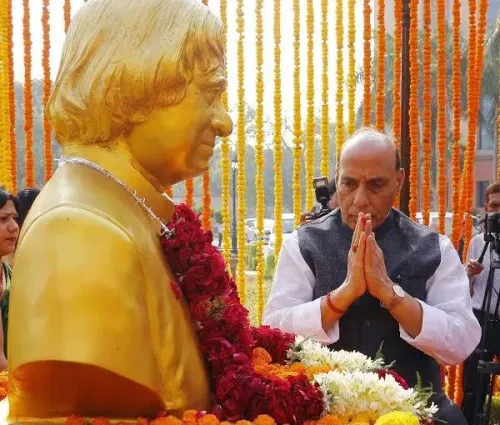
On the 95th birth anniversary of Dr. A.P.J. Abdul Kalam, Union Defence Minister Rajnath Singh on Thursday, 15 October 2026, paid tribute to the former President, calling his contribution to India's defence self-reliance unforgettable and his vision for a developed India a perpetual source of inspiration.
Singh wrote, 'भारत के पूर्व राष्ट्रपति और प्रख्यात वैज्ञानिक डॉ. ए.पी.जे. अब्दुल कलाम जी की जयंती पर उन्हें सादर नमन' — ('Respectful homage to former President of India and eminent scientist Dr. A.P.J. Abdul Kalam on his birth anniversary'). The minister noted that Kalam's simplicity remained unchanged even after he rose to the nation's highest constitutional office, and that his habit of engaging, conversing with, and encouraging children and young people earned him a singular place in the hearts of Indians.
Missile scientist who became 'People's President'
Dr. Avul Pakir Jainulabdeen Abdul Kalam was born on 15 October 1931 in Rameswaram, Tamil Nadu. He steered the Integrated Guided Missile Development Programme (IGMDP), launched in 1983, which produced systems including the Prithvi and Agni missile families — the bedrock of India's strategic deterrence architecture. He served as President of India from 2002 to 2007 and was widely known as the 'People's President' for his accessibility and deep connect with students across the country.
Kalam's legacy and India's Atmanirbhar defence push
Rajnath Singh's tribute draws a direct line between Kalam's foundational work and India's current drive for defence indigenisation. The IGMDP's success in the 1980s and 1990s demonstrated that India could develop cutting-edge strategic technology domestically — a conviction that now underpins policies accelerating indigenous production of fighters, submarines, and missile systems. Annual commemorations on 15 October have become a moment for the defence establishment to restate that intellectual inheritance.
Beyond hardware, Singh highlighted Kalam's lifelong effort to ignite scientific thinking, self-confidence, and a sense of nation-building among India's youth — qualities the minister described as an enduring inspiration for generations to come.
Point of View
The Defence Minister signals continuity between the IGMDP era and the current Atmanirbhar Bharat push in defence manufacturing. Invoking Kalam's 'Viksit Bharat' vision also aligns with the government's own development branding, lending historical and bipartisan weight to a present-day policy priority. The emphasis on Kalam's simplicity and youth connect is a soft-power reminder that national security and public inspiration can share the same biography.
NationPress
15 Oct 2026
Frequently Asked Questions
Why is 15 October celebrated as Kalam Jayanti?
15 October is the birth anniversary of Dr. A.P.J. Abdul Kalam , born in 1931 in Rameswaram, Tamil Nadu. It is observed across India as a day to honour his contributions to science, defence, and inspiring the nation's youth.
What was Dr. Kalam's role in India's missile programme?
Dr. Kalam directed the Integrated Guided Missile Development Programme (IGMDP) , initiated in 1983 , which developed India's indigenous missile systems including Prithvi and Agni , forming the backbone of India's strategic deterrence.
When was Dr. A.P.J. Abdul Kalam President of India?
Dr. Kalam served as the 11th President of India from 2002 to 2007 . He was popularly called the 'People's President' for his warmth and accessibility, especially towards students and young people.
What did Rajnath Singh say about Dr. Kalam on his birth anniversary?
Union Defence Minister Rajnath Singh called Kalam's contribution to India's defence self-reliance unforgettable and said his vision for a developed India and his efforts to inspire scientific thinking in youth would remain a perpetual source of motivation for future generations.
What is Viksit Bharat and what is Kalam's connection to it?
'Viksit Bharat' means 'Developed India.' Dr. Kalam articulated a long-term vision for India becoming a developed nation, particularly through science and technology. Rajnath Singh invoked this vision on Kalam's 2026 birth anniversary to link the former President's aspirations to current national development goals.