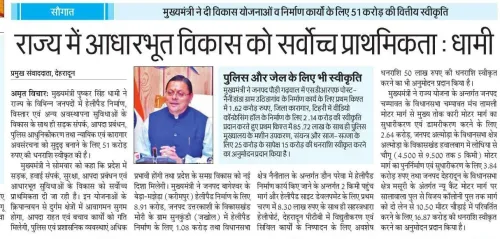
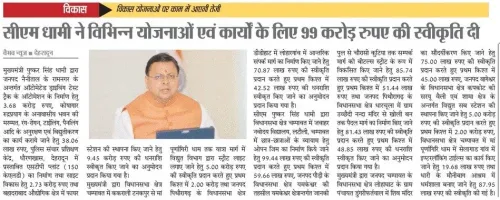
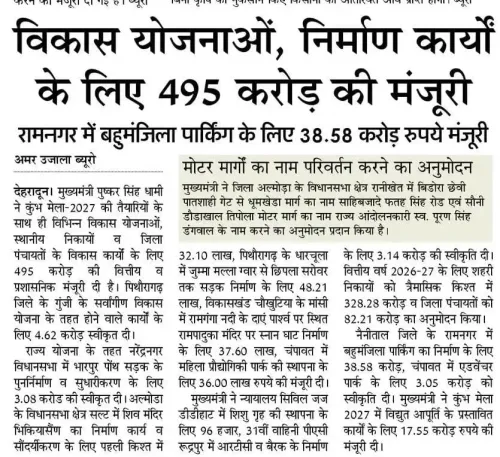
CM Dhami Clears ₹70 Crore for Uttarakhand Development Works
Synopsis
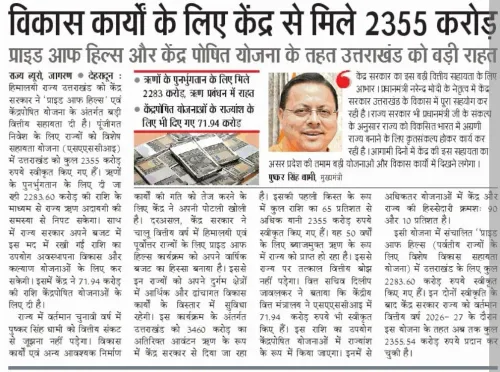
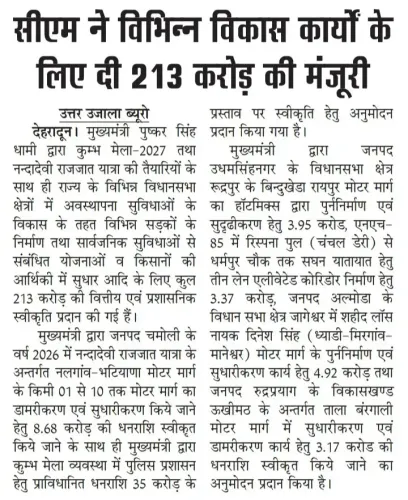
Chief Minister Pushkar Singh Dhami has approved ₹70 crore for development schemes and construction works in Uttarakhand, the Chief Minister's Office announced on October 15, 2026. Specific projects and districts will be detailed in follow-on departmental orders.
Key Takeaways
₹70 crore in financial sanction approved by CM Pushkar Singh Dhami on October 15, 2026 .
Funds earmarked for 'various development schemes and construction works' across Uttarakhand .
Specific project names, districts, and timelines are yet to be disclosed by departments.
Dhami has led Uttarakhand's BJP government since 2021 , prioritising infrastructure amid hilly terrain challenges.
Omnibus financial sanctions are a routine administrative tool in Uttarakhand to accelerate public works disbursements.
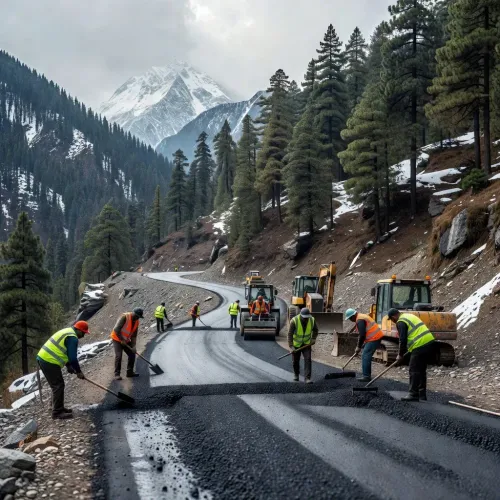
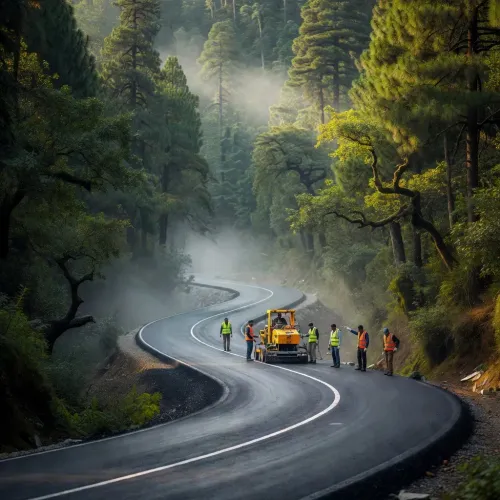
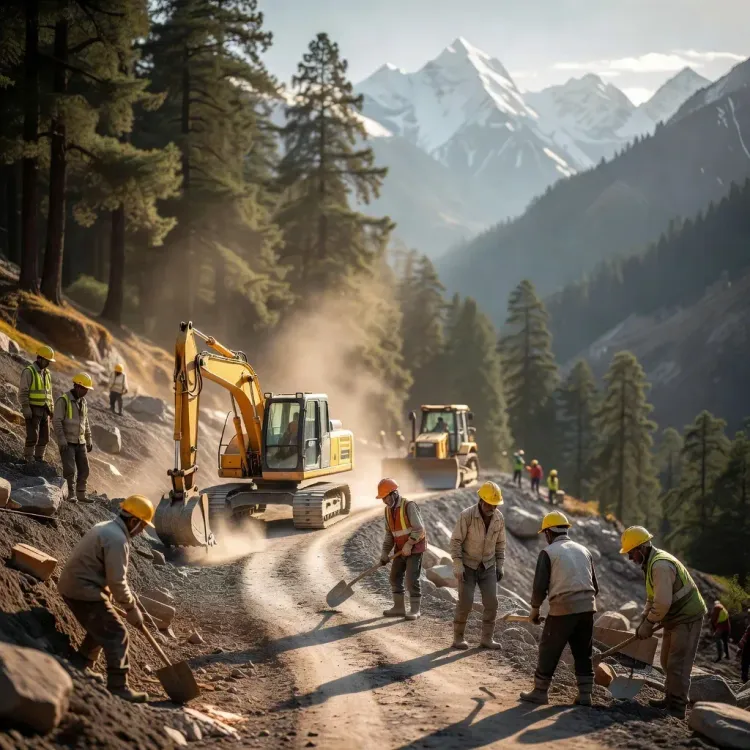
Seventy crore rupees. That is the sum Chief Minister Pushkar Singh Dhami has approved in a single financial sanction, directing funds toward development schemes and construction projects across Uttarakhand on Thursday, October 15, 2026. The Chief Minister's Office announced the clearance, signalling another round of infrastructure push in a state where roads, bridges, and public buildings must be carved through some of India's most demanding mountain terrain.
What the ₹70 Crore Sanction Covers
The official announcement stated that CM Dhami granted financial approval for viभिन्न विकास योजनाओं एवं निर्माण कार्यों — 'various development schemes and construction works' — without yet specifying individual project names, districts, or timelines. Detailed project orders are expected to follow from the finance or public works departments, at which point the full geographic spread and sectoral breakdown will become clear.
For a landlocked hill state with 13 districts, many of them remote and seasonally cut off, such omnibus sanctions are a standard administrative tool. They allow executing agencies to mobilise quickly rather than wait on project-by-project approvals.
Dhami's Infrastructure Track and the Hill-State Challenge
Pushkar Singh Dhami, who has led Uttarakhand's BJP government since 2021, has positioned infrastructure modernisation — roads, connectivity corridors, disaster-resilient construction — as a centrepiece of his administration. The state's hilly topography drives construction costs well above plains-state norms, making central and state financial injections critical to keeping project pipelines moving.
Routine financial sanctions of this scale are not unusual for Uttarakhand; the state government regularly issues such approvals to prevent bottlenecks in ongoing public works. What matters downstream is the project mix — whether the funds skew toward road connectivity, civic buildings, or disaster mitigation infrastructure in vulnerable districts.
Point of View
Where consolidating approvals speeds up field-level disbursements. For CM Dhami, the announcement also carries political optics — demonstrating an active development agenda ahead of any electoral cycle. The real test will come when project-level orders emerge: whether allocations prioritise rural connectivity and disaster resilience, the two areas where Uttarakhand's infrastructure gaps are most acute, will determine the sanction's long-term significance beyond the headline number.
NationPress
15 Oct 2026
Frequently Asked Questions
What is the ₹70 crore financial sanction approved by CM Dhami?
Chief Minister Pushkar Singh Dhami approved ₹70 crore on October 15, 2026 for various development schemes and construction works in Uttarakhand. Specific project details are yet to be released by the concerned departments.
Which projects will benefit from CM Dhami's ₹70 crore approval?
The official announcement has not named specific projects or districts yet. Detailed orders are expected from the finance or public works departments following the financial sanction.
Who is Pushkar Singh Dhami?
Pushkar Singh Dhami is the Chief Minister of Uttarakhand, leading the BJP-led state government since 2021, with a focus on infrastructure development and administrative reforms.
Why does Uttarakhand need frequent infrastructure sanctions?
Uttarakhand's mountainous terrain makes construction significantly more expensive and logistically complex than in plains states. Regular financial sanctions are needed to keep roads, bridges, and public works projects on schedule across its 13 districts.
How does Uttarakhand fund its development projects?
Uttarakhand funds development through a combination of state budget allocations, central government grants, and scheme-linked transfers. The Chief Minister's Office issues financial sanctions to authorise disbursements for approved projects.