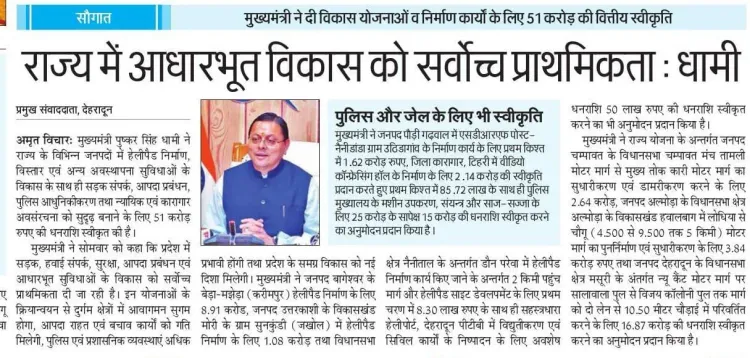
CM Dhami Sanctions ₹51 Crore for Infrastructure Across Uttarakhand
Synopsis
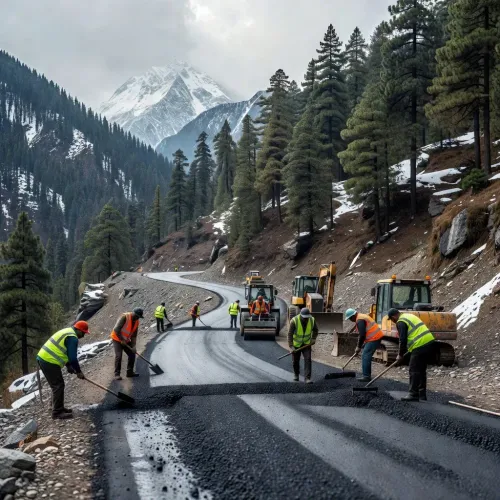
Chief Minister Pushkar Singh Dhami has sanctioned ₹51 crore for foundational development works across multiple Uttarakhand districts, continuing the state government's pattern of incremental, CM-led infrastructure approvals targeting roads, water, and civic amenities in challenging hilly terrain.
Key Takeaways
₹51 crore sanctioned by CM Pushkar Singh Dhami for infrastructure across multiple Uttarakhand districts on 21 July 2026 .
Funds are earmarked for 'foundational development' — covering roads, water supply, and basic civic amenities.
The approval continues the Dhami government's pattern of incremental, CM-led district development sanctions since 2021 .
District administrations will execute projects; utilisation reports and tender notices are the key next steps to watch.
The allocation broadly aligns with national schemes like PM Gati Shakti targeting integrated infrastructure delivery.
Terrain complexity in Uttarakhand 's hilly districts makes timely utilisation a critical challenge for this sanction.
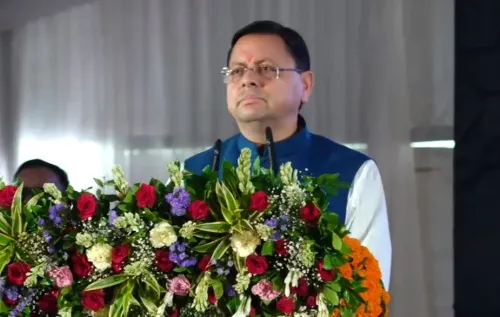
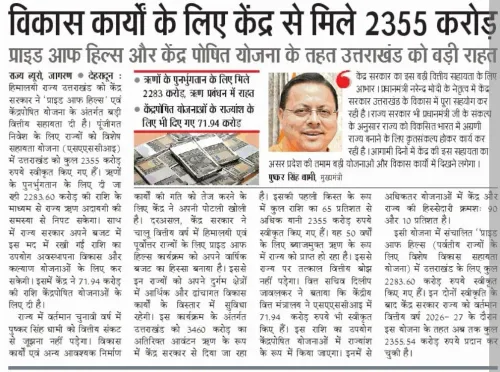
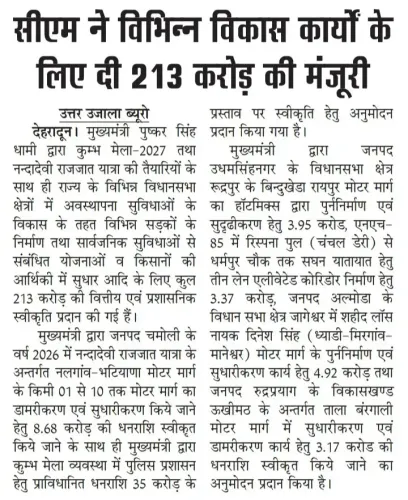
The Chief Minister's Office of Uttarakhand announced on Tuesday, 21 July 2026 that Chief Minister Pushkar Singh Dhami has approved ₹51 crore for foundational development works across various districts of the state.
Context
The official post from the Chief Minister's Office stated: 'मुख्यमंत्री श्री पुष्कर सिंह धामी ने राज्य के विभिन्न जनपदों में आधारभूत विकास हेतु ₹51 करोड़ की धनराशि की स्वीकृत' — translating to: 'Chief Minister Pushkar Singh Dhami has sanctioned an amount of ₹51 crore for foundational development in various districts of the state.' The sanction covers multiple districts simultaneously, signalling a broad-based push rather than a targeted single-district intervention.
Policy Backdrop
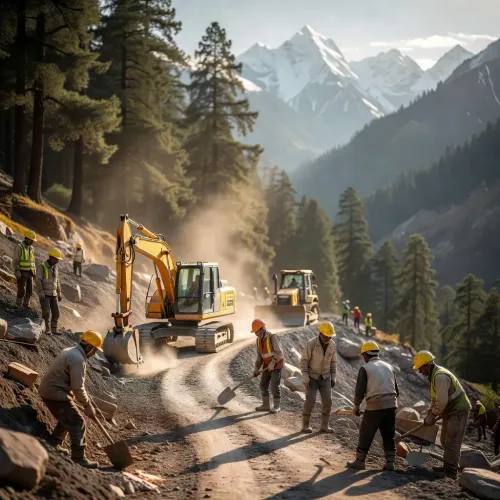
Uttarakhand is a hilly Himalayan state where infrastructure delivery is significantly more costly and logistically complex than in plains states. Since 2021-22, the Dhami government has pursued a pattern of incremental, CM-level fund approvals directed at roads, water supply, and civic amenities across districts. These allocations broadly align with national frameworks such as PM Gati Shakti, which seeks to integrate multi-modal infrastructure planning across states. District-level sanctions of this nature are typically followed by tender notices and project execution through state public works and urban development agencies.
Stakeholders and Impact
The primary beneficiaries of the ₹51 crore sanction are residents of the districts identified for development works, particularly communities in remote and hilly areas where basic amenities remain inadequate. District administrations across Uttarakhand will be responsible for project implementation, procurement, and utilisation reporting. Local contractors, civic bodies, and panchayat-level institutions are also expected to play a role in on-ground execution.
What's Next
Attention will now turn to the detailed break-up of projects funded by the ₹51 crore allocation — specifically, which districts receive what share and for what category of work. Subsequent utilisation certificates and tender notices from district administrations will determine the pace of actual delivery. Observers of state infrastructure policy will watch whether this sanction is followed by expedited project awards or remains in administrative pipeline, a recurring challenge in hilly terrain states.
Point of View
High-visibility fund approvals that signal executive responsiveness on infrastructure without waiting for a single large scheme announcement. In a state where terrain inflates project costs and timelines, such tranches serve both a developmental and a political signalling function ahead of ongoing local governance cycles. The real test, as with previous allocations, will be utilisation speed — Uttarakhand has historically faced gaps between sanction and actual ground-level expenditure. This move also fits into the BJP-governed state's effort to align visibly with national infrastructure push narratives.
NationPress
20 Oct 2026
Frequently Asked Questions
How much money has CM Dhami sanctioned for Uttarakhand infrastructure?
Chief Minister Pushkar Singh Dhami has sanctioned ₹51 crore for foundational development works across various districts of Uttarakhand, as announced on 21 July 2026.
Which districts in Uttarakhand will benefit from the ₹51 crore sanction?
The sanction covers 'various districts' of Uttarakhand as stated in the official announcement. A detailed district-wise break-up is expected to be released by respective district administrations through tender notices.
What kind of infrastructure projects will the ₹51 crore fund?
The funds are designated for 'foundational development' (aadharbhoot vikas), which typically covers roads, water supply, and basic civic amenities in Uttarakhand's hilly districts.
Who is Pushkar Singh Dhami?
Pushkar Singh Dhami is the Chief Minister of Uttarakhand, heading a BJP-led government since 2021, with a focus on state-level development approvals and infrastructure expansion.
How does this sanction relate to national infrastructure schemes?
Uttarakhand's district-level infrastructure allocations broadly align with national frameworks such as PM Gati Shakti, which integrates multi-modal infrastructure planning across Indian states.