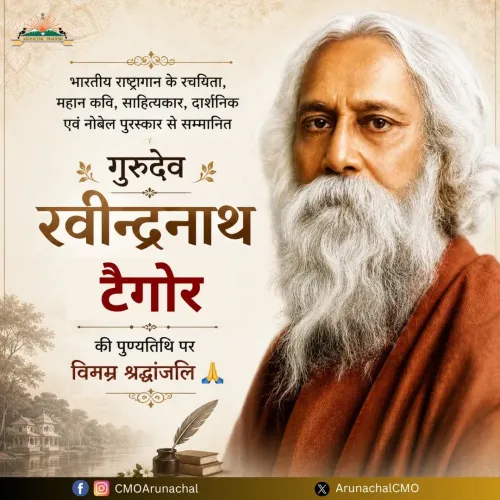
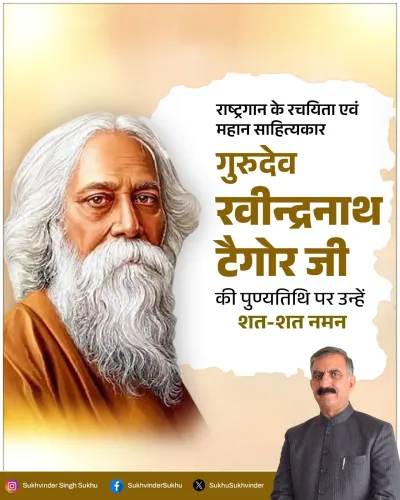
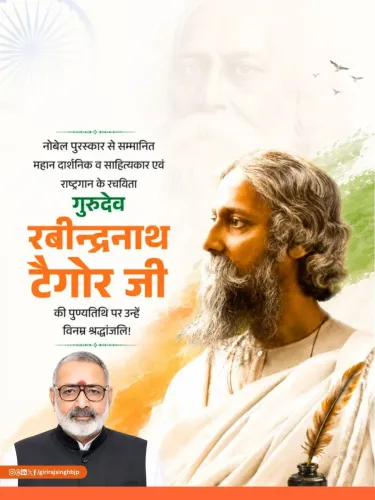
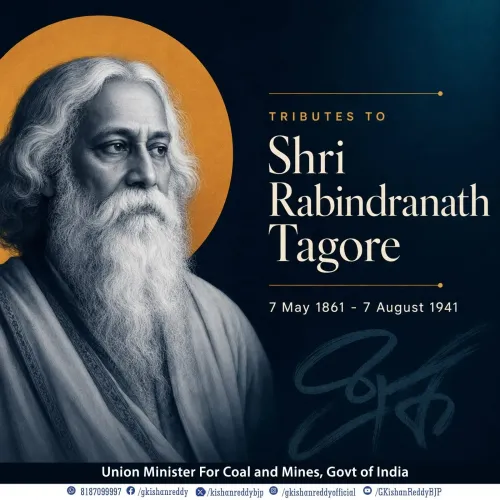
Puri Pays Tribute to Tagore on His Punyatithi
Synopsis
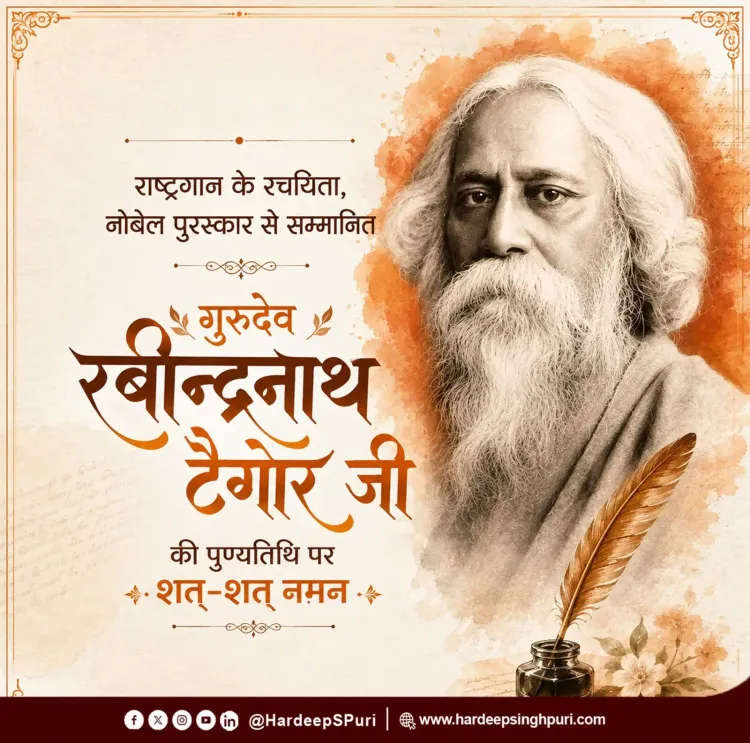
Union Petroleum Minister Hardeep Singh Puri honoured Rabindranath Tagore on his Punyatithi on 7 August, calling the Nobel laureate a visionary poet, philosopher and thinker whose works transformed Indian literature, music, and art.
Key Takeaways
Hardeep Singh Puri paid tribute to Rabindranath Tagore on his Punyatithi, observed on 7 August each year.
Tagore was awarded the Nobel Prize in Literature in 1913 for Gitanjali , becoming the first non-European Nobel laureate in the category.
Tagore's contributions span poetry, philosophy, music ( Rabindra Sangeet ), visual art, and the founding of Visva-Bharati University .
He authored India's national anthem , Jana Gana Mana .
Indian Union ministers routinely issue formal tributes on the birth and death anniversaries of major national cultural figures.
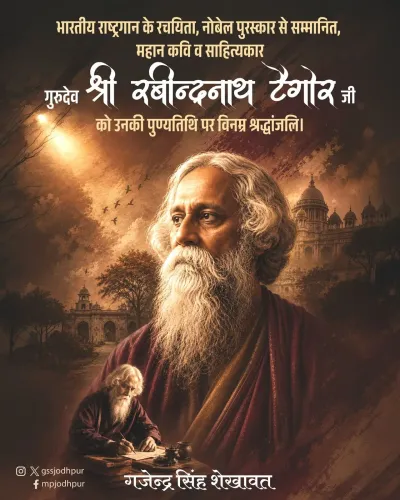
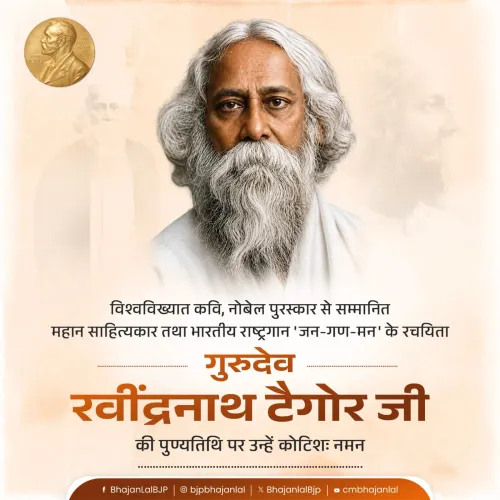
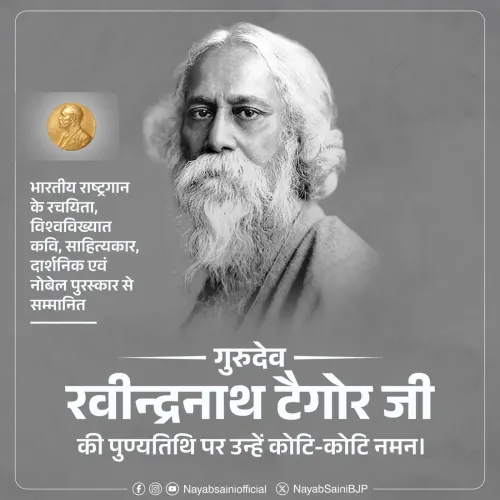
On the 7th of August, the day India pauses to remember its most luminous literary voice, Union Petroleum Minister Hardeep Singh Puri joined the nation in honouring Gurudev Rabindranath Tagore on his Punyatithi — the anniversary of his passing.
Puri wrote: 'A visionary poet, philosopher and thinker, Gurudev was the first non-European Nobel laureate in Literature. His timeless works transformed Indian literature, music, and art, while his enduring legacy continues to inspire generations and remains a guiding light of our rich cultural heritage.'
The Nobel that changed the world's idea of Indian thought
Rabindranath Tagore was awarded the Nobel Prize in Literature in 1913 — the first time the prize had gone to anyone outside Europe. The work that won it, Gitanjali (Song Offerings), stunned Western literary circles with its spiritual depth and lyrical precision. It was not merely an Indian achievement; it was a seismic shift in how the world understood the reach of human expression. Tagore did not stop at poetry. He reshaped Bengali literature, founded the Visva-Bharati University at Santiniketan, composed thousands of songs that became their own genre — Rabindra Sangeet — and painted with a restless visual imagination in his later years. He also wrote India's national anthem, Jana Gana Mana. Few figures in modern history have commanded so many art forms at once.A ritual of remembrance in official India
Puri's tribute is part of a long-standing practice among Indian Union ministers and public institutions: marking the birth and death anniversaries of national cultural figures with formal acknowledgement. August 7 — Tagore's Punyatithi — draws tributes from across the political spectrum every year, a rare point of convergence in an otherwise fractious public discourse. The consistency of this annual remembrance reflects something real: Tagore's thought — on education, on nationalism, on the individual's relationship with nature and community — remains genuinely contested and genuinely alive. He is not merely a figure on a currency note. He is still argued over, still taught, still sung. As long as Jana Gana Mana opens every official gathering in India, Tagore's voice will be the first one the nation hears.Point of View
A detail that resonates with the current government's broader narrative of India's civilisational stature on the world stage. Tagore's legacy, however, is ideologically complex — his critiques of narrow nationalism and his vision of open, humanist education sit in productive tension with contemporary political discourse. That tension is never quite acknowledged in official tributes, which tend to celebrate the poet while quietly sidestepping the philosopher.
NationPress
21 Sept 2026
Frequently Asked Questions
When is Rabindranath Tagore's Punyatithi observed?
Rabindranath Tagore's Punyatithi is observed on 7 August every year, marking the anniversary of his death.
Why was Rabindranath Tagore's Nobel Prize historically significant?
Tagore won the Nobel Prize in Literature in 1913 for Gitanjali , becoming the first non-European in history to receive the prize in that category — a landmark moment for world literature.
What did Rabindranath Tagore contribute to Indian culture?
Tagore transformed Bengali and Indian literature , founded Rabindra Sangeet as a distinct musical tradition, established Visva-Bharati University at Santiniketan, painted extensively, and wrote India's national anthem , Jana Gana Mana .
Who is Hardeep Singh Puri?
Hardeep Singh Puri is a senior BJP leader, a former career diplomat, and currently serves as India's Union Minister of Petroleum and Natural Gas .
Do Indian ministers regularly pay tribute to Rabindranath Tagore?
Yes. Paying formal tribute to Tagore on his Punyatithi ( 7 August ) and his birth anniversary is a long-standing practice among Indian Union ministers and public institutions across party lines.