Raghav Chadha Hails India's First Anti-Paper Leak Law
Synopsis
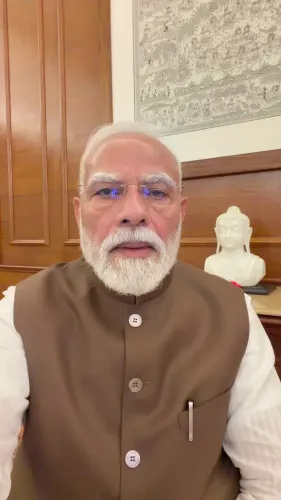
AAP Rajya Sabha MP Raghav Chadha hailed the passage of the Public Examinations Amendment Bill, 2026, calling it India's first statutory anti-paper leak framework — a legislative milestone built on the public outrage that followed the 2024 NEET paper leak crisis.
Key Takeaways
The Public Examinations Amendment Bill, 2026 has been passed, establishing India's first anti-paper leak statutory framework.
AAP Rajya Sabha MP Raghav Chadha welcomed the bill on 30 July 2026 , framing it as a response to sustained student pressure.
The amendment builds on the Public Examinations (Prevention of Unfair Means) Act, 2024 , which was enacted after the high-profile NEET paper leak scandal.
Key upcoming exams — UPSC , SSC , and state PSCs — will be the first real test of the amended law's enforcement.
Recurring paper leaks across national and state-level exams have eroded public trust in merit-based selection for over a decade.
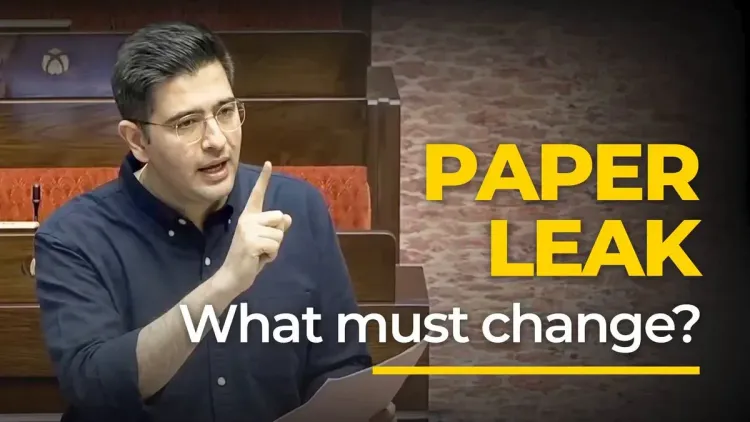
For millions of students who have watched their futures dissolve in a paper leak scandal, 30 July 2026 marks a turning point. AAP Rajya Sabha MP Raghav Chadha took to X to mark the passage of the Public Examinations Amendment Bill, 2026 — hailing it as India's first-ever statutory anti-paper leak framework.
Two Years of Outrage, One Landmark Bill
The road to this amendment runs directly through the chaos of 2024, when the NEET paper leak convulsed the country and sent hundreds of thousands of medical aspirants — and their families — into the streets. That crisis accelerated the passage of the Public Examinations (Prevention of Unfair Means) Act, 2024, India's first dedicated law against exam malpractice. The 2026 amendment now builds on that foundation, deepening the legal architecture that governs how the country's high-stakes examinations are conducted, secured, and enforced. Paper leaks are not a new wound. For over a decade, recruitment exams for railways, banking, state public service commissions, and national entrance tests have been repeatedly compromised — erasing years of preparation for aspirants who had done everything right. Every leak is not just a logistical failure; it is a broken promise to a young person who believed the system was fair.What the Amendment Is Designed to Fix
The 2024 parent law introduced stricter penalties and central oversight mechanisms for public examinations conducted by bodies such as the UPSC, SSC, and national testing agencies. The 2026 amendment extends and sharpens that framework. While the specific provisions of the amendment postdate available legislative records, the broader legislative intent — technology-based monitoring, harsher consequences for organised cheating networks, and faster institutional accountability — follows the pattern set two years ago. Chadha framed the moment in three spare lines: 'Students spoke. The Government listened. Action.' It is a deliberate echo of democratic accountability — the argument that sustained public pressure, amplified by political voices across party lines, produced a legislative result.UPSC, SSC, State PSCs: The Real Test Ahead
A law's credibility lives in its enforcement. The immediate watch-point is the notification of rules under the amended act and their application in the next cycle of major competitive examinations — UPSC Civil Services, SSC recruitments, and state PSC exams that together determine the careers of millions of aspirants every year. Whether the amendment translates into leak-proof administration on the ground, or remains a legislative statement, will be decided in examination halls — not in Parliament. For now, Chadha's post plants a flag: that the political class heard the anger of young India, and that the statute books have changed as a result. The harder work of making that change real begins now.Point of View
2026 represents the second legislative step in a post-NEET corrective arc that began with the 2024 parent act — signalling that exam integrity has become a durable political priority, not a one-cycle response. For the AAP, whose core constituency includes urban youth and first-generation aspirants, championing the bill allows the party to claim a governance win even from the Opposition benches. The harder political question is implementation: if major exams are compromised again under the amended law, the legislative milestone will quickly become a liability. The bill's credibility will ultimately be measured not in Parliament, but in the examination halls of 2027.
NationPress
31 Jul 2026
Frequently Asked Questions
What is the Public Examinations Amendment Bill 2026?
The Public Examinations Amendment Bill, 2026 is a law passed by the Indian Parliament that strengthens the anti-paper leak framework for public competitive examinations. It amends the Public Examinations (Prevention of Unfair Means) Act, 2024, which was India's first dedicated law against exam malpractice.
What triggered India's anti-paper leak legislation?
The primary trigger was the 2024 NEET paper leak scandal, which sparked nationwide protests by medical aspirants. The crisis led to the passage of the Public Examinations (Prevention of Unfair Means) Act, 2024, and the 2026 amendment further strengthens that framework.
Which exams will be covered under the new anti-paper leak law?
The law covers public examinations conducted by central bodies, including UPSC, SSC, and national testing agencies. State PSC examinations may also fall under its ambit depending on the rules notified under the act.
What did Raghav Chadha say about the Public Examinations Amendment Bill 2026?
AAP Rajya Sabha MP Raghav Chadha said he 'spoke for every young Indian who believes that honest effort deserves an honest opportunity,' and called the bill India's first-ever anti-paper leak framework, crediting sustained student pressure for the legislative outcome.
Has India had paper leaks in competitive exams before?
Yes. Paper leaks have repeatedly compromised major national and state-level recruitment and entrance exams over the past decade, including railway, banking, and medical entrance tests, eroding public trust in merit-based selection processes.