Is Rahul Gandhi Advocating for a National Strategy to Address Air Pollution?
Click to start listening
Synopsis
In a compelling call to action, Rahul Gandhi emphasizes the urgent need for a national strategy to combat air pollution, urging cooperation across political lines. His appeal for a city-specific plan highlights the grave public health consequences and the necessity for bipartisan responsibility in addressing this pressing issue.
Key Takeaways
- Urgent need for a national strategy to combat air pollution.
- Bipartisan collaboration is essential for effective solutions.
- Focus on city-specific plans to address unique challenges.
- Public health impacts are severe and require immediate attention.
- Proactive citizen engagement can drive change.
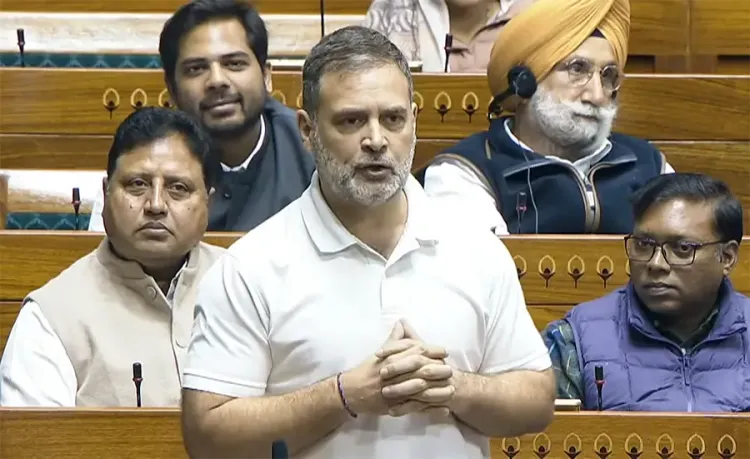
New Delhi, Dec 12 (NationPress) The Leader of Opposition in the Lok Sabha, Rahul Gandhi, called on the government to create a detailed, city-specific plan to address air pollution, describing it as a “non-ideological” matter that warrants discussion for a “unified” national action approach.
During his remarks in the Lok Sabha, Gandhi emphasized the need for collaboration between the Treasury and Opposition benches, advocating for a well-structured Parliamentary debate followed by a long-term national strategy.
He proposed that a thorough discussion could lead to the Prime Minister implementing a clear plan for each city—a methodical and systematic approach on how, over the next five to ten years, we can address this issue and enhance the quality of life for citizens.
In a message shared on X, he stated, “Air pollution has escalated into a national crisis that necessitates an immediate and comprehensive action plan. This transcends politics; it is a bipartisan duty that we are prepared to undertake alongside the PM to mitigate, resolve, and safeguard our people’s future.”
Earlier, he indicated that discussions on a national strategy should not dwell on past failures or blame but focus on constructive solutions.
Gandhi pointed out that India's major cities are “shrouded in toxic air,” warning that countless children are developing respiratory issues, senior citizens are struggling with breathing difficulties, and cancer cases are on the rise due to poor air quality.
He highlighted that this is one of the unique subjects where both the government and the Opposition can showcase their unity.
He urged members to refrain from partisan disputes during the anticipated debate and instead demonstrate to the nation that both sides can coalesce to tackle this urgent challenge.
Gandhi stated that the discussion should center on actionable steps rather than engaging in a blame game. Identifying air pollution as a national crisis, he reiterated the need for a robust and immediate national action plan.
“It’s crucial that the government devises a strategy to eliminate air pollution in our cities. We are more than willing to work with the government to develop such a plan. There are few issues nowadays that the government and the entire Opposition can align on,” he remarked.
Gandhi reaffirmed the Opposition's readiness to partner with the government in crafting a practical framework to reduce air pollution and enhance public health outcomes.
Point of View
It's imperative to recognize that addressing air pollution transcends party lines. Rahul Gandhi's appeal for a unified approach reflects a critical opportunity for collaboration in our nation's health agenda. The urgency of this issue calls for a comprehensive national plan that prioritizes public well-being over political rhetoric. We stand at a crossroads where unity can pave the way for meaningful change.
NationPress
13/12/2025
Frequently Asked Questions
Why is air pollution a non-ideological issue?
Air pollution affects everyone, regardless of political affiliation, making it a collective challenge that requires collaborative solutions.
What specific actions did Rahul Gandhi propose?
Gandhi suggested a detailed discussion leading to a systematic city-specific plan to tackle air pollution over the next five to ten years.
How does air pollution impact public health?
Air pollution is linked to respiratory diseases in children, breathing difficulties in the elderly, and a rise in cancer cases, necessitating urgent action.
What is the significance of bipartisan cooperation on this issue?
Bipartisan cooperation can demonstrate to the public that political differences can be put aside for the greater good, fostering trust and effective solutions.
How can citizens contribute to reducing air pollution?
Citizens can advocate for cleaner policies, support local initiatives, and adopt sustainable practices in their daily lives to combat air pollution.