Rahul Gandhi Slams Maharashtra TET Paper Leak
Synopsis
Congress leader Rahul Gandhi on June 27, 2026, attacked the alleged Maharashtra TET paper leak, calling it a symptom of an examination system turned into a 'system of extraction' that steals the futures of India's youth.
Key Takeaways
Congress leader Rahul Gandhi condemned the alleged Maharashtra TET paper leak on June 27, 2026 .
The Teacher Eligibility Test (TET) is a mandatory qualifying exam for government school teacher recruitment in Maharashtra .
Gandhi described the incident as 'the theft of the future of the youth,' not merely an administrative failure.
The Maharashtra TET leak follows a pattern that includes the UGC-NET cancellation and NEET-UG irregularities of June 2024 .
Repeated paper leaks have fuelled demands for computer-based testing and stronger examination security protocols across India.
Thousands of aspiring teachers in Maharashtra face delayed career prospects as a result of the cancellation.
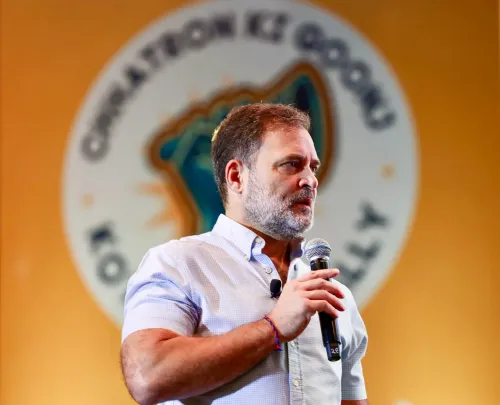
Congress leader and Leader of the Opposition Rahul Gandhi on Saturday, June 27, 2026, condemned the alleged leak of Maharashtra's Teacher Eligibility Test (TET), calling it a theft of young people's futures and demanding accountability for what he described as a systemic failure in India's examination infrastructure.
Posting in Hindi, Gandhi wrote: 'एक और पेपर लीक। एक और परीक्षा रद्द। इस बार महाराष्ट्र का TET.' ('Another paper leak. Another examination cancelled. This time, Maharashtra's TET.') He charged that the country's education and examination system had been turned into a 'system of extraction,' leaving every young person in the nation insecure. 'This is not just a paper leak,' he wrote, 'this is the theft of the future of the youth.'
Context
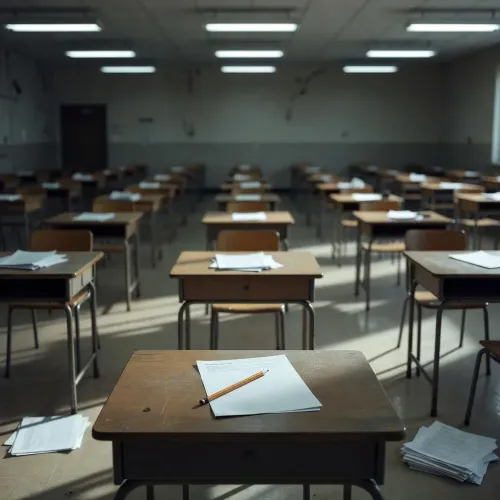
The Teacher Eligibility Test (TET) is a mandatory qualifying examination for candidates seeking appointments as teachers in government schools. Maharashtra conducts its own state-level TET, and a successful score is a prerequisite for entry into the public school teaching workforce. An alleged leak forcing cancellation of the examination directly delays the career prospects of thousands of aspiring teachers across the state.
Gandhi, as Leader of the Opposition in Lok Sabha and Member of Parliament from Rae Bareli, has consistently flagged institutional failures affecting youth employment and educational fairness as central political concerns.
Policy Backdrop
The Maharashtra TET incident is the latest in a pattern of high-profile examination irregularities that have shaken public confidence in India's competitive testing infrastructure. In June 2024, the UGC-NET examination was cancelled nationwide after reports of question paper leakage emerged. Around the same period, the NEET-UG medical entrance examination faced allegations of paper leaks, prompting a Supreme Court review and re-tests for affected candidates.
These repeated disruptions have triggered protests from student groups, petitions in courts, and calls from education policy advocates for a full transition to computer-based testing with end-to-end encryption of question banks. Critics argue that the current system of physical paper distribution creates multiple points of vulnerability that organised networks exploit for financial gain.
Stakeholders and Impact
The most immediate impact falls on aspiring teachers in Maharashtra who have invested months — and in many cases years — preparing for the TET. A cancellation forces them to restart the cycle of preparation and wait for a rescheduled date, with no guarantee that security protocols will be strengthened in the interim.
Broader stakeholders include students in Maharashtra's government schools, whose access to qualified teachers is directly tied to the pace of TET-based recruitment. Delays in filling teaching vacancies compound existing shortfalls in the public education system. The political opposition, including the Indian National Congress, has framed these failures as evidence of governance breakdown at both the state and national levels.
What's Next
Attention will now shift to the Maharashtra government's response — whether it orders a state-level inquiry, identifies the point of leakage, and announces a revised examination date with enhanced security measures. Demands are likely to intensify for structural reforms such as centralised digital question-bank management and real-time monitoring of examination centres.
If the pattern of leaks continues without credible accountability, pressure on the government to overhaul the examination regulatory framework — potentially through legislation — is expected to grow, particularly as competitive examinations remain the primary gateway to stable public-sector employment for millions of young Indians.
Point of View
' the opposition is attempting to shift public discourse from technical fixes to political accountability, targeting both state and central governance. The repeated recurrence of leaks across different examinations lends the critique a cumulative credibility that is difficult for the ruling establishment to dismiss. How the Maharashtra government responds — and how quickly it can reschedule the TET with credible security upgrades — will determine whether this becomes a sustained electoral liability.
NationPress
26 Sept 2026
Frequently Asked Questions
What is the Maharashtra TET and why was it cancelled?
The Maharashtra Teacher Eligibility Test (TET) is a mandatory qualifying examination for candidates seeking government school teaching jobs in the state. The June 2026 edition was reportedly cancelled following allegations of a paper leak before the examination could be conducted.
What did Rahul Gandhi say about the Maharashtra TET paper leak?
Rahul Gandhi posted on X on June 27, 2026, calling the incident 'the theft of the future of the youth' and charging that India's examination system had been converted into a 'system of extraction' that leaves every young person insecure.
How many times have major Indian examinations been cancelled due to paper leaks?
Multiple high-profile examinations have been disrupted in recent years. The UGC-NET was cancelled nationwide in June 2024 after paper leakage reports, and the NEET-UG faced similar allegations the same year, leading to a Supreme Court review and re-tests for affected candidates.
What reforms are being demanded after repeated paper leaks in India?
Education policy advocates and student groups have demanded a full shift to computer-based testing, end-to-end encryption of question banks, centralised digital question-bank management, and real-time monitoring of examination centres to eliminate points of vulnerability.
Who is most affected by the Maharashtra TET cancellation?
Aspiring teachers in Maharashtra who prepared for the TET are the most directly affected, facing delays in their careers. Students in Maharashtra's government schools are also indirectly impacted, as teaching vacancies remain unfilled until the recruitment process is completed.