Rahul Gandhi at Bharat Summit: Indian democracy a global asset, Modi will be defeated
Synopsis
At the Bharat Summit in Hyderabad, Rahul Gandhi did not just attack the government — he internationalised India's democratic crisis. Citing 140 million allegedly struck-off voters and a suspicious 7-million voter surge in Maharashtra, he framed Indian democracy as a global public good under siege, and promised Modi's defeat through truth and non-violence, not anger.
Key Takeaways
Rahul Gandhi addressed the Bharat Summit in Hyderabad on 14 November , declaring Indian democracy 'systematically dismantled.' He alleged that 140 million voters — about 13% of the electorate — were classified as 'non-existent or illegal' by the Election Commission of India .
Gandhi pointed to the addition of seven million voters in Maharashtra ahead of assembly polls as evidence of electoral manipulation.
He said the opposition faces 45 legal cases against him personally but found a counter-strategy through the Bharat Jodo Yatra .
Gandhi called on global allies to resist authoritarianism and asserted that PM Modi 'will be defeated' through truth and non-violence.
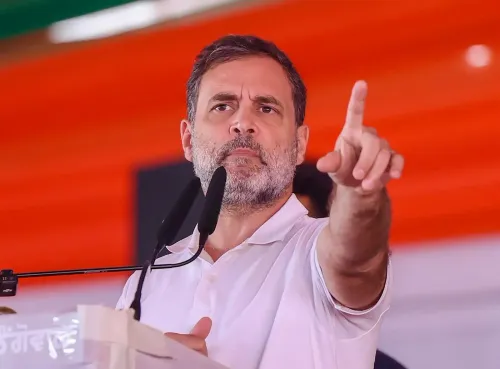
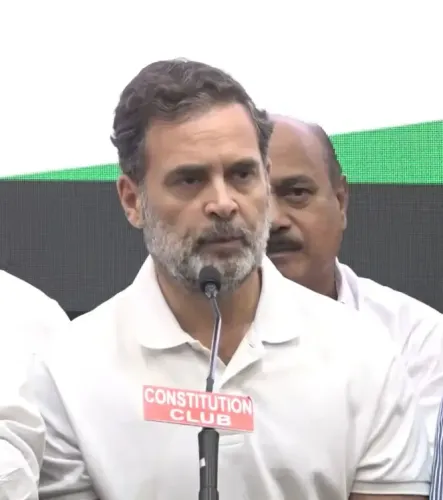
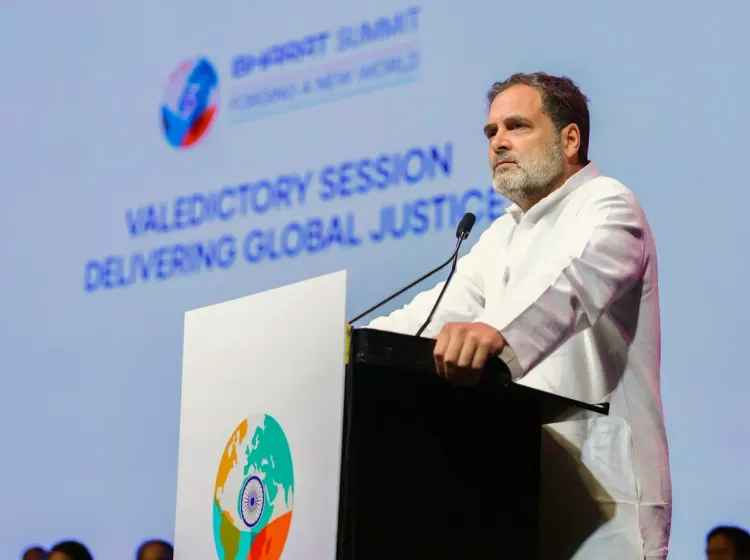
Congress leader and Leader of the Opposition in the Lok Sabha Rahul Gandhi on 14 November delivered a sharp critique of the ruling government at the Bharat Summit in Hyderabad, declaring that Indian democracy has been 'systematically dismantled' and asserting that it remains a vital global public good for more than 1.5 billion people. Gandhi told international delegates that Prime Minister Narendra Modi 'will be defeated' — not through anger or violence, but through what he called the 'eternal weapons of satya (truth) and ahimsa (non-violence).'
Apology to Barred International Delegates
Opening his address, Gandhi welcomed global guests but began with an unusual act — issuing an apology to several international delegates who were reportedly barred from attending by the government. He described this as a reflection of 'the harsh realities of the current political environment,' signalling the charged atmosphere surrounding the event.
Key Allegations: Electoral Integrity and Voter Rolls
Gandhi trained his sharpest fire on the integrity of recent electoral processes. He cited figures suggesting that 140 million voters — roughly 13 per cent of the electorate — were classified as 'non-existent or illegal' by the Election Commission of India (ECI), raising what he described as serious questions about the legitimacy of the general elections. He also pointed to events in Maharashtra, where, he alleged, an opposition lead in national polls was followed by a complete reversal in state assembly elections within three months, driven by the 'mysterious addition of seven million voters' favouring the ruling side. The ECI has not publicly responded to these specific claims.
The Bharat Jodo Yatra as a Counter-Strategy
Gandhi argued that despite facing what he described as 'mounting institutional pressure' — including 45 legal cases filed against him — the opposition discovered a powerful counter-strategy during the Bharat Jodo Yatra. The walk from Kanyakumari to Kashmir, he said, demonstrated that a direct, unmediated connection with ordinary citizens is more powerful than any 'controlled media apparatus or state-backed machinery.' This comes amid a broader opposition narrative that institutional spaces have been progressively narrowed over the past decade.
The 'Fascists vs Compassionate Majority' Framework
In a philosophical framing that drew wide attention, Gandhi described the world as divided between a 'small minority of arrogant, loud-voiced individuals who believe they know everything' — whom he termed 'fascists' — and a 'vast majority of compassionate people who listen, ask questions, and practise humility.' He traced what he called a 'decade of political shock' to the 2014 elections, arguing that the traditional economic model has since collapsed and been replaced by an 'unhealthy fusion of politics and business.'
Call for Global Solidarity Against Authoritarianism
Concluding his address, Gandhi called on 'like-minded global allies' to stand united against authoritarian trends worldwide. He framed India's democratic struggle not as a purely domestic contest but as a contribution to global democratic resilience — a framing consistent with his increasing outreach to international audiences. He pledged that the ruling administration would 'ultimately lose to love, compassion, and truth.'
Point of View
But it also hands the ruling party a ready 'foreign interference' counter-argument. The specific allegations — 140 million struck-off voters, a 7-million voter surge in Maharashtra — are serious enough to demand documentary scrutiny, yet they remain largely unverified in the public domain. What is notable is the ideological vocabulary Gandhi is now deploying: 'fascists versus compassionate majority' is a frame built for global audiences, not just domestic ones. Whether it moves votes in Bihar or Uttar Pradesh is a different question entirely.
NationPress
14 Nov 2026
Frequently Asked Questions
What did Rahul Gandhi say at the Bharat Summit in Hyderabad?
Gandhi declared that Indian democracy has been 'systematically dismantled' and is no longer functioning as it should. He alleged electoral irregularities, cited 140 million voters struck off rolls, and vowed that PM Modi 'will be defeated' through truth and non-violence.
What are the electoral fraud claims Rahul Gandhi made?
Gandhi claimed that 140 million voters — roughly 13% of the electorate — were categorised as non-existent or illegal by the Election Commission of India. He also alleged that seven million voters were mysteriously added to Maharashtra rolls ahead of assembly elections, reversing an opposition lead in that state.
Why did Rahul Gandhi apologise at the start of his address?
Gandhi apologised to several international delegates who were reportedly barred from attending the Bharat Summit by the government. He described this as reflecting 'the harsh realities of the current political environment.'
What is the significance of the Bharat Jodo Yatra in Gandhi's speech?
Gandhi cited the Bharat Jodo Yatra — the opposition's walk from Kanyakumari to Kashmir — as the moment the party discovered that direct, unmediated engagement with citizens outweighs any media or state machinery. He presented it as the opposition's core counter-strategy against institutional pressure.
How many legal cases does Rahul Gandhi say have been filed against him?
Gandhi stated that 45 legal cases have been filed against him, framing this as part of broader institutional pressure on the opposition. He said these have not deterred the Congress from continuing its political campaign.