Rahul Gandhi leads 300+ MPs' march to Election Commission
Synopsis
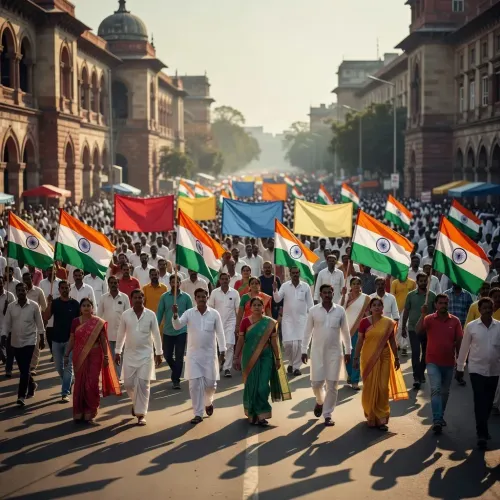
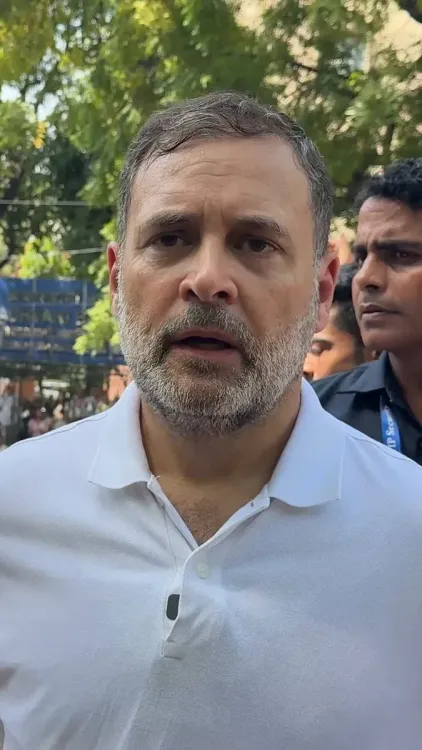
More than 300 Opposition MPs, led by Congress leader Rahul Gandhi, marched from Parliament to the Election Commission of India on October 6, 2026, but were stopped by police and denied a meeting with the Election Commissioners, triggering a sharp political confrontation.
Key Takeaways
Over 300 Opposition MPs marched from Parliament to the Election Commission of India on October 6, 2026 .
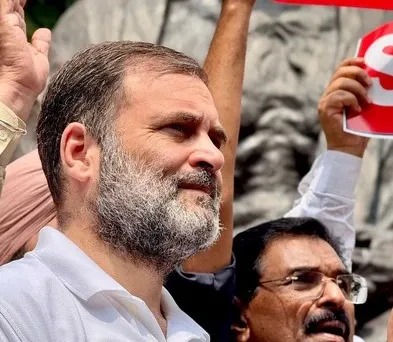
Rahul Gandhi , Leader of the Opposition in Lok Sabha, led the march and publicly flagged the confrontation on social media.
The Election Commissioners refused to meet the delegation despite its scale and stated democratic mandate.
Gandhi alleged that police stopped and threatened the marching MPs during the procession.
The march represents one of the largest Opposition delegations to approach the Election Commission in recent memory.
The incident raises constitutional questions about MP rights and access to autonomous bodies like the Election Commission of India .
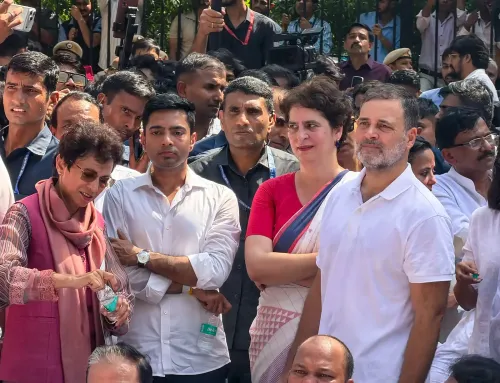
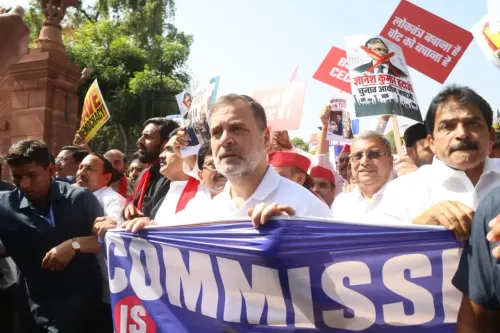
More than 300 Opposition MPs walked out of Parliament and marched toward the Election Commission of India on Tuesday, October 6, 2026 — a rare, large-scale show of democratic force that ended in a standoff when police blocked the procession and the Election Commissioners refused to meet them. Congress leader Rahul Gandhi, Leader of the Opposition in the Lok Sabha, led the march and went straight to social media with two pointed questions that framed the confrontation as a test of institutional accountability.
A march of 300 — and a door that stayed shut
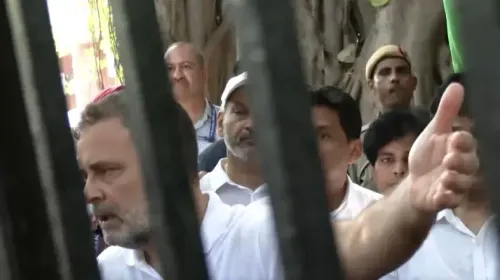
The procession, drawing MPs from across the Opposition bloc, made its way from the precincts of Parliament toward Nirvachan Sadan — the Election Commission's headquarters on Ashoka Road, New Delhi. The symbolism was deliberate: elected representatives of 'crores of Indians,' as Gandhi put it, walking to the doorstep of the constitutional body that oversees their elections. What they found instead was a police cordon and, ultimately, no audience with the Election Commissioners.
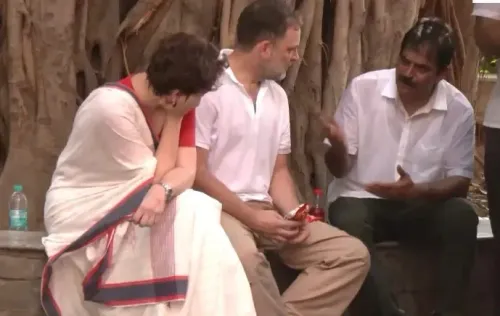
Gandhi's post flagged two specific grievances — the refusal of the Election Commissioners to receive the delegation, and the police's conduct in stopping and, he alleged, threatening the marching MPs. The combination of the two incidents turned what began as a democratic petition into a sharp political moment.
What the MPs' delegation was seeking
While the research record on the specific demand sheet presented by the delegation is limited, the scale of the march — more than 300 sitting MPs — signals that the Opposition's concerns were broad and coordinated, not a spontaneous protest. Opposition marches to the Election Commission have historically been triggered by grievances over electoral roll integrity, Electronic Voting Machine transparency, the conduct of scheduled elections, or the model code of enforcement. A delegation of this size represents a significant share of the total Opposition strength in both Houses of Parliament combined.
Police presence and the question of MP rights
The allegation that police stopped and 'threatened' serving Members of Parliament on a public march raises procedural questions that will likely reverberate beyond the day's headlines. MPs enjoy certain constitutional privileges and freedom of movement; any forcible obstruction of a parliamentary delegation on its way to meet a constitutional authority is, at minimum, politically combustible. Gandhi's framing — 'we represent crores of Indians' — places the obstruction not merely as an affront to individual MPs but as a barrier between citizens and an independent constitutional body.
The Election Commission of India, established under Article 324 of the Constitution, functions as an autonomous body. Its decision to not receive the delegation — or the circumstances under which that decision was made — will be closely scrutinised by both Opposition parties and constitutional observers in the days ahead.
When more than 300 MPs march together and still can't get through the door, the question stops being about one meeting — and starts being about who controls access to India's democratic institutions.
Point of View
And the refusal to receive them elevates the episode from protest to potential constitutional flashpoint. The dual allegation — police obstruction of sitting MPs and an unresponsive Election Commission — hands the Opposition a ready-made narrative about democratic institutions becoming inaccessible. For the ruling establishment, how it explains both the police conduct and the Commission's decision will determine whether this becomes a one-day story or a sustained accountability crisis heading into the next electoral cycle.
NationPress
6 Oct 2026
Frequently Asked Questions
Why did 300 Opposition MPs march to the Election Commission on October 6, 2026?
More than 300 Opposition MPs marched from Parliament to the Election Commission of India on October 6, 2026, to meet the Election Commissioners with what Rahul Gandhi described as concerns on behalf of 'crores of Indians.' The specific demands of the delegation were not detailed in the public post, but the scale of the march signals a broad, coordinated Opposition grievance.
Did the Election Commission meet the Opposition MPs?
No. According to Rahul Gandhi's post, the Election Commissioners refused to meet the delegation of over 300 MPs despite their march from Parliament.
Were MPs stopped by police during the march?
Yes. Rahul Gandhi alleged that police stopped and threatened the marching MPs on their way to the Election Commission headquarters at Nirvachan Sadan in New Delhi.
What is the Election Commission of India?
The Election Commission of India is an autonomous constitutional body established under Article 324 of the Constitution. It is responsible for administering elections to Parliament, state legislatures, and the offices of the President and Vice President.
Who is Rahul Gandhi?
Rahul Gandhi is a senior Congress leader, the Leader of the Opposition in the Lok Sabha, and an Indian National Congress MP elected from Rae Bareli constituency.