Rahul Gandhi leads 'March For Democracy' at Supreme Court
Synopsis
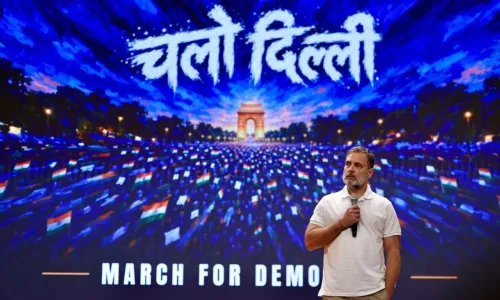
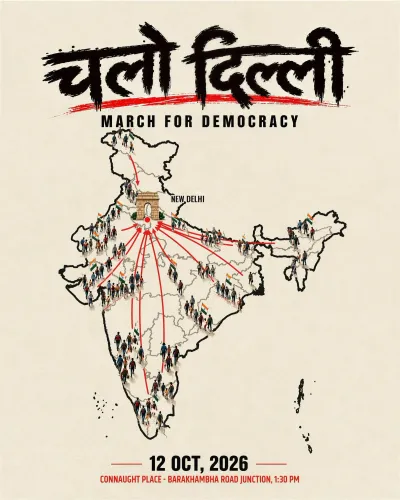
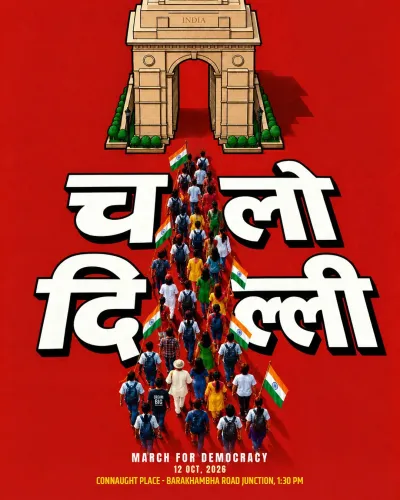
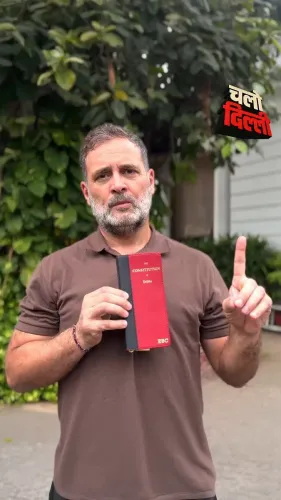
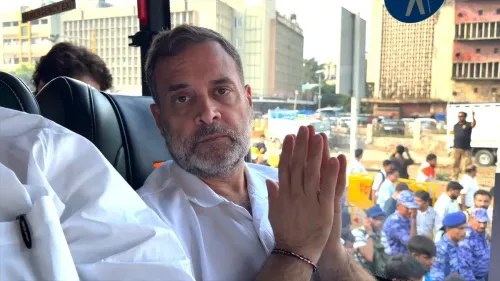
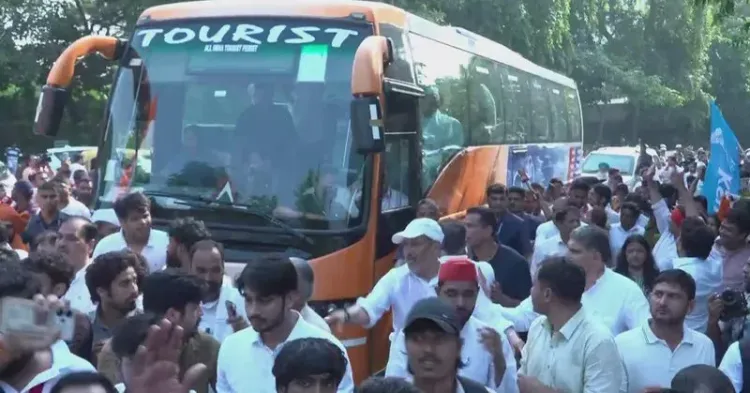
Congress leader Rahul Gandhi anchored a live-streamed 'March For Democracy' outside the Supreme Court in New Delhi on October 12, 2026, framing the demonstration as a constitutional challenge and broadcasting it directly to a national audience on X.
Key Takeaways
Rahul Gandhi , Leader of the Opposition and MP from Rae Bareli , led the 'March For Democracy' on October 12, 2026 .
The march was staged outside the Supreme Court of India, New Delhi — a venue chosen for its constitutional symbolism.
Gandhi live-streamed the event on X , bypassing traditional media to reach audiences directly.
The action continues a pattern of Congress-led mobilisations invoking threats to democratic institutions in 2025-26 .
The choice of the Supreme Court as a backdrop signals the opposition's intent to frame its grievances as matters of constitutional law, not merely partisan politics.
Opposition leader Rahul Gandhi took to the steps of India's highest court on Monday, October 12, 2026, anchoring a live-streamed 'March For Democracy' outside the Supreme Court of India, New Delhi — a demonstration that placed the judiciary's doorstep at the centre of the Congress party's latest push against the ruling establishment.
The Supreme Court as a protest backdrop
The choice of venue was deliberate and loaded with symbolism. By staging the march directly outside the Supreme Court, Gandhi and the Congress sought to frame their grievance not merely as a political dispute but as a constitutional one — a challenge to the state of democratic institutions themselves. Live-streaming the event on X amplified the reach beyond those physically present, turning a street demonstration into a national broadcast.
Congress's democracy narrative in 2026
The 'March For Democracy' fits into a pattern of opposition-led mobilisations that have intensified through 2025-26, with the Indian National Congress repeatedly invoking threats to constitutional values, press freedom, and judicial independence as rallying themes. As Leader of the Opposition in the Lok Sabha and MP from Rae Bareli, Gandhi has positioned himself as the principal voice of organised dissent, using high-visibility public actions to sustain momentum between parliamentary sessions.
What the live stream signals
Gandhi's decision to broadcast the march live on X rather than through traditional channels reflects the Congress's evolving media strategy — direct-to-audience, unmediated, and harder to ignore. A live stream from outside the Supreme Court carries an implicit message: that those marching believe the issues at stake are matters of law, not just politics, and that the public deserves to witness the moment in real time.
Whether the march translates into legal petitions, a parliamentary offensive, or remains a statement of solidarity, the image of opposition leaders assembled at the gate of the nation's apex court is one the Congress clearly intends to lodge in the public memory.
Point of View
Where the optics are harder for the treasury bench to dismiss. It signals that the opposition is willing to fight on symbolic terrain as much as legislative. Whether this translates into sustained legal and parliamentary action, or remains a media moment, will determine its long-term impact on the political conversation around institutional independence in India.
NationPress
12 Oct 2026
Frequently Asked Questions
What is Rahul Gandhi's 'March For Democracy'?
It is a protest march led by Congress leader Rahul Gandhi outside the Supreme Court of India in New Delhi on October 12, 2026 , aimed at highlighting what the opposition describes as threats to democratic institutions. The event was live-streamed on X.
Where was the March For Democracy held?
The march was held outside the Supreme Court of India in New Delhi , a venue selected to underscore the constitutional dimension of the opposition's concerns.
Why did Rahul Gandhi choose the Supreme Court as the venue?
The Supreme Court backdrop was a deliberate symbolic choice, framing the Congress's protest as a constitutional issue rather than a purely partisan one — implying that democratic institutions themselves are under threat.
Did Rahul Gandhi live-stream the March For Democracy?
Yes. Gandhi broadcast the march live on X , allowing a national audience to watch the demonstration in real time without traditional media intermediaries.
What is Rahul Gandhi's current political position?
Rahul Gandhi is the Leader of the Opposition in the Lok Sabha and Member of Parliament from Rae Bareli , representing the Indian National Congress .