Rahul Gandhi Slams Delhi BJP Minister Over Alleged Slapping Video
Synopsis
Rahul Gandhi condemned a Delhi BJP minister on September 27, 2026, over a viral video allegedly showing the minister slapping a youth filming a road-work event, calling it proof that a government certain of victory no longer fears voters and demands silence instead of consent.
Key Takeaways
Rahul Gandhi posted on September 27, 2026 , targeting a Delhi BJP minister over a video allegedly showing him slapping a young man who was filming a road-digging demonstration.
Gandhi framed the incident as one point in a pattern: questions on the street earn a slap, questions on paper leaks earn a baton, questions in Parliament get the mic cut.
He argued that governments no longer fear elections when they believe their victory is guaranteed — linking the behaviour to what he called vote theft .
Gandhi used the term andhbhakti (blind devotion) to describe what he says such governments demand from citizens in place of genuine consent.
The specific minister's identity and the exact circumstances of the video remain unverified by official sources.
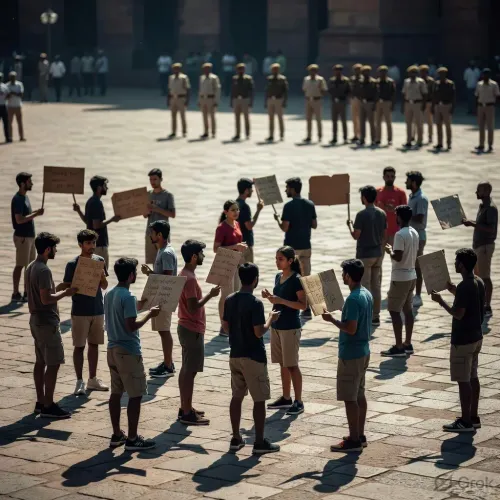
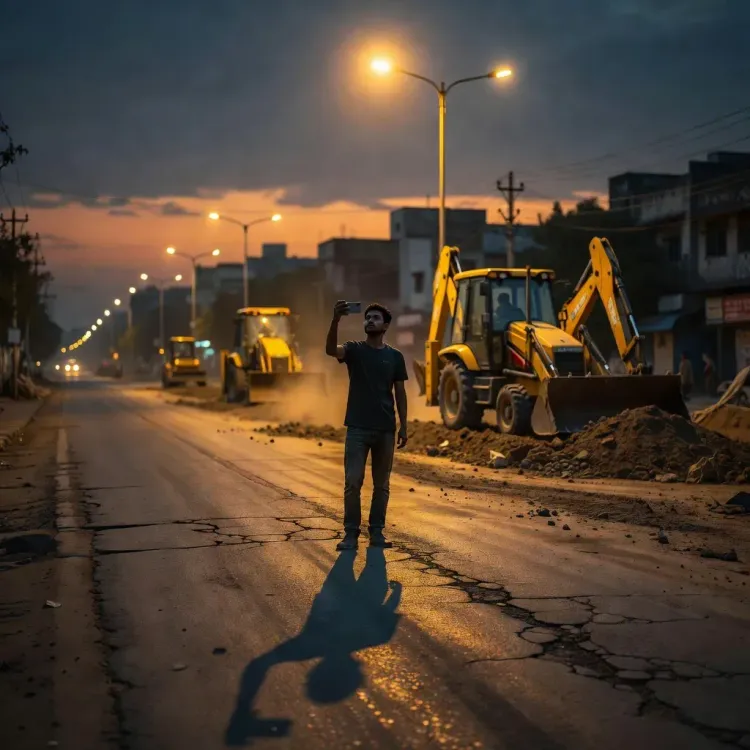
A video of an alleged slap — and the question it was meant to capture — has ignited a sharp political confrontation. Congress leader Rahul Gandhi on Sunday, September 27, 2026, called out a Delhi BJP minister over a clip reportedly showing the minister striking a young man who was filming a road-digging demonstration in front of him.
Gandhi translated the scene into a political indictment: 'His crime? He was filming. A road was being dug in front of the minister to be shown off, and the man had a camera in his hand.' In Hindi, Gandhi wrote: 'सड़क पर सवाल पूछो - थप्पड़। पेपर लीक पर सवाल पूछो - लाठी। संसद में सवाल पूछो - माइक बंद।' — 'Ask a question on the road: a slap. Ask about a paper leak: a baton. Ask in Parliament: the mic goes off.'
The pattern Gandhi is pointing to: silencing questions across arenas
Gandhi's post is structured as a deliberate escalation — from street to examination hall to Parliament. Each example is meant to form a link in the same chain: that questioning authority in any space now carries a cost. Congress has raised concerns repeatedly over alleged mic-muting and disruptions during parliamentary proceedings across multiple sessions since 2014, and the party has framed those incidents as part of a wider erosion of accountability.
Gandhi sharpened that framing on Sunday with one of his most direct formulations yet: 'These people do this because they no longer fear that an election can remove them.' He connected that fearlessness directly to what he described as vote theft: 'Vote theft buys not just the result — it buys the arrogance that follows.'
What Gandhi says 'vote theft' purchases — beyond the ballot
The closing lines of the post carry the sharpest edge. Gandhi argued that a government certain of victory stops seeking citizen consent and instead demands silence and 'blind devotion' — using the Hindi phrase 'अंधभक्ति' (andhbhakti), a term that has entered Indian political vocabulary as a pejorative for unquestioning loyalty to a leader or party. The framing shifts his critique from a single slap to a systemic claim about what unaccountable power looks like on the ground.
Gandhi has frequently used isolated incidents involving BJP functionaries as entry points into broader arguments about institutional erosion — a rhetorical method that his party has refined over several electoral cycles. Delhi residents and opposition parties are the immediate audience; the deeper target is the voter who may be asking whether their accountability mechanisms still function.
The identity of the minister in the video and the precise circumstances of the incident remain officially unverified. Whether Delhi authorities or the Delhi Assembly respond to the clip will determine how much institutional traction this moment gets — or whether it stays confined to social media's short memory.
Point of View
Viscerally relatable incident to a systemic claim about accountability collapse. By threading the street, the exam hall, and Parliament into one sentence, he attempts to make the slap feel like policy, not personal conduct. The 'vote theft buys arrogance' formulation is politically significant because it tries to give voters a causal explanation for why public officials feel insulated from consequence — an argument that could resonate in urban Delhi where citizen-state friction over civic infrastructure is already high. Whether the incident gains traction beyond social media will depend on whether a formal complaint is filed or the Delhi Assembly takes it up.
NationPress
28 Sept 2026
Frequently Asked Questions
What did Rahul Gandhi say about the Delhi BJP minister slapping video?
Rahul Gandhi said a Delhi BJP minister was seen in a video slapping a young man whose only 'crime' was filming the minister during a road-digging event, calling it evidence of a government that no longer fears voters.
Who is the Delhi BJP minister accused of slapping a youth in the video?
The specific identity of the minister shown in the video has not been officially confirmed or verified; Gandhi's post does not name the minister.
What does Rahul Gandhi mean by 'vote theft buys arrogance'?
Gandhi argued that when an election result is secured through illegitimate means, the winning party feels free to act without accountability — not just claiming a result but also the impunity that comes after it.
What is 'andhbhakti' and why did Gandhi use it?
'Andhbhakti' is a Hindi term meaning blind devotion, widely used in Indian political discourse as a pejorative for unquestioning loyalty to a leader. Gandhi used it to argue that unaccountable governments demand silence and blind allegiance rather than democratic consent.
Has the Delhi government responded to Rahul Gandhi's post about the slapping video?
No official response from Delhi authorities or the Delhi government had been publicly recorded at the time of this report.