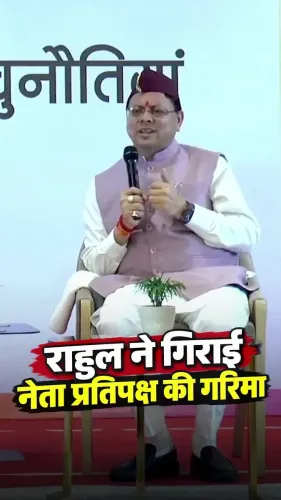
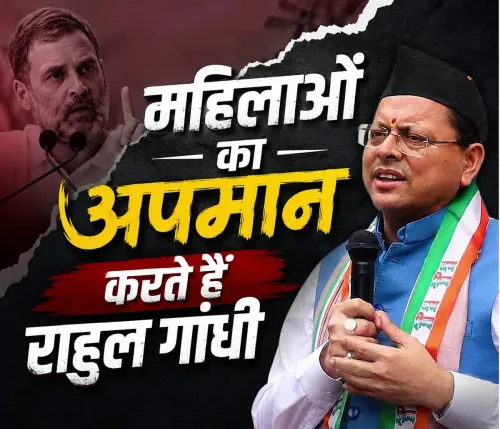
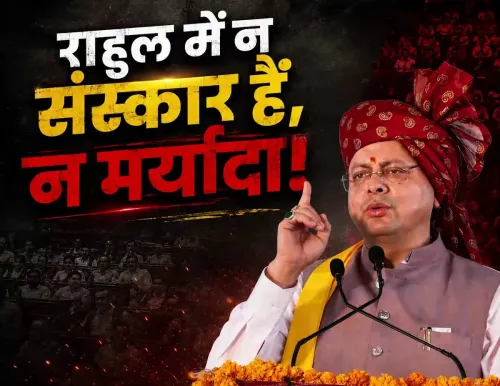
CM Dhami slams Rahul Gandhi over language used against PM Modi
Synopsis
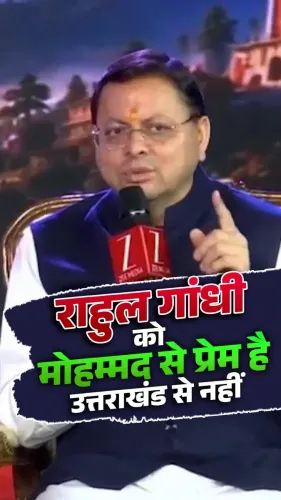
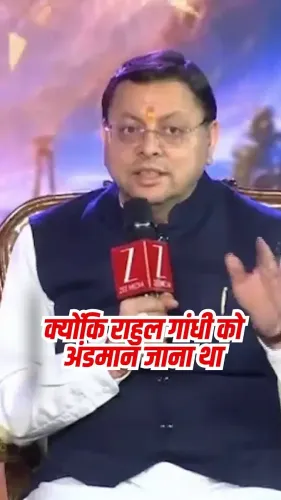
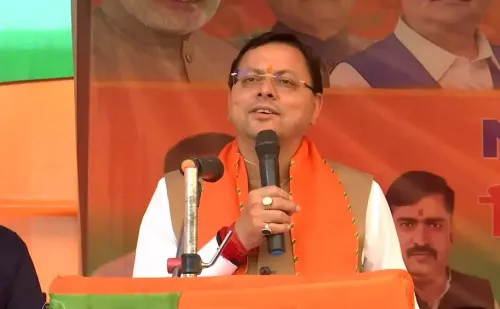
Uttarakhand CM Pushkar Singh Dhami publicly attacked Rahul Gandhi on August 13, 2026, accusing the Congress leader of using language against PM Modi that violates the norms of civilised political culture and predicting voters will continue to reject him.
Key Takeaways
CM Pushkar Singh Dhami posted a sharp rebuke of Rahul Gandhi on August 13, 2026 .
Dhami accused Gandhi of using language against PM Narendra Modi that is 'unacceptable in any civilised political culture.' He called Gandhi's rhetoric 'a blot on the decorum of Indian politics' rather than the language of India.
Dhami predicted that voters, who he said are watching Gandhi's words, values, and thinking, will continue to reject him.
The statement follows a broader BJP pattern of publicly challenging the tone of Congress leaders' remarks directed at the Prime Minister.
A sharp salvo from the hills of Uttarakhand landed in the middle of national political discourse on Thursday, August 13, 2026, as Uttarakhand Chief Minister Pushkar Singh Dhami publicly rebuked Congress leader Rahul Gandhi, accusing him of deploying language against Prime Minister Narendra Modi that Dhami called a 'stain on the dignity of Indian politics.'
In a post on X, CM Dhami wrote — translated from Hindi — that 'Rahul Gandhi's language is deteriorating day by day. The use of language of this level against the country's Prime Minister cannot be acceptable in any civilised political culture. This is not the language of India; rather, it is a blot on the decorum of Indian politics.' He added that the public is watching not just Gandhi's words, but his values and thinking — and that is precisely why, Dhami argued, 'the country has continuously rejected him and will continue to do so.'
BJP's pattern of calling out opposition rhetoric
Dhami's statement is not an isolated outburst — it fits squarely into a well-established playbook. BJP state leaders have repeatedly issued public rebukes whenever opposition figures, particularly from the Indian National Congress, direct pointed or colourful language at PM Modi. These exchanges tend to spike during electoral seasons and parliamentary sessions, when political temperature runs highest and every word becomes a campaign moment.
The pattern serves a dual purpose: it positions the ruling party as the defender of institutional dignity, and it turns the opposition's rhetoric into a liability. By framing Gandhi's language as a character issue rather than a policy disagreement, Dhami shifts the battlefield from substance to conduct — a move that historically resonates with a section of the Indian electorate.
Dhami's political weight behind the words
Pushkar Singh Dhami has served as Chief Minister of Uttarakhand since 2021 and is considered one of the more vocal BJP voices at the state level on national political matters. His decision to enter this particular exchange signals that the party intends to amplify the issue beyond a single news cycle. Whether Congress responds — and how sharply — will determine whether this remains a one-day story or escalates into a sustained war of words ahead of the next political contest.
For now, the lines are drawn. One side calls it unacceptable language. The other side will almost certainly call it political deflection. The audience — Indian voters — are, as Dhami himself noted, watching everything.
Point of View
Not merely a spontaneous reaction — by centering the attack on Gandhi's 'language' and 'values' rather than any specific policy disagreement, the BJP frames the opposition leader as temperamentally unfit rather than ideologically wrong. This is a well-worn but effective strategy: it keeps the conversation on character rather than governance. The timing and the medium — a public X post from a sitting Chief Minister — suggest the party wants this narrative amplified across the media ecosystem. If Congress does not respond swiftly with a counter-narrative, the charge risks sticking with undecided voters who prize decorum in public life.
NationPress
28 Sept 2026
Frequently Asked Questions
What did CM Dhami say about Rahul Gandhi?
Uttarakhand Chief Minister Pushkar Singh Dhami accused Rahul Gandhi of using increasingly poor language against Prime Minister Narendra Modi, calling it 'a blot on the decorum of Indian politics' and predicting voters will continue to reject Gandhi.
Why did Dhami attack Rahul Gandhi's language?
Dhami argued that using demeaning language against a sitting Prime Minister is unacceptable in any civilised political culture, and that Gandhi's words, values, and thinking are being judged by the public.
What is Pushkar Singh Dhami's political position?
Pushkar Singh Dhami is the Chief Minister of Uttarakhand and a senior leader of the Bharatiya Janata Party (BJP), having held the top post in the state since 2021.
Is this the first time BJP has criticised Rahul Gandhi's language?
No. BJP leaders at both the national and state level have repeatedly criticised the language and tone used by Rahul Gandhi and other Congress leaders when addressing or referring to Prime Minister Modi — a pattern that intensifies during electoral periods.
How did Congress respond to Dhami's statement?
As of the time of this report, no formal response from Congress spokespersons had been issued in reply to CM Dhami's specific post.