Rahul Gandhi Thanks Stalin, Vows Joint Fight for Federalism
Synopsis
Congress leader Rahul Gandhi on June 19, 2026, thanked Tamil Nadu Chief Minister M.K. Stalin for his wishes and reaffirmed their shared resolve to defend India's Constitution and federalism, calling it a fight for 'the very soul of our democracy' that they would wage together until victory.
Key Takeaways
Rahul Gandhi publicly thanked Tamil Nadu Chief Minister M.K.
Stalin on June 19, 2026 , for warm wishes in a post on X.
Gandhi pledged that he and Stalin share a 'resolve to defend the idea of India, our Constitution, and federalism.' The Congress-DMK alliance was formally constituted as part of the broader opposition bloc publicly launched in July 2023 .
Tamil Nadu has raised federal concerns through state assembly resolutions since 2019 , covering GST compensation and resource-sharing disputes.
Congress and DMK jointly opposed the farm laws of 2020 on the grounds that states were inadequately consulted.
Gandhi's use of the Tamil honorific Thiru for Stalin underscores deliberate cultural outreach to a key southern political partner.
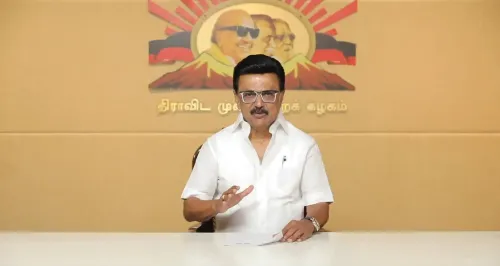
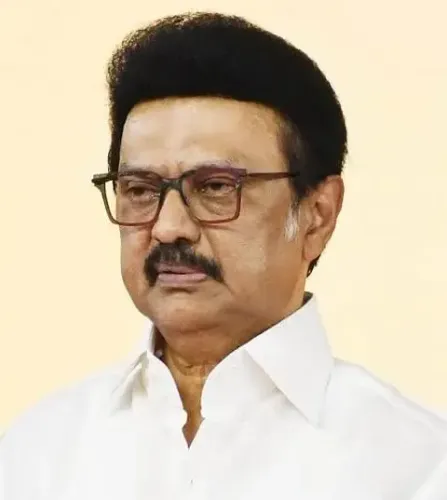
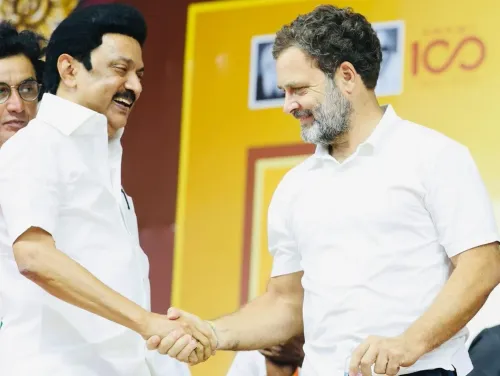
Congress leader and Leader of the Opposition Rahul Gandhi on Friday, June 19, 2026, publicly thanked Tamil Nadu Chief Minister M.K. Stalin for his warm wishes, reaffirming their shared commitment to defending India's Constitution, federalism, and what he called 'the very soul of our democracy.'
Context
Responding to a message from DMK president and Tamil Nadu Chief Minister M.K. Stalin, Gandhi wrote on X: 'Thank you, Thiru M.K. Stalin, for your warm wishes. Our shared resolve to defend the idea of India, our Constitution, and federalism will continue to guide us — this is the fight for the very soul of our democracy, and we will wage it together, until we win.'
The use of the honorific Thiru — a Tamil equivalent of 'Mr' — signals deliberate cultural respect, underscoring the Congress leader's effort to nurture ties with a key southern ally. While the precise occasion for Stalin's original message could not be independently confirmed, the exchange reflects the ongoing political coordination between Congress and the Dravida Munnetra Kazhagam (DMK).
Policy Backdrop
The two parties have long shared ground on federal concerns. Tamil Nadu has, since 2019, passed multiple assembly resolutions raising objections over GST compensation, river water disputes, and what successive state governments have described as central overreach. Congress and DMK also jointly opposed the farm laws of 2020, arguing that the legislation bypassed meaningful consultation with states — a structural violation of federal principles.
The broader opposition alliance, publicly launched in July 2023, brought Congress and DMK together alongside other regional parties on a shared platform centred on constitutional and federal questions. Gandhi's post on June 19 reinforces that this alliance remains an active political force, not merely an electoral arrangement.
Stakeholders and Impact
The exchange carries significance beyond symbolism. State governments led by non-BJP parties — particularly in the south — have increasingly coordinated on issues of fiscal federalism, including the devolution of central taxes and the terms of centrally sponsored schemes. For Tamil Nadu, which contributes disproportionately to central tax revenues relative to its share of transfers, these grievances carry both economic and political weight.
For the Indian National Congress, maintaining a robust relationship with the DMK is strategically vital: the DMK commands significant electoral ground across Tamil Nadu's 39 Lok Sabha seats, and its alignment with Congress strengthens the opposition's southern flank. Gandhi's framing of the partnership as a fight for 'the idea of India' also signals an attempt to elevate state-level federal concerns into a national constitutional narrative.
What's Next
Political observers will watch for any joint opposition statements or coordinated action in upcoming state assembly sessions and parliamentary discussions on centre-state fiscal matters. With several state elections on the horizon and parliamentary debates on resource-sharing expected, the Congress-DMK alignment articulated in this exchange is likely to be tested and, if sustained, could shape opposition strategy in the months ahead. Gandhi's closing phrase — 'we will wage it together, until we win' — leaves little ambiguity about the intent to maintain this coalition through future political contests.
Point of View
Gandhi is attempting to give the alliance ideological durability beyond any single election cycle. The invocation of 'the soul of democracy' also signals that the opposition intends to contest the BJP not merely on policy but on the terrain of institutional legitimacy. Whether this rhetorical solidarity translates into coordinated legislative or electoral action will be the real measure of the alliance's strength.
NationPress
19 Sept 2026
Frequently Asked Questions
Why did Rahul Gandhi thank M.K. Stalin?
Rahul Gandhi thanked Tamil Nadu Chief Minister M.K. Stalin for sending him warm wishes, reaffirming their shared commitment to defending India's Constitution and federalism in a post on X on June 19, 2026.
What is the Congress-DMK alliance about?
The Congress and DMK are part of a broader opposition alliance launched in July 2023, united primarily around defending federalism, constitutional values, and opposing what they describe as central overreach by the BJP-led government.
What federal issues has Tamil Nadu raised with the Centre?
Tamil Nadu has, since 2019, passed assembly resolutions raising concerns over GST compensation, river water disputes, and the terms of centrally sponsored schemes, arguing that the state's share of central tax transfers is inadequate relative to its contributions.
What does 'Thiru' mean in Rahul Gandhi's post?
'Thiru' is a Tamil honorific equivalent to 'Mr' or 'Sir.' Gandhi's use of the term when addressing M.K. Stalin is widely read as a gesture of cultural respect toward his southern political ally.
What is Rahul Gandhi's current political position?
Rahul Gandhi is the Leader of the Opposition in the Lok Sabha and a Member of Parliament from Rae Bareli, representing the Indian National Congress.