Why is Stalin Criticizing AIADMK and BJP?
Synopsis
In a powerful address, M.K. Stalin, Tamil Nadu's Chief Minister and DMK President, condemns AIADMK and BJP for their betrayal of state interests. He calls on DMK members to intensify their efforts ahead of the 2026 Assembly elections, invoking the legacy of the party's founder, Anna, to inspire a renewed commitment to social justice and state autonomy.
Key Takeaways
Stalin's critique of AIADMK and BJP highlights perceived betrayals of Tamil Nadu.
Invocation of Anna's legacy serves as motivation for DMK supporters.
The DMK government is focused on progressive governance and social welfare.
Stalin's call for action aims to prepare the party for 2026 Assembly elections .
Continued emphasis on state rights and linguistic identity .
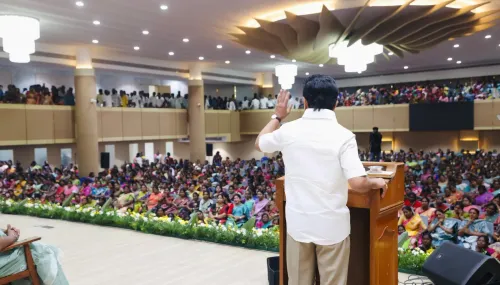
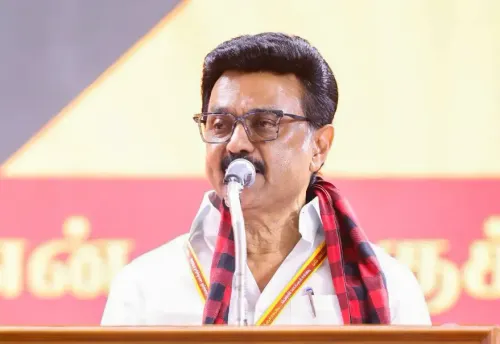
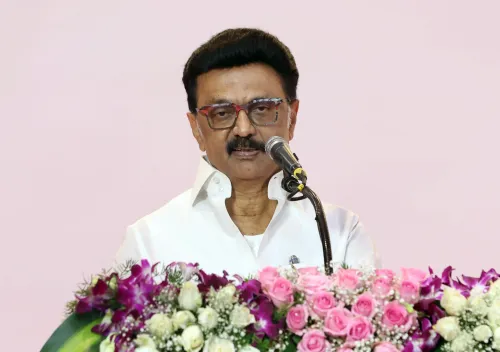
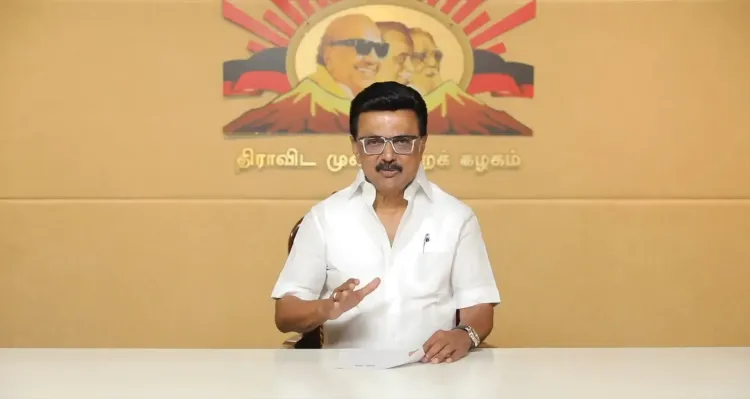
Chennai, Feb 2 (NationPress) In a fierce critique of the AIADMK and BJP, Tamil Nadu's Chief Minister and DMK President M.K. Stalin on Monday accused both parties of betraying the interests of the state, undermining federalism, and failing to act against the imposition of Hindi and Sanskrit.
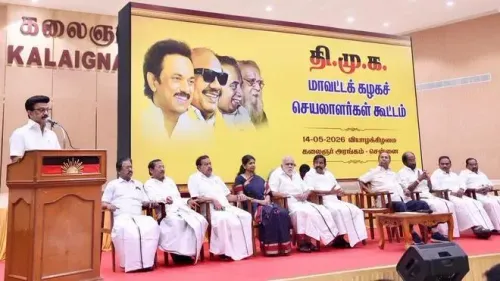
In a comprehensive letter to party activists, he urged DMK members to amplify their efforts and lay the groundwork for triumph in the upcoming 2026 Assembly elections.
Stalin pointed out that the BJP is actively working to erode Tamil Nadu's linguistic identity, incite religious division, and diminish state autonomy, while the AIADMK remains a passive onlooker to these actions.
He stated, "A party that claims to honor Anna’s legacy has abandoned its self-respect and neglected to defend Tamil Nadu," blaming the AIADMK for enabling the BJP's agenda through its silence and compliance.
Reaffirming the DMK’s ideological foundation, Stalin celebrated the legacy of Perarignar C.N. Annadurai, the party's founder, whom he hailed as a monumental rationalist leader who gave the state its name—Tamil Nadu—and devised a political strategy centered on social justice, self-respect, and people-centric governance.
Stalin reminded that Anna established the DMK in 1949 and led it to power within 18 years due to widespread public support.
He emphasized Anna’s landmark reforms, including the legalization of Self-Respect marriages, the staunch rejection of Hindi imposition, the introduction of the Tamil–English two-language policy, and the renaming of the state. He noted that although Anna’s term as Chief Minister was cut short by cancer, his impact on Tamil society remains significant.
After Anna’s death, Stalin emphasized, it was Muthamizh Arignar Kalaignar M. Karunanidhi who sustained the movement during its toughest times.
For five decades, Kalaignar led the DMK, held the Chief Minister position five times, defended democratic principles during the Emergency, and built the foundations of modern Tamil Nadu. Even under oppression, he ensured Anna’s ideals lived on through peaceful protests, resistance to press censorship, and consistent public engagement.
Looking to the present, Stalin claimed the DMK government has liberated Tamil Nadu from the “dark decade” of AIADMK governance and set the state on a progressive trajectory.
Despite what he called systematic marginalization by the BJP-led Union government, Tamil Nadu continues to experience robust growth in economy, industry, education, and infrastructure—a progress even recognized in Central government evaluations.
Stalin affirmed that the Dravidian Model government is dedicated to social welfare, state rights, and inclusive development. He urged party members to renew their commitment to the ideals of Anna and Kalaignar, announcing a peaceful march to Anna Square on Tuesday, commemorating Anna’s death anniversary.
"We will persist in our efforts on Anna’s path. We will engage with the people, stand with them, and, with their backing, reclaim victory in the Assembly elections," he proclaimed.
Point of View
I observe that Stalin's statements reflect a deeper political strategy aimed at mobilizing DMK supporters while exposing the perceived weaknesses of his opposition. This rhetoric is essential not just for rallying support but also for reinforcing the party's ideological foundations as they prepare for future elections. The focus on Anna's legacy serves as a rallying point for both history and future aspirations.
NationPress
7 Oct 2026
Frequently Asked Questions
What did M.K. Stalin criticize during his address?
M.K. Stalin criticized the AIADMK and BJP for betraying Tamil Nadu's interests, undermining federalism, and remaining silent on the imposition of Hindi and Sanskrit.
What is the significance of Anna's legacy in Stalin's address?
Anna's legacy symbolizes the DMK's commitment to social justice, self-respect, and state autonomy, serving as an inspiration for party members as they prepare for the 2026 elections.
What actions did Stalin call for from DMK cadre?
Stalin called on DMK cadre to intensify their efforts and renew their pledge to Anna and Kalaignar's ideals, aiming for victory in the upcoming Assembly elections.