Rahul Gandhi Targets Modi, Shah, Bhagwat, Doval, Gyanesh Over Democracy
Synopsis
Leader of Opposition Rahul Gandhi accused PM Modi of destroying Indian democracy and youth prospects, naming Modi, Shah, Bhagwat, Doval, and Gyanesh Kumar as individuals who will be 'brought to justice' — signalling a sweeping Opposition accountability campaign.
Key Takeaways
Rahul Gandhi posted a direct political attack on October 10, 2026 , accusing PM Narendra Modi of destroying democracy and the future of India's youth.
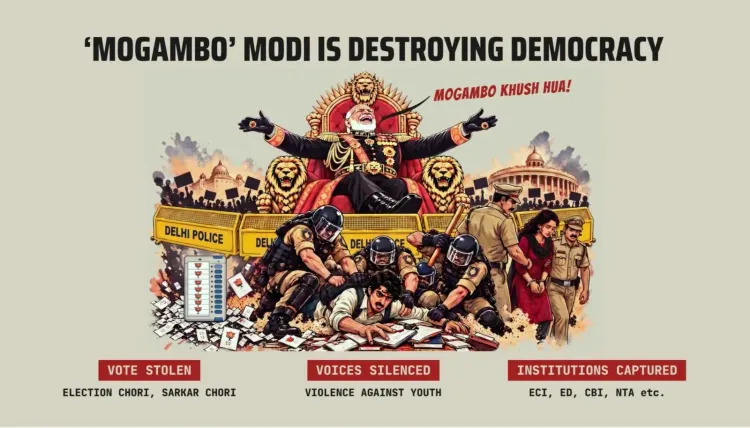
Gandhi used the Bollywood villain reference 'Mogambo' to characterise Modi, a culturally loaded term implying unchecked, villainous authority.
Five individuals were named explicitly: Narendra Modi, Amit Shah, Mohan Bhagwat, Ajit Doval, and Gyanesh Kumar .
The inclusion of the RSS chief, the NSA, and the Chief Election Commissioner alongside the PM and Home Minister signals a multi-institutional critique.
Gandhi framed the issue as a generational one, tying democratic erosion directly to the future of India's youth .
The post's absolute language — 'no power on earth' — suggests a sustained accountability campaign rather than a one-off statement.
In a sharp, unambiguous political salvo, Congress leader and Leader of the Opposition Rahul Gandhi on Saturday, October 10, 2026, accused Prime Minister Narendra Modi of destroying Indian democracy and the future of the country's youth — and warned that accountability would come, naming five individuals by name.
The charge: 'Mogambo Modi' and the destruction of democracy
Gandhi invoked the name 'Mogambo' — the iconic Bollywood villain from the 1987 film Mr. India, a cultural shorthand in India for unchecked, villainous power — to characterise Prime Minister Modi. The post stated plainly: 'Mogambo Modi has destroyed democracy and the future of India's Youth.' The framing is deliberate: it positions the ruling establishment not merely as a political rival but as an existential threat to constitutional order and generational opportunity.
Five names, one accountability warning
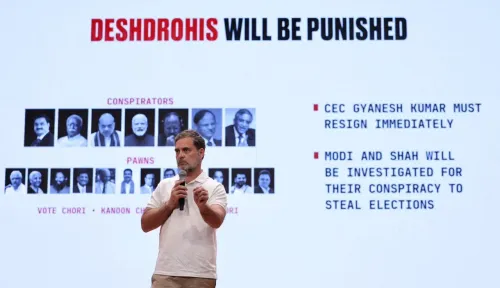
Gandhi's post went further than a generalised attack. He named five individuals specifically: Prime Minister Narendra Modi, Home Minister Amit Shah, RSS chief Mohan Bhagwat, National Security Advisor Ajit Doval, and a fifth figure identified as Gyanesh Kumar — widely understood in political circles to refer to the Chief Election Commissioner. The inclusion of the Election Commission's head alongside the RSS chief and senior security establishment figures signals that Gandhi's critique spans electoral institutions, security structures, and ideological organisation simultaneously.
The language of the warning was absolute: 'There is no power on earth that can stop' these five from being 'brought to justice.' In Opposition political rhetoric, such formulations typically signal a sustained, coordinated accountability campaign rather than a one-off statement.
Youth, democracy, and the Opposition's running theme
The reference to 'India's Youth' is not incidental. Congress and Gandhi have consistently anchored their political messaging around youth unemployment, examination irregularities, and shrinking institutional space for dissent — arguments that resonate with a demographic that forms the largest share of India's electorate. Framing democratic erosion as a youth issue sharpens the political edge: it converts an abstract constitutional argument into a lived, economic grievance.
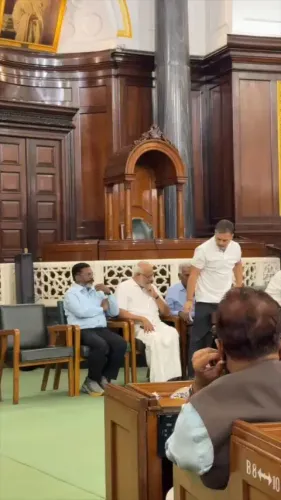
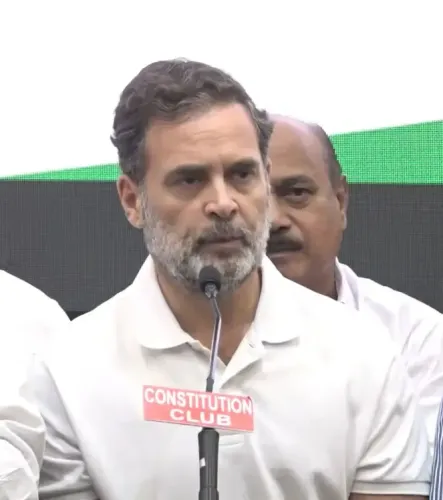
The post was accompanied by an image — the specifics of which were not independently described — suggesting the message was packaged for visual amplification across social media platforms.
Whether this post marks the opening of a formal Opposition offensive or stands as a standalone statement of intent, one thing is clear: Rahul Gandhi has drawn a very public line, named the figures he holds responsible, and staked his political credibility on the promise of accountability.
Point of View
Security establishment, ideological organisation, and electoral institution — reflects a Congress strategy of personalising accountability rather than directing fire at abstract 'the government.' By invoking youth and democracy together, the party is attempting to fuse a constitutional argument with an economic grievance, broadening its coalition beyond committed Opposition voters. The 'Mogambo' framing is a calculated cultural move: it is instantly recognisable, carries no ambiguity, and travels on social media without translation. The naming of the Chief Election Commissioner alongside the RSS chief is the most politically consequential element — it signals that Congress intends to contest the neutrality of electoral institutions as a central campaign theme going forward.
NationPress
10 Oct 2026
Frequently Asked Questions
Why did Rahul Gandhi call Modi 'Mogambo'?
'Mogambo' is the name of a famous Bollywood villain from the 1987 film Mr. India, used in Indian popular culture as shorthand for a power-hungry, unaccountable antagonist. Gandhi used the reference to characterise PM Modi as someone exercising power destructively and without democratic restraint.
Who are the five people Rahul Gandhi named in his post?
Gandhi named Prime Minister Narendra Modi, Home Minister Amit Shah, RSS chief Mohan Bhagwat, National Security Advisor Ajit Doval, and Gyanesh Kumar — widely understood to refer to the Chief Election Commissioner of India.
What did Rahul Gandhi mean by 'brought to justice'?
Gandhi's phrase 'brought to justice' signals a political and potentially legal accountability campaign by the Opposition, though the post does not specify the mechanism or timeline for such accountability.
Why did Rahul Gandhi link democracy with India's youth?
Congress has consistently argued that democratic erosion has direct consequences for young Indians — through unemployment, shrinking institutional space, and compromised examination systems — making the youth framing a way to connect constitutional concerns to everyday economic realities.
What is the political significance of naming the Chief Election Commissioner?
Including the Chief Election Commissioner in a list of individuals to be 'brought to justice' is a significant escalation, as it signals that the Congress party intends to formally contest the neutrality and functioning of India's electoral institutions as a core political argument.