Giriraj Singh hails Railways' first live heart transport on Vande Bharat
Synopsis
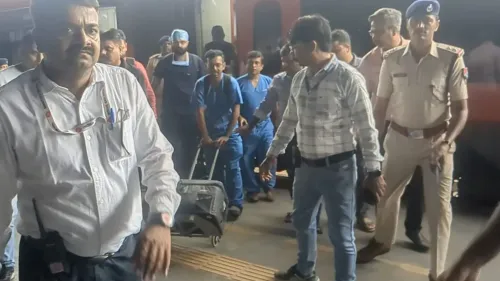
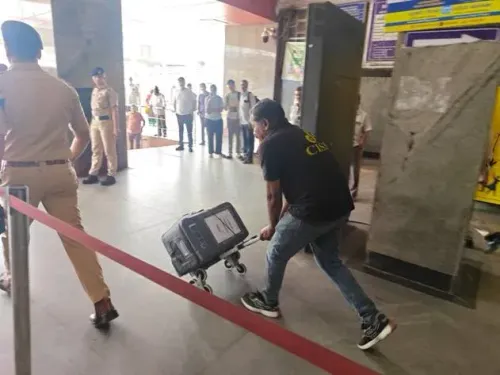
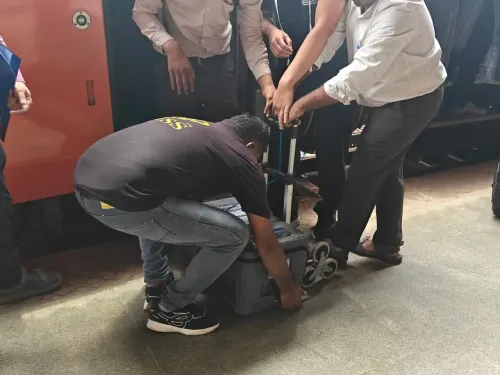
Union Textiles Minister Giriraj Singh on August 1, 2026 hailed Indian Railways for conducting its first-ever live heart transport aboard the Vande Bharat Express, marking a new frontier in using high-speed rail infrastructure for critical medical logistics.
Key Takeaways
Giriraj Singh shared the milestone on August 1, 2026 , calling it a historic achievement for Indian Railways.
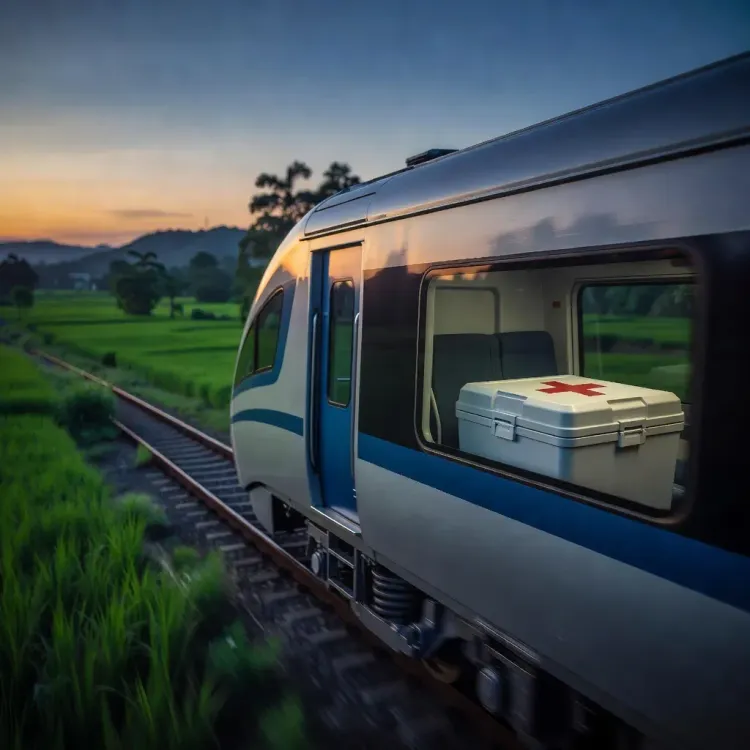
The Vande Bharat Express was used for the first time to transport a live human heart, a critically time-sensitive organ.
A donated heart remains viable for only four to six hours , making speed of transit a life-or-death variable.
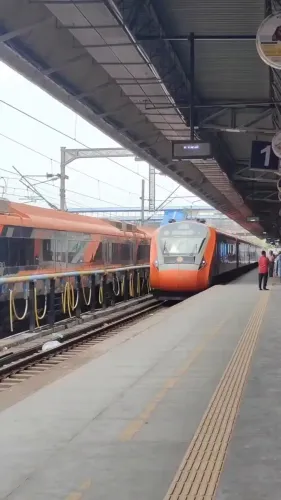
The Vande Bharat Express , first launched in 2019 on the New Delhi–Varanasi route, can reach speeds of up to 160 km/h .
The development signals a potential new role for India's semi-high-speed rail network as a critical medical logistics corridor.
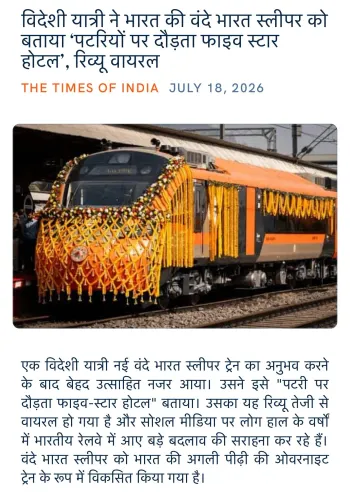
A beating heart, a racing train, and a race against time — Union Textiles Minister Giriraj Singh on Saturday, August 1, 2026, celebrated a landmark moment in Indian medical and rail history: the first-ever live heart transport aboard the Vande Bharat Express, India's flagship semi-high-speed train.
Sharing the news on X, the minister wrote: 'भारतीय रेलवे ने रचा इतिहास, वंदे भारत एक्सप्रेस से पहली बार किया गया लाइव हार्ट ट्रांसपोर्ट' — 'Indian Railways has created history, with a live heart transported for the first time on the Vande Bharat Express.' The post, shared via the NaMo App, underscores the political significance the ruling establishment attaches to this convergence of infrastructure and public health.
Why speed on rails can mean life or death
Organ transplants operate on brutal timelines. A donated human heart remains viable for transplant for only four to six hours after retrieval — every minute of transit counts. Road corridors, long the default for organ logistics in Indian cities, are vulnerable to traffic snarls and unpredictable delays. Rail, when fast and reliable enough, offers a controlled, high-speed alternative that can dramatically compress that window. The Vande Bharat Express, first launched in 2019 on the New Delhi–Varanasi route, was built on indigenous technology as part of Indian Railways' modernization push. Capable of reaching speeds up to 160 km/h, it has since expanded across dozens of routes nationwide. Using it as a medical courier — for the most time-sensitive cargo imaginable — marks a qualitative leap in how the network is being reimagined.From passenger comfort to critical care corridor
This is not the first time Indian Railways has been pressed into emergency medical service. Green corridors — cleared road stretches for organ transport — have been a staple of state governments for years. But deploying a scheduled semi-high-speed train for a live organ marks a new chapter: the rail network as an active node in the healthcare supply chain, not just a passenger mover. For Indian Railways, which operates one of the world's largest rail networks and serves over 13 million passengers daily, the move signals an appetite to integrate its upgraded infrastructure into national public-service delivery — a direction consistent with the government's broader connectivity agenda. If this pilot proves replicable, it could reshape organ logistics on inter-city corridors where Vande Bharat services already run — giving transplant teams a fast, predictable, weather-independent option that road transport simply cannot guarantee.Point of View
Becoming a medical lifeline adds a powerful new political and policy narrative. It also quietly advances the case for further route expansion of Vande Bharat services, with health connectivity now joining economic connectivity as a justification. Whether this becomes a formal, institutionalised protocol — or remains a one-off — will determine whether it is a genuine policy shift or a well-timed headline.
NationPress
15 Sept 2026
Frequently Asked Questions
What is the Vande Bharat Express live heart transport?
Indian Railways conducted its first-ever transport of a live human heart aboard the Vande Bharat Express, using the semi-high-speed train's speed and reliability to move the organ within its narrow viability window for transplant.
Why is transporting a live heart by train significant?
A human heart remains viable for transplant for only four to six hours after retrieval, making every minute of transit critical. High-speed rail offers a faster and more predictable alternative to road transport, which is vulnerable to traffic delays.
When was the Vande Bharat Express first launched?
The Vande Bharat Express was first inaugurated in 2019 on the New Delhi–Varanasi route as part of Indian Railways' modernization programme using indigenous technology.
Why did Giriraj Singh comment on this railway milestone?
As a senior BJP minister and MP, Giriraj Singh regularly amplifies government achievements on social media. Sharing this milestone reflects the political importance the ruling establishment places on Vande Bharat as a symbol of national progress.
Could Vande Bharat be used regularly for organ transport in India?
This event opens the possibility of using Vande Bharat corridors as a formal medical logistics channel, though whether it becomes standard protocol depends on coordination between the Ministry of Railways and healthcare authorities.