Rajasthan CM Bhajanlal Celebrates Tribal Art as State's Identity
Synopsis
The Chief Minister's Office of Rajasthan, in a post attributed to CM Bhajanlal Sharma, declared tribal art and rich cultural traditions the state's 'unique identity and great strength,' linking the message to the ongoing #SevaSankalpAbhiyan outreach drive.
Key Takeaways
The Chief Minister's Office of Rajasthan posted on 27 September 2026 , attributing the message to CM Bhajanlal Sharma .
The post declared tribal art and cultural traditions the state's 'unique identity and great strength' ( विशिष्ट पहचान और बड़ी ताकत ).
The statement was posted under the #SevaSankalpAbhiyan hashtag, indicating a broader government outreach campaign.
Rajasthan's key tribal communities include the Bhil, Meena, and Garasia peoples, known for distinctive art forms.
BJP-led state governments in Rajasthan have consistently emphasised indigenous heritage as part of cultural and welfare messaging.
Concrete policy follow-up — such as budget allocations or tribal art schemes — has not yet been announced.
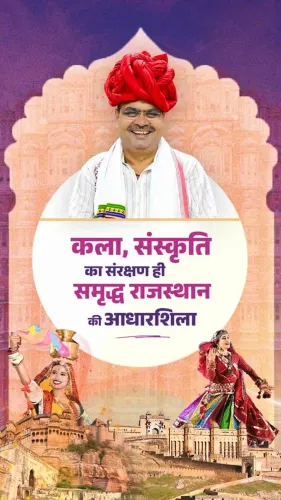
Rajasthan's tribal art traditions and centuries-old cultural heritage are more than folklore — they are, in the words of the state's top office, the very identity and strength of the land. The Chief Minister's Office of Rajasthan invoked this pride on Sunday, 27 September 2026, in a post attributed to Chief Minister Bhajanlal Sharma, under the banner of the #SevaSankalpAbhiyan initiative.
The post, in Hindi, reads: 'जनजातीय कला एवं समृद्ध सांस्कृतिक परंपराएँ, प्रदेश की विशिष्ट पहचान और बड़ी ताकत हैं' — 'Tribal art and rich cultural traditions are the unique identity and great strength of the state.' Brief as the statement is, it lands in a deliberate context: a governing party positioning itself as custodian of Rajasthan's indigenous heritage.
Bhil, Meena, Garasia — the communities behind the canvas
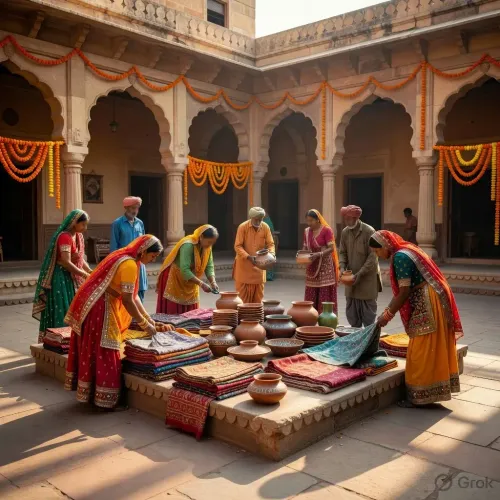
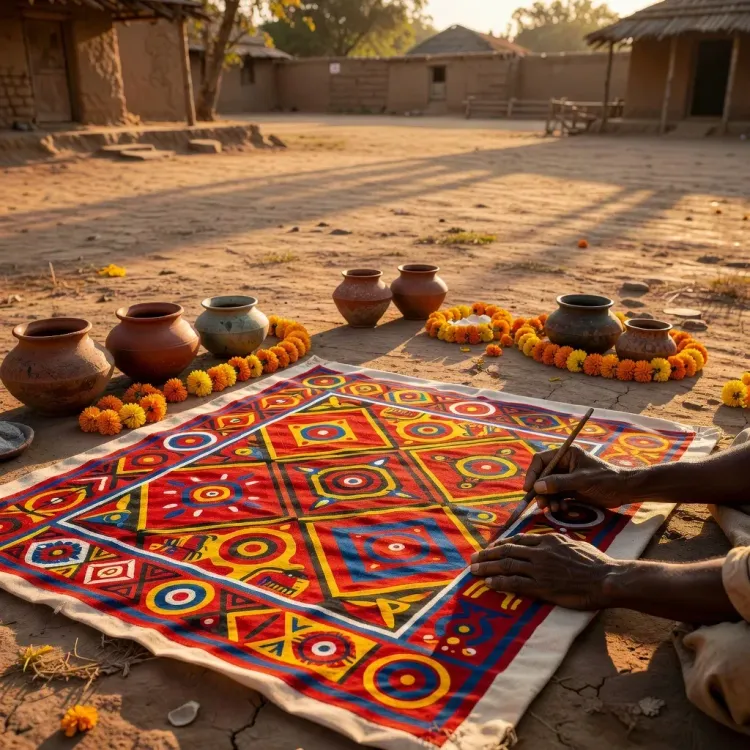
Rajasthan is home to some of India's most visually distinctive tribal communities — the Bhil, Meena, and Garasia peoples among them. Their art forms, from vibrant Bhil paintings to intricate embroidery and ritual craft, carry ecological and spiritual knowledge encoded across generations. These traditions have found growing audiences in both domestic tourism and international craft markets, making cultural affirmation from the state's highest office more than symbolic.
Indian state governments have long used proclamations of tribal heritage to anchor tourism campaigns and handicraft policy. BJP-led administrations in Rajasthan have continued this emphasis, folding indigenous art promotion into broader welfare and outreach messaging. Sunday's post is consistent with that pattern — but the hashtag signals something more structured.
What #SevaSankalpAbhiyan signals
The #SevaSankalpAbhiyan hashtag links the cultural message to what appears to be a broader outreach drive under CM Bhajanlal Sharma, who has led the state since December 2023. The specific scope and activities of the campaign have not been independently detailed in public records, but the framing — 'seva' (service) and 'sankalp' (resolve) — is characteristic of BJP-run state governments that blend welfare delivery with cultural identity politics.
For Rajasthan's tribal folk artists, recognition from the Chief Minister's Office carries practical weight: it signals potential policy attention in areas like direct procurement, state-festival platforms, and handicraft export promotion. Whether Sunday's post is a prelude to concrete announcements — a budget allocation, a tribal art festival, a scheme — remains to be seen in the weeks ahead.
Rajasthan's indigenous traditions have survived centuries. Whether they thrive in the next decade depends less on salutes from high offices and more on the policy specifics that follow them.
Point of View
Which is a deliberate political signal. Linked to the #SevaSankalpAbhiyan drive, it suggests the party is using cultural affirmation as an entry point for wider outreach ahead of possible state-level events. The real test will be whether this sentiment translates into measurable policy — direct artist support, platform access, or export facilitation — or remains a headline without a budget line.
NationPress
27 Sept 2026
Frequently Asked Questions
What did the Rajasthan Chief Minister's Office post on 27 September 2026?
The Rajasthan CMO posted a statement attributed to CM Bhajanlal Sharma declaring that tribal art and rich cultural traditions are the state's 'unique identity and great strength,' using the hashtag #SevaSankalpAbhiyan.
What is the SevaSankalpAbhiyan campaign in Rajasthan?
#SevaSankalpAbhiyan appears to be a government outreach initiative under CM Bhajanlal Sharma. The exact scope and activities of the campaign have not been confirmed in publicly available records.
Which tribal communities are prominent in Rajasthan?
The Bhil, Meena, and Garasia communities are among Rajasthan's most prominent tribal groups, known for distinctive art forms including Bhil paintings, embroidery, and ritual craft.
Who is Bhajanlal Sharma?
Bhajanlal Sharma is the Chief Minister of Rajasthan from the BJP, having assumed office in December 2023. His administration has maintained a focus on cultural outreach and welfare programs.
Does the Rajasthan government have schemes for tribal art promotion?
Rajasthan has historically supported tribal handicrafts through state festivals, procurement drives, and tourism initiatives. No new specific scheme was announced in this post; possible policy follow-up under SevaSankalpAbhiyan is being watched.