Rajasthan CM Office: Every Visitor Carries Hope, Honour It

Synopsis
The Chief Minister's Office of Rajasthan posted a pointed governance message on October 30, urging officials that every citizen who visits a government office carries hope, and that official behaviour and decisions must strengthen public trust in the administration.
Key Takeaways
The Chief Minister's Office of Rajasthan posted a governance message on October 30, 2026 emphasising citizen-first administrative conduct.
The post stated that every person entering a government office carries hope, and officials' behaviour, work style and decisions can strengthen public trust.
The message was addressed to Chief Minister Bhajan Lal Sharma , who has led Rajasthan since December 2023 after the BJP's assembly election victory.
The post was hashtagged #आपणो_अग्रणी_राजस्थान ('Our Pioneering Rajasthan'), a recurring branding theme of the current state government.
No new scheme or policy was announced; the post is a tone-setting directive on frontline administrative conduct.
Every person who walks into a government office arrives carrying hope — and how officials receive them, work with them, and decide for them can either strengthen or shatter public trust in the state. That message came directly from the Chief Minister's Office of Rajasthan on Friday, October 30, 2026, in a pointed call for responsive, dignified administration addressed to Chief Minister Bhajan Lal Sharma.
The post, shared under the hashtag #आपणो_अग्रणी_राजस्थान ('Our Pioneering Rajasthan'), stated: 'Every person who comes to the office comes with some hope. In such a situation, the behaviour, working style and decisions of officials can strengthen that person's trust in the administration.'
A Simple Sentence With Administrative Weight
Stripped to its core, the message is a reminder to the state's bureaucratic machinery that a citizen at a government counter is not an inconvenience — they are the very reason the office exists. The framing is deliberate: it does not announce a new scheme or cite a statistic, but sets a tone from the top, asking officials to treat each interaction as a trust-building moment. Under Chief Minister Bhajan Lal Sharma, who took charge in December 2023 after the BJP's victory in the Rajasthan assembly elections, the administration has repeatedly returned to this theme of citizen-centric governance. Messaging from the Chief Minister's Office has consistently positioned official conduct — not just policy — as the foundation of administrative legitimacy.Why Bureaucratic Behaviour Is a Political Signal in Rajasthan
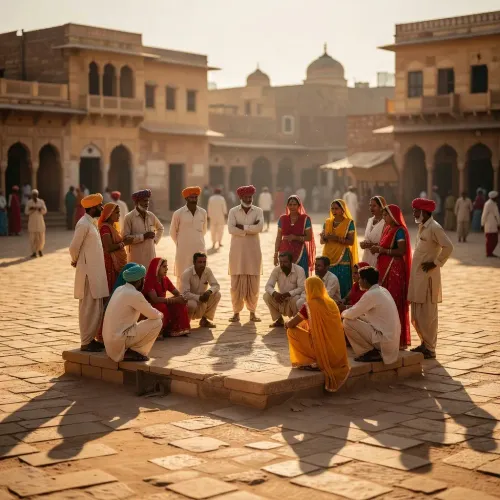
In a state as vast and rural as Rajasthan, the district office or the tehsil counter is often the only face of government that a citizen ever sees. For millions — whether they are applying for a land record, seeking a widow's pension, or registering a grievance — the attitude of a single official defines their entire experience of the state. This reality makes the Chief Minister's Office statement more than an aspirational note. It is a calibration signal directed at the administrative chain, reinforcing that citizen trust is a governance metric, not just a talking point. The broader national discourse around 'minimum government, maximum governance' finds its most tangible expression not in budget documents but in exactly these frontline interactions. Rajasthan watchers may look for follow-through in the form of internal circulars, official training modules, or public grievance review mechanisms that operationalise this intent in the months ahead. If the hope citizens carry into government offices is met with indifference, the cost is not just administrative — it is political. And the Chief Minister's Office knows it.Point of View
The post signals that accountability for official behaviour flows from the top, reinforcing a command-and-culture approach. This fits squarely within the BJP's 'maximum governance' narrative, but the real test is whether such messaging is followed by measurable accountability mechanisms, training mandates, or grievance redressal reforms. Without institutional follow-through, it risks remaining a motivational post rather than a governance directive.
NationPress
30 Oct 2026
Frequently Asked Questions
What did the Rajasthan Chief Minister's Office post on October 30 2026?
The CMO posted a governance message stating that every citizen who visits a government office comes with hope, and that officials' behaviour, work style and decisions can either build or erode public trust in the administration.
Who is Bhajan Lal Sharma and why was he tagged?
Bhajan Lal Sharma is the Chief Minister of Rajasthan, serving since December 2023 after the BJP won the state assembly elections. He was tagged as the head of government to whom the message is directed and attributed.
What does Aapno Agrani Rajasthan mean?
'Aapno Agrani Rajasthan' translates to 'Our Pioneering Rajasthan' and is a branding hashtag used by the current BJP state government to frame its governance vision for the state.
Is this a new policy or scheme announcement by the Rajasthan government?
No. The post does not announce a new policy, scheme, or programme. It is a tone-setting statement on administrative conduct and the importance of citizen trust-building by frontline officials.
Why does official behaviour at government offices matter in Rajasthan?
In a large and largely rural state like Rajasthan, district and tehsil offices are often the primary — and sometimes only — point of contact between citizens and the government. How officials treat visitors directly shapes public perception of governance quality.