Rajasthan CM Sharma Pushes Land Rights Alongside Housing Drive
Synopsis
The Chief Minister's Office of Rajasthan highlighted on 13 August 2026 that the Bhajan Lal Sharma government has been accelerating work on both housing delivery and formal land-rights recognition, targeting landless families and the urban poor under the 'Aapno Agrani Rajasthan' banner.
Key Takeaways
The Rajasthan CMO posted on 13 August 2026 crediting CM Bhajan Lal Sharma with fast-tracking both housing and land-rights work.
The state is pursuing a twin-track approach : shelter delivery paired with formal land title (patta) regularisation.
Key beneficiaries are landless families and the urban poor across Rajasthan.
Bhajan Lal Sharma has led the BJP government in Rajasthan since December 2023 .
The initiative is branded under the hashtag #आपणो_अग्रणी_राजस्थान ('Our Leading Rajasthan').
Specific beneficiary numbers and new scheme details are expected in state budget and annual progress reports.
Shelter alone is not enough — and Rajasthan's government is making that point with action. The Chief Minister's Office of Rajasthan posted on 13 August 2026 that the state has been working swiftly not just on housing, but on securing land rights for its residents, crediting Chief Minister Bhajan Lal Sharma for the push under the banner of Aapno Agrani Rajasthan ('Our Leading Rajasthan').
Housing and land titles: Rajasthan's twin-track welfare push
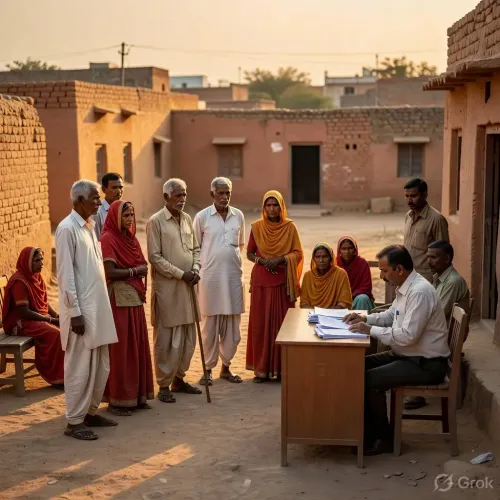
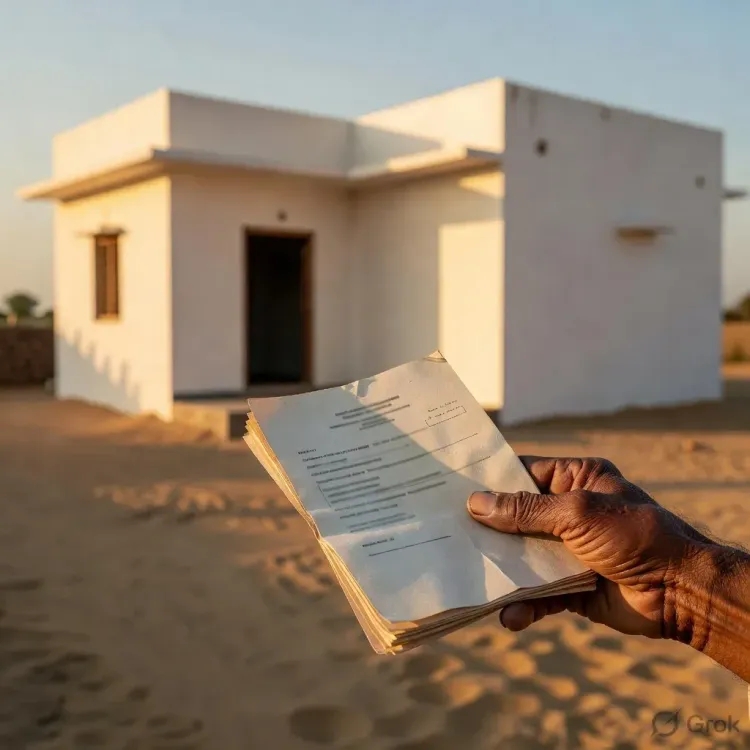
The post, brief but pointed, signals a deliberate policy framing: housing without land tenure leaves beneficiaries on shaky ground. By pairing shelter delivery with formal land-rights recognition — through mechanisms such as patta (title deed) distribution — the state is targeting a chronic vulnerability among landless families and the urban poor. Indian state governments have long pursued this twin-track approach, running central housing programmes alongside state-level land title regularisation to give beneficiaries both a roof and a legal claim to the ground beneath it.
Bhajan Lal Sharma's welfare agenda since December 2023
Bhajan Lal Sharma took charge as Chief Minister of Rajasthan in December 2023, leading the Bharatiya Janata Party government in the state. Successive Rajasthan administrations have grappled with rural and urban landlessness, and the current government has positioned land-rights delivery as a core welfare commitment alongside housing. The hashtag #आपणो_अग्रणी_राजस्थान ('Aapno Agrani Rajasthan') frames these efforts as part of a broader identity for the state — one that aims to lead on social welfare benchmarks.
The convergence of housing and land rights matters because tenure security is what converts a house into a lasting asset. A family with a home but no title deed remains exposed to eviction and cannot leverage the property for credit or economic mobility. Rajasthan's stated focus on both pillars addresses precisely that gap.
Specific beneficiary numbers and scheme names for this phase remain to be detailed in official budget documents and annual progress reports — the real measure of how fast 'fast' actually is.
Point of View
The Sharma government is signalling a more durable welfare model than shelter-only programmes — one that addresses tenure insecurity, a persistent gap in Indian social policy. This framing also serves a political purpose: differentiating the BJP administration's record in Rajasthan ahead of future electoral cycles by pointing to tangible, legally enforceable benefits. The 'Aapno Agrani Rajasthan' branding suggests the government is building a cohesive welfare narrative rather than announcing isolated schemes. Whether the pace matches the rhetoric will depend on the beneficiary numbers that official reports eventually surface.
NationPress
14 Aug 2026
Frequently Asked Questions
What is Rajasthan doing for land rights in 2026?
The Rajasthan government under Chief Minister Bhajan Lal Sharma has stated it is accelerating work on both housing delivery and formal land-rights recognition — such as patta (title deed) distribution — for landless families and the urban poor.
Who is Bhajan Lal Sharma?
Bhajan Lal Sharma is the Chief Minister of Rajasthan, representing the Bharatiya Janata Party. He assumed office in December 2023.
What does 'Aapno Agrani Rajasthan' mean?
'Aapno Agrani Rajasthan' translates from Rajasthani/Hindi as 'Our Leading Rajasthan' — a branding slogan used by the current state government to frame its development and welfare agenda.
Why does land title matter alongside housing?
A house without a formal land title leaves residents vulnerable to eviction and unable to use the property as collateral for loans. Pairing housing with patta (title deed) regularisation gives beneficiaries legally secure tenure and greater economic mobility.
Which families benefit from Rajasthan's housing and land-rights drive?
The primary beneficiaries are landless families and the urban poor in Rajasthan who lack both shelter and formal ownership documents for the land they occupy.