Trump Closes $800 Duty-Free Import Loophole
Synopsis
President Trump announced the closure of the $800 de minimis customs exemption, a decade-old rule that allowed foreign shippers to send packages into the US duty-free with minimal scrutiny. The White House framed it as shutting down a major loophole exploited by tariff cheats.
Key Takeaways
The de minimis exemption under Section 321 of the Tariff Act allowed packages valued under $800 to enter the US duty-free.
The threshold was raised from $200 to $800 by the Trade Facilitation and Trade Enforcement Act of 2015 , effective 2016 .
President Trump announced the exemption has been closed, calling it a loophole for 'tariff cheats.' Foreign direct-to-consumer e-commerce platforms that relied on duty-free US deliveries face the biggest disruption.
Domestic US retailers had long argued the exemption created an unfair competitive disadvantage.
Follow-on Federal Register notices and updated Section 321 procedures will determine the practical enforcement timeline.
A customs rule that let foreign shippers flood American doorsteps with duty-free packages for over a decade has been shut down — and President Donald J. Trump is making sure everyone knows who pulled the plug.
The $800 Door That Stayed Open Too Long
At the centre of the fight is the de minimis exemption, codified under Section 321 of the Tariff Act. The rule allowed any individual package valued under $800 to enter the United States completely duty-free, with minimal customs scrutiny. That threshold was not always so generous — the Trade Facilitation and Trade Enforcement Act of 2015 more than tripled it from $200 to $800, effective 2016, opening a channel that foreign direct-to-consumer shippers quickly learned to exploit at scale.
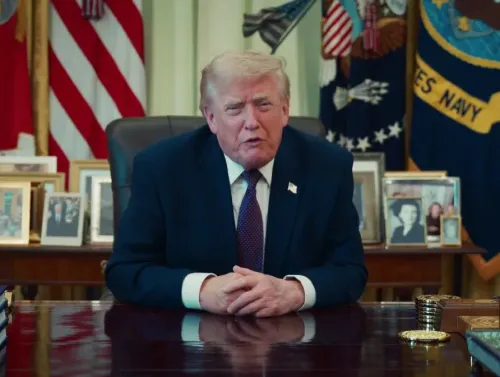
Trump's statement put it bluntly: 'For years, Foreign Shippers could send packages worth up to $800 into our Country, DUTY FREE, NO TARIFF, far less scrutiny. It became a giant loophole for TARIFF Cheats... So, we CLOSED IT.'
Why the Loophole Became a Flashpoint
The surge in cross-border e-commerce after 2016 turned the de minimis threshold into a pressure point for US retailers and domestic manufacturers, who argued they were competing against foreign platforms that paid no import duties on millions of low-value shipments. Successive administrations examined tightening the rule, but the exemption survived — until now, according to the White House.
The tariff-enforcement argument is straightforward: if a foreign shipper splits a large, tariffable consignment into dozens of sub-$800 packages, each parcel clears customs duty-free. Critics called it structural tariff arbitrage built into law. Domestic industries called it an unlevel playing field. Washington called it a loophole. Trump has now called it closed.
What Closing It Means for Shippers and Shoppers
Foreign e-commerce platforms that built business models around duty-free direct-to-consumer delivery to American addresses face the sharpest disruption. US consumers accustomed to cheap, tariff-free overseas parcels may see prices adjust. Domestic retailers, long vocal about the competitive disadvantage, stand to gain if enforcement holds.
The move sits squarely within the Trump administration's broader tariff-forward trade posture — a pattern of using customs mechanisms to rebalance what the White House frames as decades of asymmetric trade arrangements. Watch for Federal Register notices or updated Section 321 procedures that will determine exactly how and when the exemption ends in practice.
The loophole lasted a decade. The question now is whether the door stays shut.
Point of View
Targeting a structural gap that survived multiple administrations. By framing it as an anti-cheating measure rather than a straightforward tariff hike, the White House is attempting to build broad domestic political support — nobody defends 'loopholes.' The real test is implementation: executive proclamations on customs procedure have historically faced legal and logistical challenges, and the scale of low-value parcel volume makes enforcement genuinely complex. For India, which has its own export interest in small-parcel e-commerce to the US, this is a development worth tracking closely.
NationPress
14 Aug 2026
Frequently Asked Questions
What is the de minimis exemption that Trump closed?
The de minimis exemption, under Section 321 of the US Tariff Act, allowed packages valued under $800 to enter the United States completely duty-free with minimal customs checks. The threshold was raised from $200 to $800 in 2016.
Why did Trump call the $800 import rule a loophole?
Trump argued that foreign shippers exploited the rule to send goods into the US without paying tariffs, effectively bypassing trade duties that would apply to larger shipments. The White House labelled it a tool for 'tariff cheats.'
How does closing the de minimis exemption affect Indian exporters?
Indian businesses that ship small-value packages directly to US consumers — particularly in textiles, handicrafts, and e-commerce — could face new duties, raising costs and potentially reducing price competitiveness in the American market.
Which foreign companies are most affected by the de minimis closure?
Foreign e-commerce platforms and direct-to-consumer shippers that built logistics models around duty-free sub-$800 deliveries to US addresses face the sharpest impact. US domestic retailers are expected to benefit from the change.
What happens next after Trump closes the duty-free import loophole?
Federal Register notices and updated Section 321 customs procedures will set the practical enforcement rules and timelines. Congressional action could also codify or modify the change.