Trump signs customs order to tighten import scrutiny, target tariff evaders
Synopsis
Trump's new customs order extends his border-security framework to trade itself — tighter bonds, deeper disclosures, and a 'good standing' test that could ban repeat fentanyl importers. Navarro pegs the revenue upside at $20-30 billion a year, but the bigger signal is regulatory: foreign exporters, including from India and China, now face a heavier compliance load to access the US market.
Key Takeaways
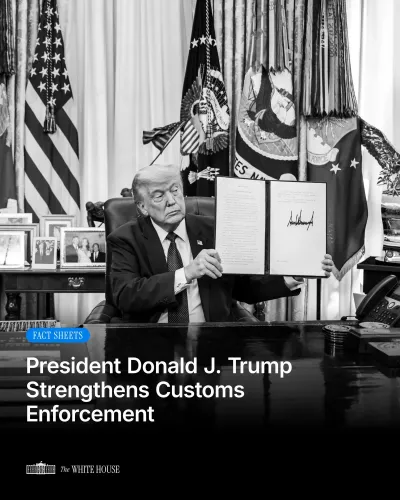
President Donald Trump signed a sweeping customs enforcement executive order on 4 June 2025 .
DHS must revise importer eligibility rules within 180 days , including higher bonds and ownership disclosures.
A new 'good standing' rule could bar firms caught importing fentanyl or contraband.
Trade advisor Peter Navarro projected revenue of $20-30 billion a year from the order.
Foreign exporters must file documentation with home customs authorities within 90 days before shipping to the US.
The order targets forced labour imports, transhipment, undervaluation and misclassification.
US President Donald Trump on 4 June 2025 signed a sweeping executive order to overhaul customs enforcement, imposing stricter requirements on foreign importers and cracking down on tariff evasion, forced labour imports and supply-chain fraud. The move signals tougher oversight for companies shipping goods into the United States and forms a central pillar of the administration's trade enforcement push.
What the order mandates
The order directs federal agencies to revamp customs procedures, expand importer disclosures, strengthen audits and penalties, and close what the administration called longstanding loopholes that let firms dodge duties, mask ownership structures and bypass US trade laws.
“Customs enforcement is essential to the national security, foreign policy, and economy of the United States,” the executive order states, adding that “systemic inefficiencies, loopholes, insufficient enforcement mechanisms, and outdated processes have created opportunities for malign actors to evade Federal law.”
Stricter rules for importers of record
The Department of Homeland Security has been directed to revise importer eligibility rules within 180 days. Changes include higher bond coverage, expanded ownership disclosures and additional information on import volumes, business affiliations and domestic assets.
Foreign importers face sharper scrutiny, with the administration arguing they pose unique enforcement challenges because assets and key personnel sit overseas. The order bars foreign importers from certain informal entry procedures and layers additional conditions on formal entries.
'Good standing' and fentanyl crackdown
A new “good standing” requirement means companies found to have illegally imported fentanyl, precursor chemicals or other contraband could lose the right to import into the US. Customs brokers and freight forwarders will also face enhanced vetting, with risk-based compliance tiers built on enforcement history and audit outcomes.
US Customs and Border Protection Commissioner Rodney Scott, speaking at the White House before the signing, said the administration was extending its border security playbook to trade. “This is literally taking the same principles and applying them to trade to protect American industry,” Scott said, adding that countries and actors “undercutting” US import-export rules and tariffs would be stopped.
Revenue projections and trade fraud
Trump's trade advisor Peter Navarro claimed the initiative would generate significant revenue. “What we're going to do here with the EO… that's about a $20 billion to $30 billion a year EO you're going to get,” Navarro said, adding the focus would be on fentanyl, unhealthy products, counterfeits and tariff evaders.
The order also prioritises enforcement against forced labour imports, illegal transhipment, undervaluation and misclassification of goods, while expediting seizure and disposal of non-compliant shipments. Within 90 days, foreign exporters will be required to file documentation with their own customs authorities before shipping to the US.
Why it matters
White House Staff Secretary Will Scharf said the order was designed to ensure importers accurately report goods and properly account for duties. The directive comes as Trump's second-term trade agenda leans heavily on tariffs, supply-chain security and a revival of domestic manufacturing — a continuation of arguments he has made since returning to office about shielding American industries from unfair competition.
For exporters in India, China and other major trading partners, the tighter compliance regime could mean higher documentation costs, longer clearance timelines and greater legal exposure in the months ahead.
Point of View
Not just the rates. The 'good standing' test and 180-day DHS overhaul could quietly do more to reshape importer behaviour than another headline tariff hike. Navarro's $20-30 billion revenue claim deserves scepticism; past customs enforcement upgrades have routinely undershot projections. For Indian exporters, the real story is the 90-day foreign documentation mandate — a back-door extraterritorial reach that few capitals have publicly addressed.
NationPress
24 Oct 2026
Frequently Asked Questions
What does Trump's new customs executive order do?
Signed on 4 June 2025, the order overhauls US customs enforcement by tightening importer eligibility, raising bond and disclosure requirements, and creating a 'good standing' regime. It also targets tariff evasion, forced labour imports, fentanyl smuggling and supply-chain fraud.
How will the order affect foreign importers and exporters?
Foreign importers will be barred from certain informal entry procedures and face additional conditions on formal entries into the US. Foreign exporters will, within 90 days, need to file documentation with their own customs authorities before shipping to the United States.
How much revenue is the order expected to generate?
Trump's trade advisor Peter Navarro projected the order would generate $20 billion to $30 billion a year. The estimate is tied to reduced customs fraud, tighter tariff collection and a crackdown on counterfeit and contraband goods.
What is the 'good standing' requirement for importers?
Under the new rule, companies found to have illegally imported fentanyl, precursor chemicals or other contraband could lose the ability to import goods into the US. The order also calls for risk-based compliance tiers built on enforcement history and audit results.
When will the new customs rules take effect?
The Department of Homeland Security has 180 days to revise importer eligibility rules, while foreign exporter documentation requirements kick in within 90 days. Enhanced vetting of customs brokers and freight forwarders will roll out in parallel.