Rajasthan CMO: Sharma expands diaspora network to 51 chapters
Synopsis
The Chief Minister's Office of Rajasthan said the state expanded the Rajasthan Foundation to 51 chapters — 25 national and 26 international — under Chief Minister Bhajanlal Sharma, up from 12 inactive chapters in 2023, while forming a new department and district cells for the diaspora.
Key Takeaways
The Chief Minister's Office of Rajasthan on 26 November 2026 listed three years of diaspora outreach under CM Bhajanlal Sharma.
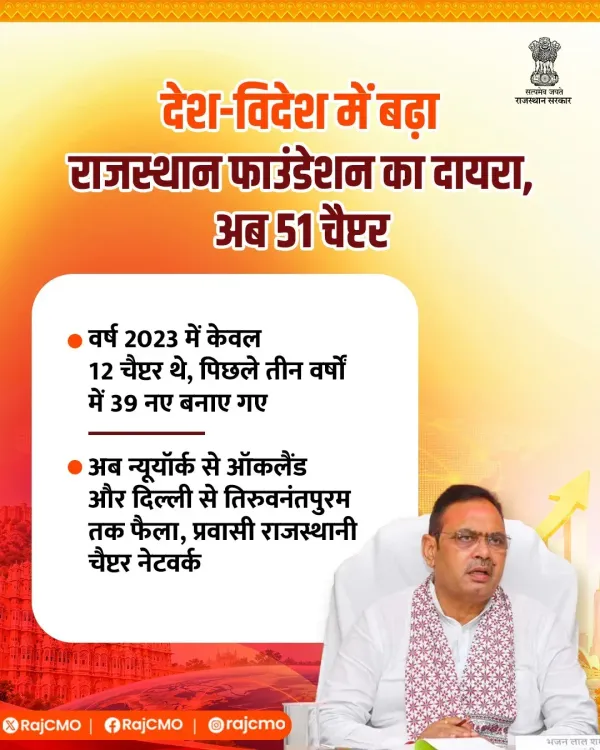
It said the Rajasthan Foundation now has 51 chapters: 25 national and 26 international.
The office said the Foundation had only 12 chapters in 2023 and that those were not functional.
It said all 12 were revived and 39 new chapters were created in the last three years.
Other steps listed include a new department for pravasis, district migrant cells, Pravasi Rajasthani Diwas, and meets in India and abroad.
Rajasthanis living from Indian metros to overseas cities now sit inside a 51-chapter official network, the Chief Minister's Office of Rajasthan said on Thursday, 26 November 2026, as it catalogued three years of diaspora outreach under Chief Minister Bhajanlal Sharma. The office listed a new department for non-resident Rajasthanis, revived Foundation chapters, and district migrant cells as the machinery meant to keep those ties alive.
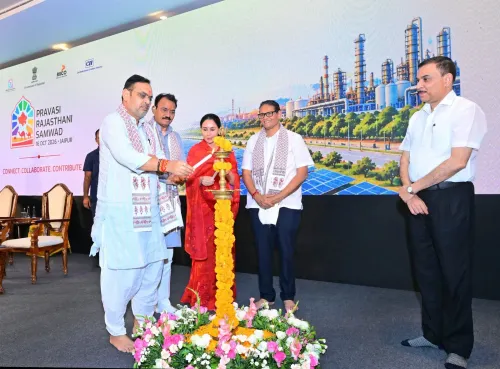
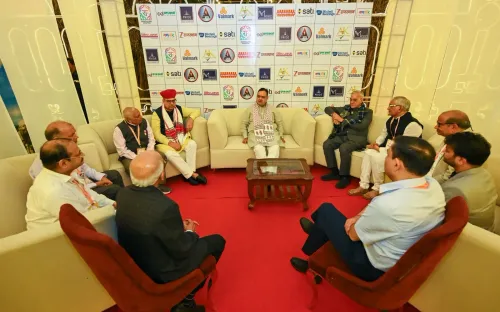
In its post, the office said that under Sharma's leadership the state government had taken several important steps in the last three years to connect Rajasthani migrants settled in the country and abroad with their roots. It pointed to a new department for pravasis, new chapters of the Rajasthan Foundation, migrant cells in districts, Pravasi Rajasthani Diwas (Pravasi Rajasthani Day), continuous dialogue, and migrant meets in India and abroad.
51 chapters: 25 national, 26 international
The office stated that the Rajasthan Foundation's network has now expanded to 51 chapters, including 25 national and 26 international ones. In 2023, it said, the foundation had only 12 chapters, and those were not functional. All of them were made active, and 39 new chapters were created in the last three years, according to the post.
New department, district cells and Pravasi Diwas
The CMO framed the work as a bid to reconnect the diaspora with its roots. Formation of a dedicated department for migrants, district-level pravasi cells, an annual Pravasi Rajasthani Diwas, and regular meets at home and abroad were listed as the main instruments.
Indian states have long maintained foundations, annual days and overseas chapters to sustain cultural and economic ties with communities from their regions. Rajasthan's current drive, as described by the CMO, continues that pattern by reactivating a pre-existing foundation network and adding new organisational layers.
Whether the new department and the expanded chapter map produce visible investment, cultural projects, or a thicker two-way flow of people and capital is the test every state diaspora office eventually faces.
Point of View
Tourism and cultural prestige. The Rajasthan CMO is now putting a precise organisational number on that strategy, describing a Foundation that it says was largely dormant in 2023 and is now 51 chapters deep. The policy bet is that a dedicated department, district cells and an annual Pravasi Diwas will convert sentiment into investment and two-way mobility. Whether those chapters become deal-making nodes or remain ceremonial clubs will decide if this three-year push is a structural shift or a branding exercise.
NationPress
26 Nov 2026
Frequently Asked Questions
How many Rajasthan Foundation chapters did the CMO claim in 2026?
The Chief Minister's Office of Rajasthan said the Foundation now has 51 chapters, 25 national and 26 international. It said there were only 12 chapters in 2023 and that those were not functional.
Who is Bhajanlal Sharma?
Bhajanlal Sharma is the Chief Minister of Rajasthan, in office since December 2023. The CMO attributed the last three years of diaspora outreach to his leadership.
What is the Rajasthan Foundation?
The Rajasthan Foundation is the state government body tasked with maintaining links between Rajasthan and its non-resident community through chapters and events. The CMO said its network has been expanded and revived.
Has Rajasthan created a department for non-resident Rajasthanis?
The CMO said a new department for pravasis has been formed, along with migrant cells in districts. The post did not spell out the department's name or staffing.
What is Pravasi Rajasthani Diwas?
It is a day for non-resident Rajasthanis that the CMO listed among steps to keep the diaspora connected to the state, alongside regular dialogue and meets in India and abroad.