CM Rajasthan Backs Vibrant Village Programme, Anti-Drone Push
Synopsis
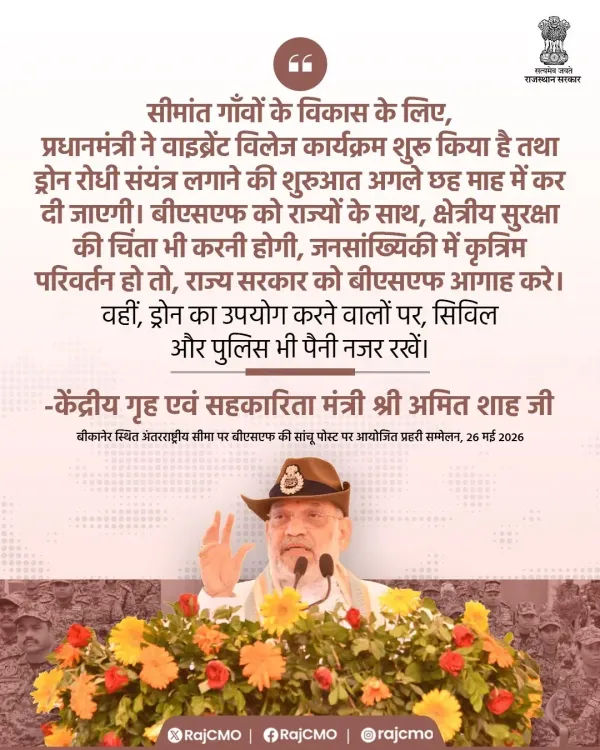
The Chief Minister's Office of Rajasthan on 27 May 2026 highlighted PM Modi's Vibrant Village Programme for border-area development and announced that anti-drone plant installations along Rajasthan's Pakistan border will begin within six months, tagging Home Minister Amit Shah.
Key Takeaways
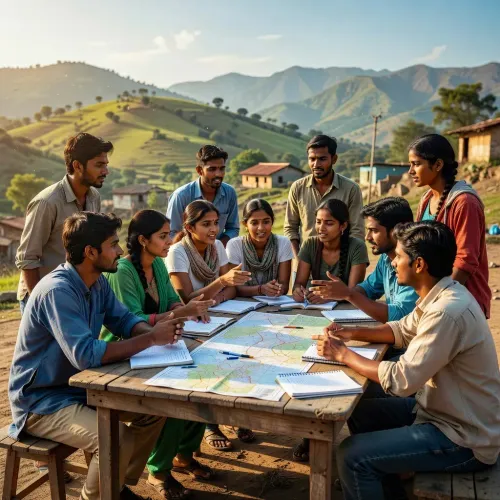
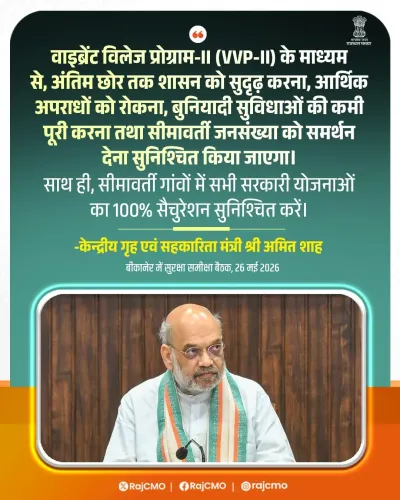
The Vibrant Village Programme , launched by PM Narendra Modi , targets infrastructure, connectivity, and livelihood development in India's border villages.
Anti-drone installations along Rajasthan's border are planned to commence within the next six months , per the CMO post.
Rajasthan shares a border of over 1,000 km with Pakistan , making it a priority zone for both development and security measures.
The Vibrant Villages Programme was announced in Union Budget 2022-23 and received Cabinet approval in 2023 .
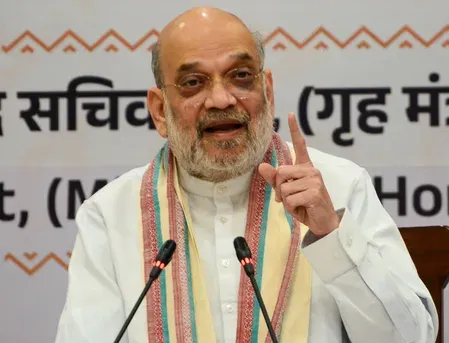
Union Home Minister Amit Shah was tagged in the post, indicating central-state coordination on border security.
The dual focus on civilian development and counter-drone technology addresses both out-migration and cross-border aerial threat concerns.
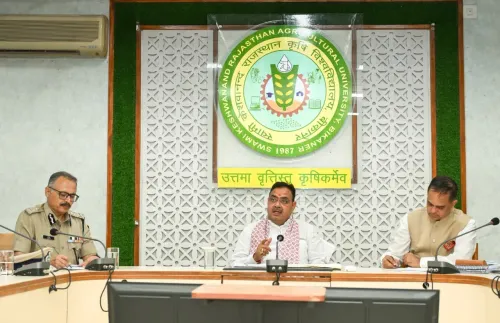
The Chief Minister's Office of Rajasthan on Wednesday, 27 May 2026 highlighted two major border-security and development initiatives — the Vibrant Village Programme launched by Prime Minister Narendra Modi and a planned rollout of anti-drone installations along Rajasthan's border areas within the next six months — tagging Union Home Minister Amit Shah in the post.
The post, shared under the hashtag #आपणो_अग्रणी_राजस्थान ('Our Progressive Rajasthan'), stated: 'The Prime Minister has launched the Vibrant Village Programme for the development of border villages, and the installation of anti-drone plants will be commenced within the next six months.'
Context
Rajasthan shares one of India's longest international borders with Pakistan, stretching over 1,000 kilometres across districts including Barmer, Jaisalmer, Bikaner, and Sri Ganganagar. Villages in these frontier zones have historically faced challenges including poor connectivity, limited livelihood options, and out-migration of residents. The dual announcement of civilian development and security technology directly addresses both dimensions of this vulnerability.
The tagging of Amit Shah, who oversees border security policy as Union Home Minister, signals coordination between the state government and the central security establishment on these measures.
Policy Backdrop
The Vibrant Villages Programme was first announced in the Union Budget 2022-23 and received Cabinet approval in 2023 for phased implementation along India's northern and western borders. The scheme targets comprehensive development covering infrastructure, road connectivity, housing, clean energy, and livelihood support in remote border villages that have seen significant population decline.
Anti-drone systems form part of a broader indigenous defence modernisation drive. India's western frontier has faced repeated incidents involving cross-border drone activity, prompting accelerated deployment of counter-unmanned aerial system (C-UAS) technology by both the armed forces and paramilitary agencies. The planned installations in Rajasthan align with this national security posture.
Stakeholders and Impact
The primary beneficiaries of the Vibrant Village Programme are border villagers — farming and pastoral communities who have long been disadvantaged by geographic remoteness. Improved infrastructure and livelihood opportunities are expected to reduce out-migration, which security planners regard as a risk factor since depopulated border zones are harder to monitor.
Security forces, including the Border Security Force (BSF) and Army units deployed along the Rajasthan border, stand to benefit operationally from anti-drone installations. Counter-drone technology enhances surveillance and interdiction capabilities against aerial threats such as smuggling drones and potential hostile UAVs. Local district administrations will be central to implementation coordination.
What's Next
The stated six-month timeline for commencing anti-drone plant installation places the target around November–December 2026. Observers will track which specific border districts are prioritised for early deployment and whether procurement and tendering processes are expedited accordingly.
For the Vibrant Village Programme, the focus in 2026-27 will be on the pace of on-ground works — roads, power supply, and digital connectivity — in identified Rajasthan border villages. Progress on both fronts is likely to be a benchmark for the state government's #आपणो_अग्रणी_राजस्थान development narrative heading into the next review cycle.
Point of View
The state government signals alignment with the Union Home Ministry's security agenda, which is politically significant given the BJP's governance of both the Centre and Rajasthan. The six-month anti-drone timeline, if met, would represent a meaningful acceleration of C-UAS deployment on the western frontier, where drone-based smuggling and surveillance threats have intensified. Taken together, the post frames border development as both a welfare imperative and a national security necessity — a framing that resonates strongly with the ruling dispensation's political messaging.
NationPress
11 Oct 2026
Frequently Asked Questions
What is the Vibrant Village Programme?
The Vibrant Village Programme is a central government scheme announced in Union Budget 2022-23 and approved by the Cabinet in 2023. It provides infrastructure, road connectivity, clean energy, and livelihood support to remote villages along India's international borders, including in Rajasthan.
Why is Rajasthan getting anti-drone installations?
Rajasthan shares a long border with Pakistan and has faced cross-border drone activity involving smuggling and potential surveillance threats. Anti-drone plants are being deployed as part of India's broader counter-unmanned aerial system (C-UAS) modernisation along its western frontier.
When will anti-drone plants be installed in Rajasthan?
According to the Chief Minister's Office of Rajasthan's post on 27 May 2026, the installation of anti-drone plants is expected to commence within the next six months, placing the start around November-December 2026.
Which districts in Rajasthan are on the Pakistan border?
The main districts of Rajasthan bordering Pakistan include Barmer, Jaisalmer, Bikaner, and Sri Ganganagar. These areas are the primary focus zones for both the Vibrant Village Programme and anti-drone security measures.
What is the role of Amit Shah in Rajasthan's border security?
Amit Shah, as Union Home Minister, oversees border security and internal security policies at the national level. The Rajasthan CMO tagged him in the post, indicating coordination between the state government and the central government on border development and security initiatives.