Rajasthan CMO highlights PM E-Bus Seva Yojana for urban EV push
Synopsis
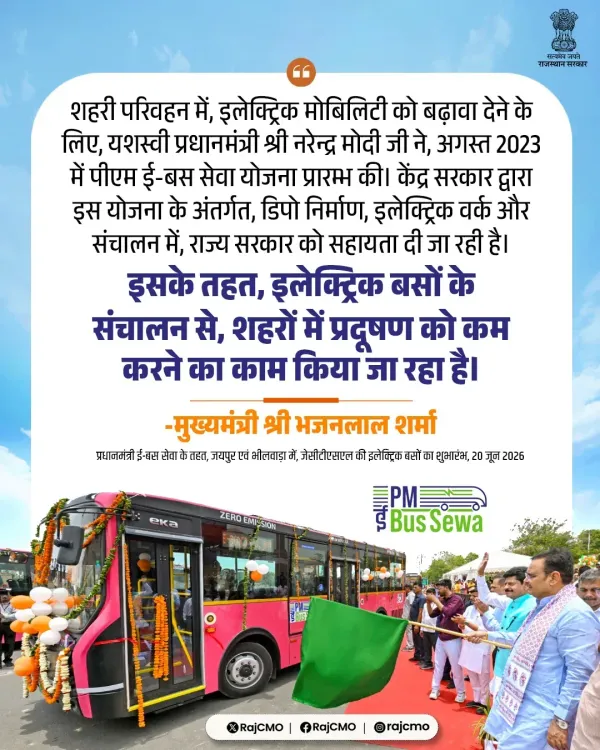
The Chief Minister's Office of Rajasthan on 20 June 2026 highlighted PM Modi's PM E-Bus Seva Yojana, launched in August 2023, to promote electric mobility in urban transport — signalling the state's alignment with India's central EV bus programme under CM Bhajanlal Sharma.
Key Takeaways
The Chief Minister's Office of Rajasthan posted on 20 June 2026 spotlighting the PM E-Bus Seva Yojana .
The scheme was launched by Prime Minister Narendra Modi in August 2023 to deploy electric buses in Indian cities.
The post was tagged to Rajasthan Chief Minister Bhajanlal Sharma under the hashtag #आपणो_अग्रणी_राजस्थान .
The yojana is the latest in a policy chain that includes FAME-I (2015) and FAME-II (2019) , progressively focusing on public bus electrification.
Key stakeholders include urban commuters , state transport undertakings , and EV manufacturers .
State-level deployment numbers and charging infrastructure plans for Rajasthan are yet to be confirmed publicly.
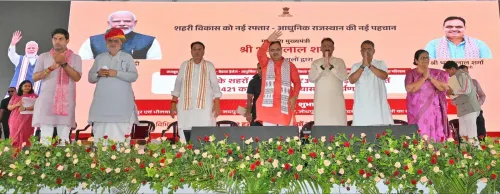
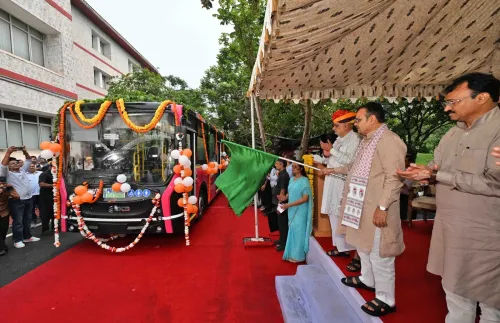
The Chief Minister's Office of Rajasthan on Saturday, 20 June 2026 highlighted Prime Minister Narendra Modi's flagship PM E-Bus Seva Yojana, underscoring the scheme's role in advancing electric mobility across Indian cities. The post, attributed to the office of Chief Minister Bhajanlal Sharma, referenced the scheme's launch in August 2023 as a key step in transforming urban public transport.
Context
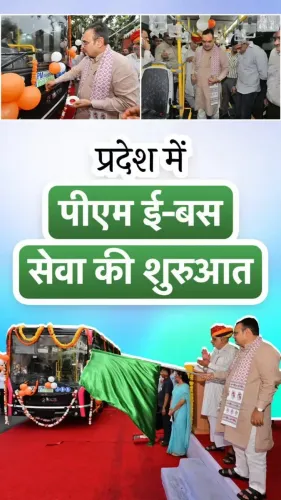
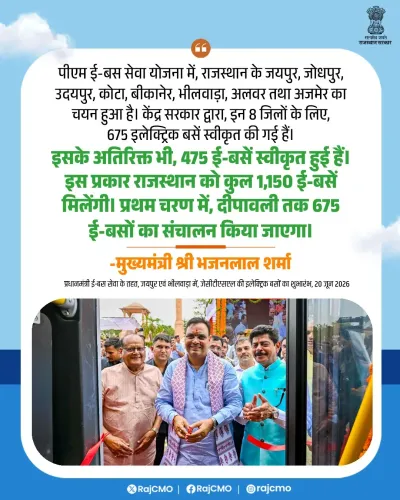
The Rajasthan CMO's post stated: 'शहरी परिवहन में, इलेक्ट्रिक मोबिलिटी को बढ़ावा देने के लिए, यशस्वी प्रधानमंत्री श्री नरेन्द्र मोदी जी ने, अगस्त 2023 में पीएम ई-बस सेवा योजना प्रारम्भ की।' — translated: 'To promote electric mobility in urban transport, the visionary Prime Minister Shri Narendra Modi Ji launched the PM E-Bus Seva Yojana in August 2023.' The message was tagged to Chief Minister Bhajanlal Sharma under the hashtag #आपणो_अग्रणी_राजस्थान ('Our Leading Rajasthan'), signalling the state's alignment with the central programme.
Policy Backdrop
The PM E-Bus Seva Yojana, launched by the central government in August 2023, aims to deploy electric buses across Indian cities to reduce urban air pollution and dependence on fossil fuels. It is the latest in a series of central interventions on electric mobility, following the FAME-I scheme introduced in 2015 and the expanded FAME-II rollout in 2019, which shifted focus toward public transport and shared mobility.
India's electric vehicle policy lineage stretches back to the National Electric Mobility Mission Plan 2020, launched in 2013, which set long-term adoption targets. Successive programmes have progressively moved from subsidising private vehicle purchases to electrifying bus fleets in tier-1 and tier-2 cities, reflecting a strategic pivot toward mass public transport.
Stakeholders and Impact
The primary beneficiaries of the PM E-Bus Seva Yojana are urban commuters, particularly in cities dependent on ageing diesel-powered public bus fleets. State transport undertakings stand to receive central support for procuring and operating electric buses, easing the fiscal burden of fleet modernisation.
Electric vehicle manufacturers and charging infrastructure developers are also key stakeholders, as large-scale bus deployments create sustained demand. The scheme fits within India's broader goal of cutting oil import bills and meeting climate commitments by greening public transport at scale.
What's Next
Attention will now turn to state-level tender awards and the pace of bus deployment under the scheme across Rajasthan and other participating states. Complementary state policies on charging infrastructure and fare integration will determine how effectively the central scheme translates into improved commuter experience on the ground.
With BJP-governed states consistently amplifying central EV initiatives in official communications, Rajasthan's messaging signals continued political and administrative momentum behind the electrification agenda — though concrete deployment figures for the state remain to be established in public records.
Point of View
The messaging seeks to fuse state identity with national policy achievement. This reflects a well-worn playbook where central scheme credit is shared downward to state administrations, strengthening both the PM's and the CM's governance image simultaneously. The real test, however, will be whether Rajasthan's actual bus deployment numbers under the scheme match the rhetorical momentum.
NationPress
19 Sept 2026
Frequently Asked Questions
What is PM E-Bus Seva Yojana?
PM E-Bus Seva Yojana is a central government scheme launched by Prime Minister Narendra Modi in August 2023 to deploy electric buses in Indian cities, aiming to reduce urban air pollution and fossil fuel dependence in public transport.
When was PM E-Bus Seva Yojana launched?
The PM E-Bus Seva Yojana was launched in August 2023 by Prime Minister Narendra Modi as part of India's broader push to electrify urban public transport.
What did the Rajasthan CMO post about electric buses?
On 20 June 2026, the Chief Minister's Office of Rajasthan posted highlighting PM Modi's PM E-Bus Seva Yojana, underlining the scheme's role in promoting electric mobility in urban transport and tagging Chief Minister Bhajanlal Sharma.
What is the difference between FAME scheme and PM E-Bus Seva Yojana?
FAME-I (2015) and FAME-II (2019) were demand-incentive programmes covering a range of electric vehicles including private cars and two-wheelers, while PM E-Bus Seva Yojana (2023) focuses specifically on deploying electric buses for urban public transport at scale.
How does PM E-Bus Seva Yojana benefit commuters in Rajasthan?
The scheme provides central government support for procuring electric buses, which can modernise ageing public bus fleets in Rajasthan's cities, offering cleaner, quieter, and potentially cheaper urban commutes — though state-specific deployment details are yet to be confirmed publicly.