CM Bhajanlal flags off 47 e-buses in Jaipur, Bhilwara
Synopsis
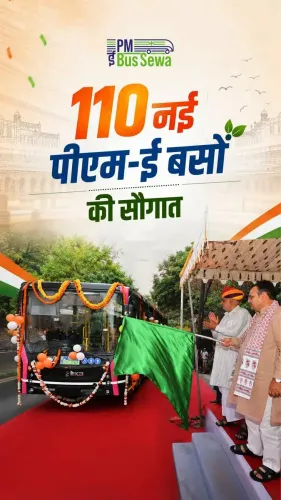
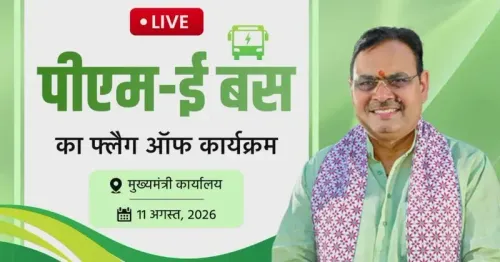
Chief Minister Bhajanlal Sharma flagged off 29 electric buses from Amar Jawan Jyoti in Jaipur and launched 18 more in Bhilwara via video conference under the central PM e-Bus Sewa scheme on 20 June 2026, expanding clean public transport across Rajasthan.
Key Takeaways
29 electric buses were flagged off from Amar Jawan Jyoti, Jaipur under PM e-Bus Sewa , operated by JCTSL .
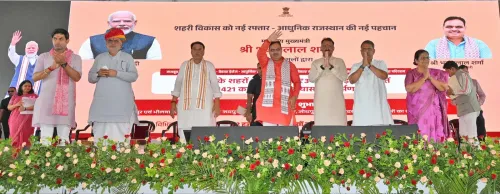
18 additional electric buses were launched in Bhilwara via video conference on the same day.
Buses are equipped with panic buttons, air conditioning, and CCTV cameras for passenger safety and comfort.
CM Bhajanlal Sharma personally rode the bus from Amar Jawan Jyoti to State Hangar after purchasing a ticket.
The PM e-Bus Sewa scheme targets deployment of 10,000 electric buses across 169 Indian cities .
The launches mark the scheme's expansion in Rajasthan beyond the capital to the tier-2 city of Bhilwara .
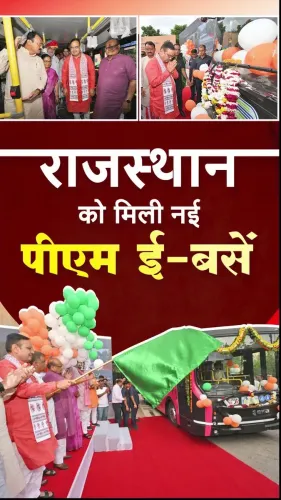
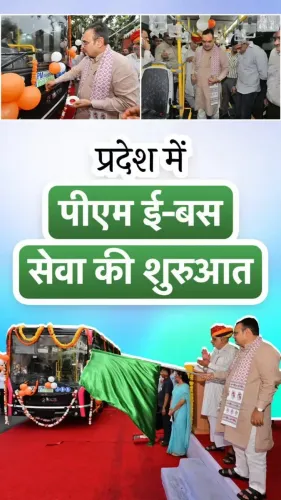
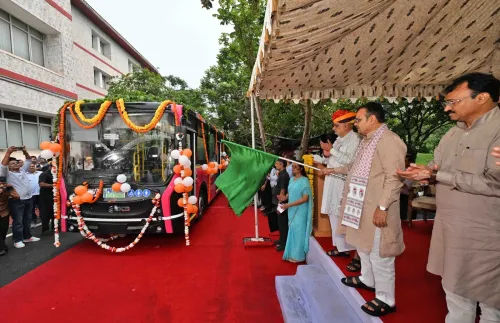
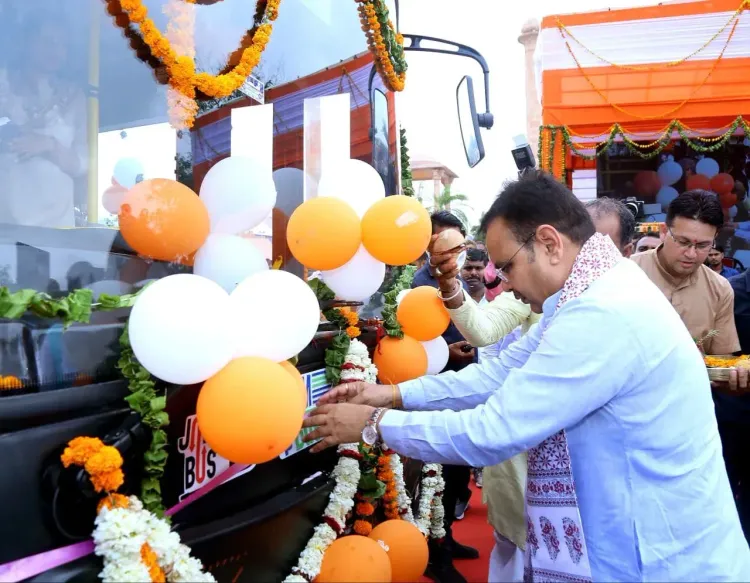
Chief Minister Bhajanlal Sharma on Saturday, 20 June 2026 flagged off 29 electric buses under the PM e-Bus Sewa scheme from Amar Jawan Jyoti in Jaipur, operated by Jaipur City Transport Services Limited (JCTSL). Separately, he launched 18 more electric buses in Bhilwara via video conference, bringing the total induction to 47 new e-buses across two Rajasthan cities in a single day.
Context
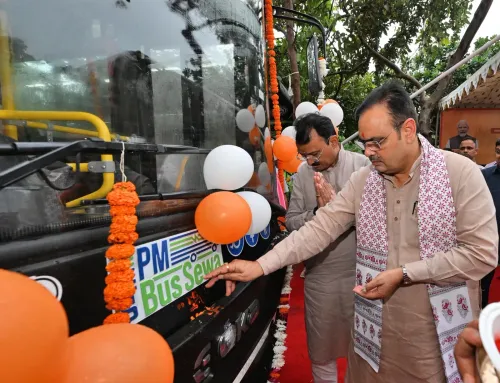
The Chief Minister's Office of Rajasthan announced the event through an official post, quoting Sharma as saying: 'in bason ke sanchalan se swachh, surakshit evam sugam sarvajanik parivahan ko badhawa milega' ('the operation of these buses will promote clean, safe and convenient public transport'). The launch was conducted with a formal puja (ceremonial worship) of the electric bus at Amar Jawan Jyoti, the war memorial that served as the ceremonial departure point.
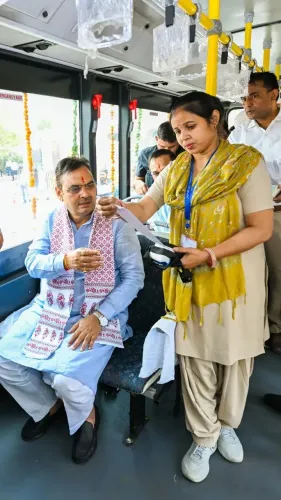
Sharma personally inspected the buses, familiarising himself with onboard features including a panic button, air conditioning, and CCTV cameras. He also interacted with the driver and conductor before purchasing a ticket and riding the bus from Amar Jawan Jyoti to State Hangar.
Policy Backdrop
The PM e-Bus Sewa scheme was launched by the Government of India in 2023 with an objective to deploy 10,000 electric buses across 169 cities nationwide, with the Centre funding a significant share of operational costs. The scheme is a cornerstone of India's national electric mobility mission, targeting urban air quality improvement and reduced dependence on fossil fuels in public transport.
Rajasthan has progressively integrated electric buses into its urban transport network, particularly in Jaipur, where JCTSL manages city bus operations. The induction of these 29 buses in the state capital and 18 buses in Bhilwara — a major textile and industrial city — signals the scheme's expansion beyond the capital into tier-2 urban centres.
Stakeholders and Impact
Urban commuters in Jaipur and Bhilwara stand to benefit directly from cleaner, air-conditioned public transport equipped with modern safety features. The panic button and CCTV cameras are particularly significant for women's safety on public buses, a recurring policy concern in Indian cities.
For JCTSL and the Rajasthan state transport ecosystem, electric buses offer lower per-kilometre operational costs over time compared with diesel fleets, though the upfront capital and charging infrastructure requirements remain substantial. The central subsidy under PM e-Bus Sewa helps bridge this gap for state agencies.
What's Next
The rollout of the remaining buses sanctioned under PM e-Bus Sewa for other Rajasthan cities will be closely watched as a measure of the state government's pace of implementation. Publication of ridership figures and emission reduction data from the Jaipur and Bhilwara corridors will serve as early indicators of the scheme's on-ground impact. If adoption rates are strong, Rajasthan could position itself as a model for central-state coordination on green urban mobility under the #AapnoAgraneeRajasthan vision.
Point of View
One via video conference — is a deliberate signal that the Bhajanlal Sharma government is pushing PM e-Bus Sewa beyond state capitals into tier-2 cities, a politically significant move ahead of continued urban local body consolidation. The Chief Minister's decision to personally board the bus and purchase a ticket is a well-worn but effective piece of political optics, framing green infrastructure as accessible governance rather than elite policy. This fits a broader BJP-ruled-state pattern of using centrally-funded schemes to demonstrate visible, photo-friendly delivery. The real test will be whether charging infrastructure, driver training, and ridership data in Bhilwara match the ceremonial ambition of the launch.
NationPress
19 Sept 2026
Frequently Asked Questions
What is PM e-Bus Sewa and how does it work in Rajasthan?
PM e-Bus Sewa is a central government scheme launched in 2023 to deploy 10,000 electric buses across 169 Indian cities. In Rajasthan, buses are operated by agencies like JCTSL in Jaipur, with the Centre funding a portion of operational costs to make electric public transport viable for state governments.
How many electric buses were launched in Rajasthan on 20 June 2026?
A total of 47 electric buses were launched on 20 June 2026 — 29 in Jaipur flagged off from Amar Jawan Jyoti, and 18 in Bhilwara inaugurated via video conference by Chief Minister Bhajanlal Sharma.
What safety features do the new Jaipur electric buses have?
The new electric buses under PM e-Bus Sewa in Jaipur are equipped with panic buttons, air conditioning, and CCTV cameras, as inspected and highlighted by CM Bhajanlal Sharma at the launch event.
What is JCTSL and what role does it play in Jaipur's bus services?
JCTSL stands for Jaipur City Transport Services Limited. It is the nodal agency responsible for operating city bus services in Jaipur and is the operator of the newly inducted electric buses under the PM e-Bus Sewa scheme.
Why was Amar Jawan Jyoti chosen as the launch point for the electric buses?
Amar Jawan Jyoti is a prominent war memorial in Jaipur that serves as a ceremonial and symbolic location for government events. CM Bhajanlal Sharma flagged off the buses from there and also rode the bus from Amar Jawan Jyoti to State Hangar.