Rajasthan CM Highlights Inter-State Water Cooperation Under Modi
Synopsis
The Chief Minister's Office of Rajasthan on October 28, 2026 credited PM Narendra Modi's guidance for new inter-state water cooperation breakthroughs, with CM Bhajanlal Sharma highlighting improved coordination between Rajasthan, the central government, and neighbouring states as a governance milestone.
Key Takeaways
The Chief Minister's Office of Rajasthan announced new dimensions of inter-state water cooperation on October 28, 2026 .
Chief Minister Bhajanlal Sharma attributed the progress to the guidance of Prime Minister Narendra Modi and better coordination with the central government.
Rajasthan is one of India's most water-stressed states, making inter-state river-sharing arrangements critical for agriculture and drinking water.
India's Inter-State River Water Disputes Act, 1956 provides the legal framework, but centre-facilitated coordination offers a faster, less adversarial route.
The announcement aligns with Modi's broader 'cooperative federalism' push and the BJP's political advantage of governing both Rajasthan and the centre.
The post was hashtagged #AapnoAgraneeRajasthan , part of a state-branding campaign positioning Rajasthan as a governance pioneer.
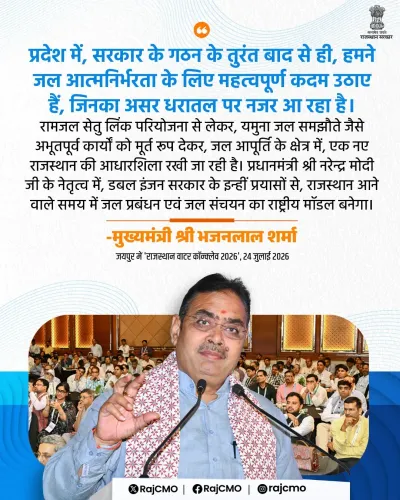
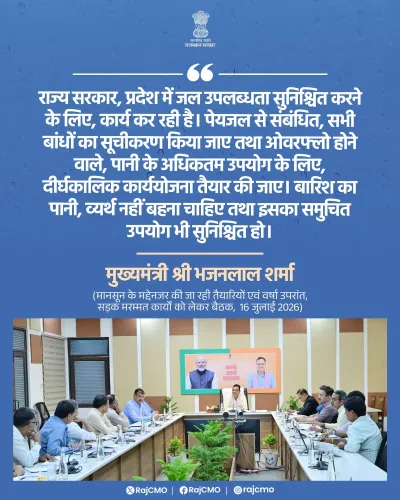
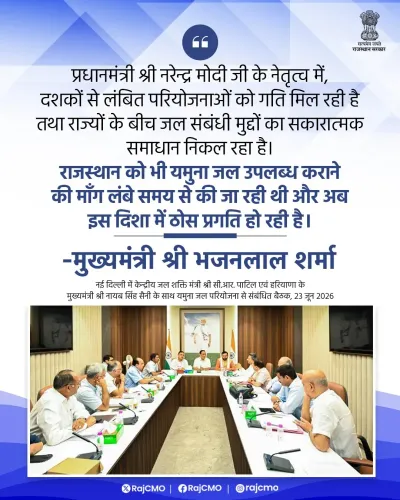
Water-sharing diplomacy rarely makes headlines — until the taps run dry. On Wednesday, October 28, 2026, the Chief Minister's Office of Rajasthan credited the guidance of Prime Minister Narendra Modi for establishing new dimensions of inter-state water cooperation between Rajasthan and its neighbouring states, calling it a milestone in coordinated resource governance.
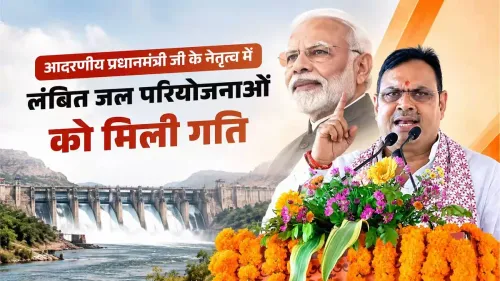
The post, attributed to Chief Minister Bhajanlal Sharma via the official CMO handle, stated: 'Pradhan Mantri Shri Narendra Modi Ji ke margdarshan mein, kendra sarkar aur padosi rajyon ke saath, behtar samanvay se antarrajyiy jal sahyog ke naye aayam sthapit hue hain' — 'Under the guidance of Prime Minister Narendra Modi, new dimensions of inter-state water cooperation have been established through better coordination with the central government and neighbouring states.'
Why Water Cooperation Matters for Rajasthan
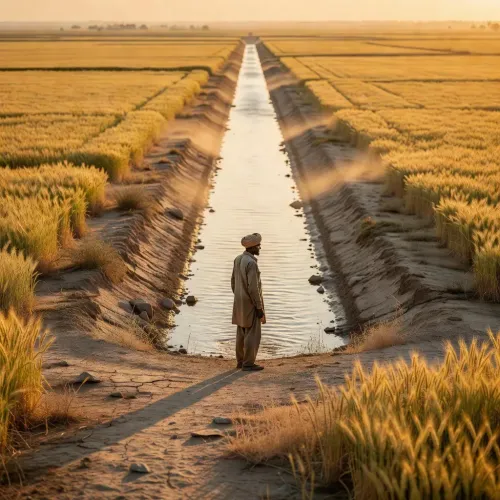
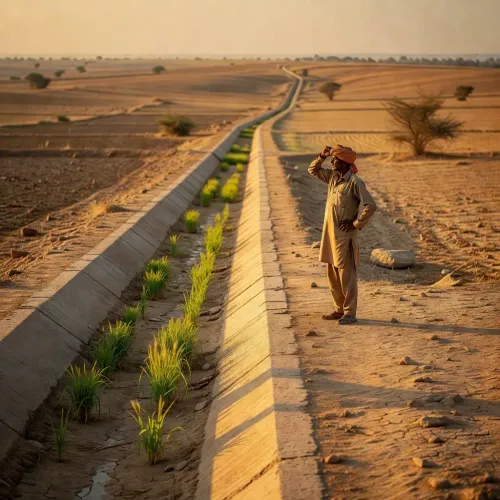
Rajasthan is one of India's most arid states, covering over 10 percent of the country's geographical area while receiving some of its lowest rainfall. The state's agriculture and drinking water supply lean heavily on inter-state river systems — making diplomatic coordination with neighbouring states not a bureaucratic nicety, but an existential requirement for millions of farmers.
India's formal framework for managing these disputes dates to the Inter-State River Water Disputes Act, 1956, which established tribunal mechanisms for adjudication. But tribunals are slow and adversarial. What Rajasthan's CMO is signalling here is something different — a shift toward proactive, centre-facilitated coordination that sidesteps litigation in favour of negotiated sharing.
Modi's Cooperative Federalism Push as the Enabling Frame
Since 2014, Prime Minister Narendra Modi has consistently invoked 'cooperative federalism' as a governing philosophy — pushing states to resolve shared resource disputes through dialogue rather than courtrooms. The National Water Resources Council, chaired by the Prime Minister, serves as the apex forum for exactly this kind of centre-state and inter-state dialogue on water policy.
Chief Minister Bhajanlal Sharma, who took office in December 2023, has made water resource management a stated priority for his administration. By publicly crediting central leadership, the Rajasthan government is positioning these coordination gains as a dividend of BJP's alignment across state and central governments — a common political framing, but one that also reflects the genuine structural advantage of shared party governance in facilitating such agreements.
What Farmers and Riparian Communities Stand to Gain
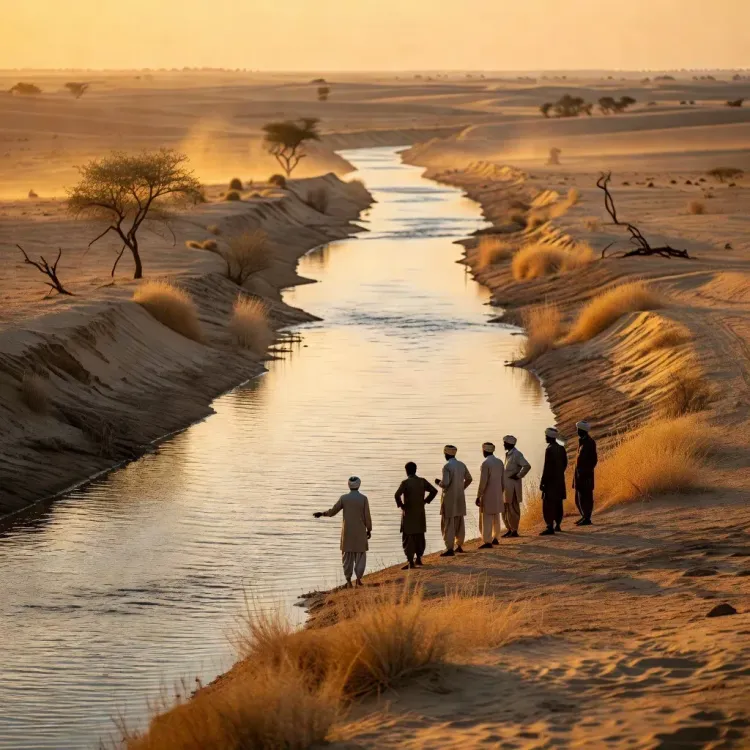
Better inter-state water coordination translates directly into more predictable water flows for irrigation canals, reduced shortfalls during drought years, and a stronger basis for long-term agricultural planning in water-stressed districts. For Rajasthan's farming communities — particularly those dependent on the Indira Gandhi Canal system and shared river basins — even incremental improvements in upstream coordination can mean the difference between a viable kharif season and a failed one.
The hashtag #AapnoAgraneeRajasthan (Our Pioneering Rajasthan) frames this as part of a broader state-branding effort under Sharma's government, asserting Rajasthan's leadership position in governance outcomes under the current BJP dispensation.
Point of View
Inter-state cooperation is genuinely consequential, and the signal matters to farming communities who have long endured the slow grind of tribunal-based water disputes. The 'cooperative federalism' frame, however, also carries an implicit contrast with opposition-governed states, suggesting coordination is smoother when ideological alignment exists across levels of government. The real test will come in the specifics: whether concrete river-basin agreements or revised water-sharing protocols follow this announcement.
NationPress
28 Oct 2026
Frequently Asked Questions
What is inter-state water cooperation in India?
Inter-state water cooperation refers to agreements and coordination mechanisms between neighbouring states for sharing river water, typically facilitated by the central government. India's legal framework for this is grounded in the Inter-State River Water Disputes Act, 1956, though centre-mediated dialogue has increasingly supplemented formal tribunal processes.
Why is water cooperation important for Rajasthan?
Rajasthan is one of India's most arid states and depends heavily on inter-state river systems for irrigation and drinking water. Predictable water flows from shared river basins are critical for the state's agricultural sector and millions of farmers across water-stressed districts.
Who is Bhajanlal Sharma?
Bhajanlal Sharma is the Chief Minister of Rajasthan, having taken office in December 2023 as the BJP's choice for the state. He has made water resources and state development a focus of his administration.
What is cooperative federalism as promoted by PM Modi?
Cooperative federalism, as championed by Prime Minister Narendra Modi since 2014, refers to a governance approach that encourages centre-state and inter-state collaboration on shared challenges — including water, infrastructure, and economic development — rather than adversarial dispute resolution.
What is the National Water Resources Council?
The National Water Resources Council is India's apex body for water policy, chaired by the Prime Minister. It serves as a key forum for inter-state and centre-state dialogue on water sharing and resource management.