Rajasthan CMO: State to become national water model under Modi
Synopsis
The Chief Minister's Office of Rajasthan declared on 25 July 2026 that the state will emerge as India's national model for water management and conservation, citing coordinated central and state efforts under PM Narendra Modi and CM Bhajan Lal Sharma's double-engine government framework.
Key Takeaways
The Rajasthan CMO stated on 25 July 2026 that the state aims to become India's national model for water management and water conservation .
The claim is anchored in the double-engine government framework, citing alignment between the BJP-led central and state governments.
Central schemes underpinning the claim include the Jal Jeevan Mission (launched 2019), Atal Bhujal Yojana (2018), and the Jal Shakti Abhiyan campaign.
Rajasthan is India's largest state by area and faces chronic water scarcity across its arid and semi-arid regions.
Key beneficiaries include farmers in arid districts , rural households, and groundwater-dependent communities across the state.
Progress will be measured through Jal Jeevan Mission coverage data, groundwater trends, and future state budget allocations for water infrastructure.
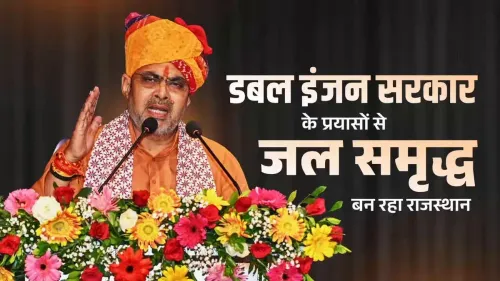
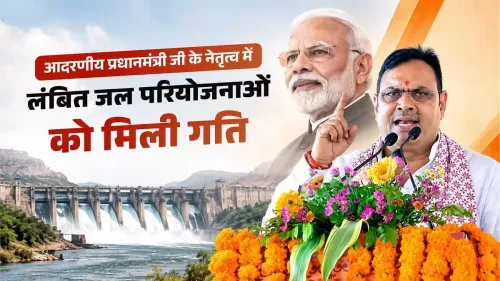
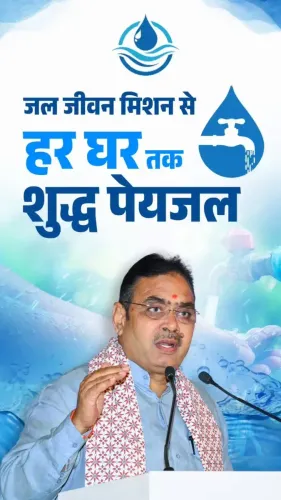
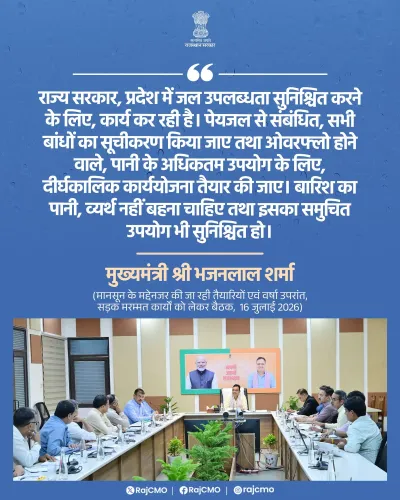
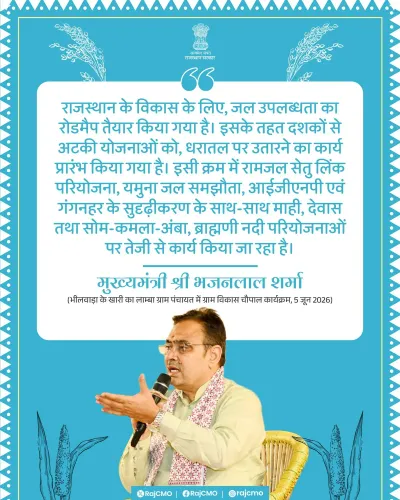
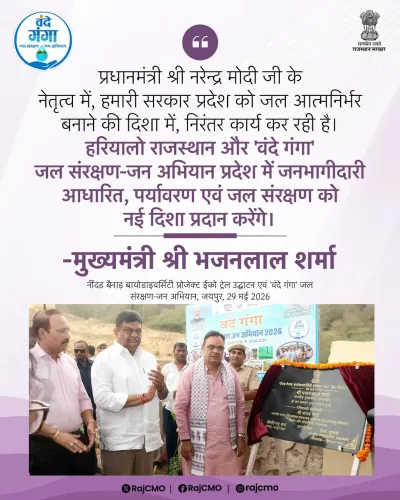
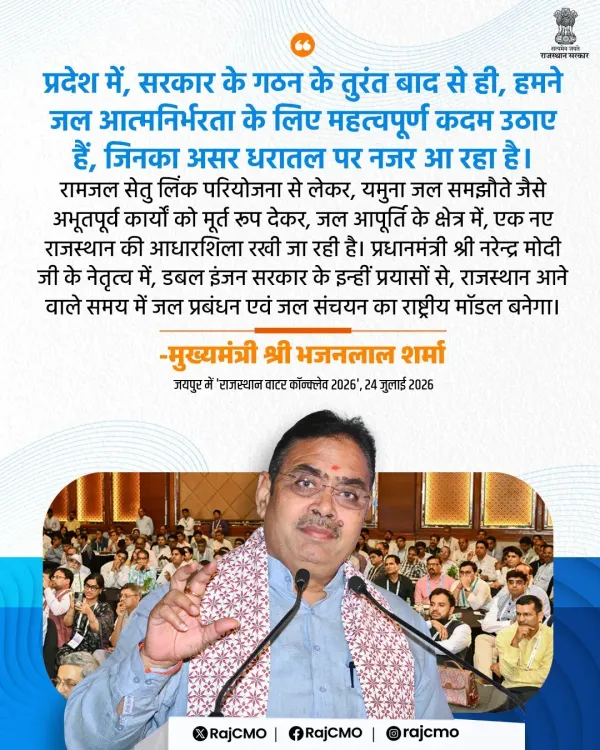
The Chief Minister's Office of Rajasthan declared on Friday, 25 July 2026 that the state is on course to become a national model for water management and water conservation, crediting the 'double-engine government' effort led by Prime Minister Narendra Modi and Chief Minister Bhajan Lal Sharma.
The post, shared under the hashtag #आपणो_अग्रणी_राजस्थान ('Our Frontrunner Rajasthan'), stated: 'Under the leadership of Prime Minister Shri Narendra Modi Ji, through the efforts of this double-engine government, Rajasthan will become the national model for water management and water conservation in the times to come.'
Context
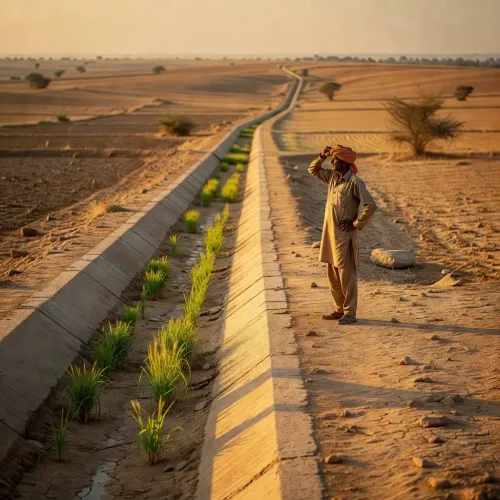
Rajasthan is India's largest state by area and encompasses vast arid and semi-arid zones that have historically faced chronic water scarcity. A significant share of its population — particularly in rural districts — depends on groundwater and seasonal sources that are vulnerable to depletion and erratic monsoons. The state's geography makes water security a perennial governance priority.
The phrase 'double-engine government' is standard BJP political vocabulary referring to alignment between the party-led central government and a state government of the same party, implying coordinated policy delivery.
Policy Backdrop
The claim builds on several converging central schemes. The Jal Jeevan Mission, launched in 2019, set out to provide functional household tap connections to all rural households across India, with Rajasthan among the participating states. The mission marked a significant expansion of piped drinking water infrastructure in the state's underserved districts.
Separately, the Atal Bhujal Yojana, introduced in 2018, targets sustainable groundwater management in seven water-stressed states including Rajasthan. The scheme promotes community-level aquifer management and links infrastructure investment with conservation behaviour. Rajasthan also joined the national Jal Shakti Abhiyan water conservation campaign from 2019 onwards, which focused on rainwater harvesting, watershed development, and recharge of traditional water bodies.
Together, these programmes represent the policy lineage the CMO post implicitly references when citing 'these efforts' of the double-engine government.
Stakeholders and Impact
The communities with the most at stake are farmers in arid districts, rural households dependent on groundwater, and communities in regions where surface water availability is seasonal. Improved water management directly affects agricultural productivity, drinking water reliability, and livelihoods in a state where a large proportion of the workforce is engaged in agriculture.
The CMO's framing positions Rajasthan not merely as a beneficiary of central schemes but as a replicable template — a messaging approach that has appeared in BJP-governed states across sectors including renewable energy and agriculture. If the state does achieve demonstrable progress in water coverage and conservation metrics, it could influence how future national programmes are designed and rolled out.
What's Next
Observers will watch for concrete indicators: state-level progress data on Jal Jeevan Mission household connections, groundwater-level trends under the Atal Bhujal Yojana, and any dedicated water budget allocations in Rajasthan's next fiscal planning cycle. Formal recognition of the state as a 'national model' would likely require independent assessments of coverage, sustainability, and community adoption rather than policy announcements alone.
The government's next steps may include project-level announcements or progress reviews by Chief Minister Bhajan Lal Sharma that give substance to the aspirational target set in this communication.
Point of View
Reinforcing PM Modi's brand in a large state the party recaptured. Whether Rajasthan can substantiate the 'national model' claim will depend on independently verifiable water coverage and conservation data, not just scheme enrolment numbers. The broader pattern of states being positioned as sectoral models — seen earlier in renewable energy and digital governance — suggests this is a deliberate template the party uses to generate aspirational narratives ahead of policy reviews.
NationPress
23 Oct 2026
Frequently Asked Questions
Why is Rajasthan being called a national model for water management?
The Rajasthan Chief Minister's Office made this claim on 25 July 2026, citing the convergence of central schemes like the Jal Jeevan Mission and Atal Bhujal Yojana with state-level implementation under CM Bhajan Lal Sharma and PM Modi's leadership.
What is the Jal Jeevan Mission and how does it apply to Rajasthan?
The Jal Jeevan Mission, launched in 2019, aims to provide functional household tap connections for drinking water to all rural households in India. Rajasthan, which faces severe water scarcity in its arid regions, is a key participating state.
What is the double-engine government referred to in the Rajasthan CMO post?
The term 'double-engine government' is BJP political vocabulary for a situation where both the central government and a state government are led by the BJP, implying coordinated and faster policy delivery.
What is the Atal Bhujal Yojana and does it cover Rajasthan?
The Atal Bhujal Yojana, introduced in 2018, promotes sustainable groundwater management across seven water-stressed states in India, and Rajasthan is one of the states covered under the scheme.
What does #AapnoAgraniRajasthan mean?
The hashtag translates from Hindi and Rajasthani as 'Our Frontrunner Rajasthan,' used by the state government to promote Rajasthan's development progress across various sectors including water, infrastructure, and governance.