Rajasthan CMO hails PM Modi's cooperative federalism push
Synopsis
The Chief Minister's Office of Rajasthan credited PM Narendra Modi with deepening cooperative federalism in India, tagging CM Bhajanlal Sharma. The post reflects the BJP-ruled state's alignment with the Centre's governance model, rooted in reforms like NITI Aayog and the GST Council since 2014.
Key Takeaways
The Rajasthan CMO posted on 1 July 2026 praising PM Narendra Modi for strengthening cooperative federalism across India.
The post tags CM Bhajanlal Sharma and uses the hashtag #आपणो_अग्रणी_राजस्थान ('Our Forward-Looking Rajasthan').
Cooperative federalism was institutionalised through the replacement of the Planning Commission with NITI Aayog in 2015 .
The GST Council , established in 2017 , is a key structural example of centre-state collaboration on tax policy.
Rajasthan under the BJP has consistently aligned its official communications with the Centre's governance narrative since 2014 .
Centre-state coordination ahead of the next Union Budget and updates on centrally sponsored schemes remain key areas to watch.
The Chief Minister's Office of Rajasthan on Wednesday, 1 July 2026, praised Prime Minister Narendra Modi for strengthening the spirit of cooperative federalism across India, citing the leadership of Chief Minister Bhajanlal Sharma under the hashtag #आपणो_अग्रणी_राजस्थान ('Our Forward-Looking Rajasthan').
Context
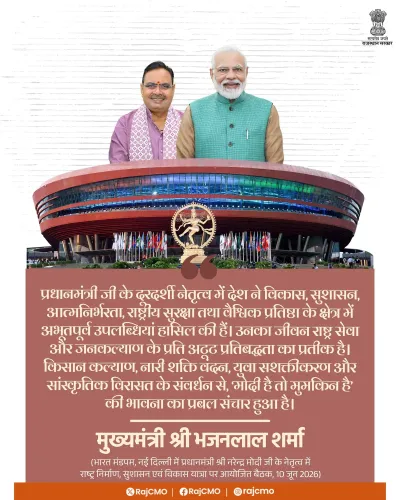
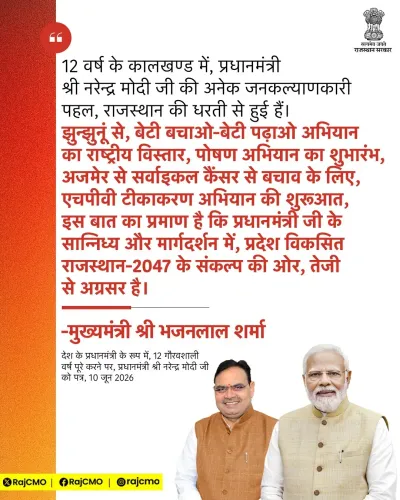
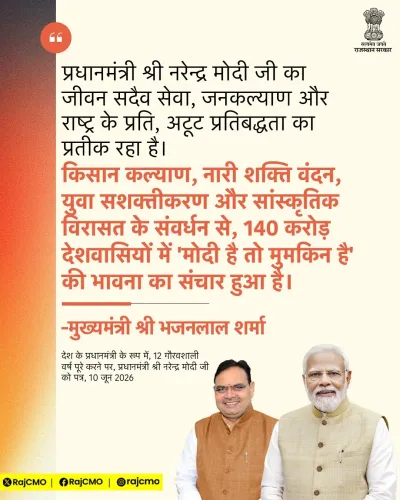
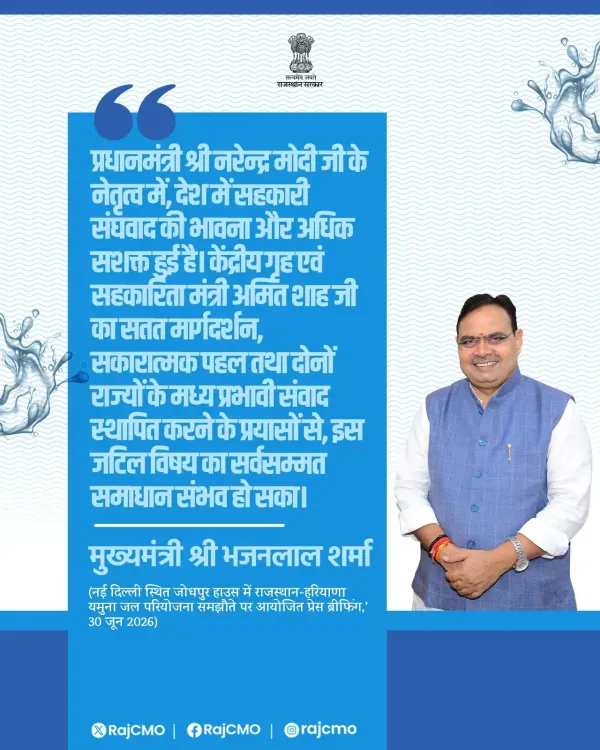
The post, shared from the official Rajasthan CMO handle, states: 'प्रधानमंत्री श्री नरेन्द्र मोदी जी के नेतृत्व में, देश में सहकारी संघवाद की भावना और अधिक सशक्त हुई है' — 'Under the leadership of Prime Minister Shri Narendra Modi, the spirit of cooperative federalism in the country has been further strengthened.' The message tags CM Bhajanlal Sharma and is accompanied by an image, signalling the state government's alignment with the Centre's governance approach.
Cooperative federalism refers to a model in which the Union government and state governments work in structured partnership on policy design, resource allocation, and implementation, rather than the Centre dictating terms to states.
Policy Backdrop
The idea gained institutional momentum in 2015 when the central government replaced the Planning Commission with NITI Aayog, explicitly to give states a greater voice in national planning. The move was framed as a structural shift from a top-down planning model to one where states are treated as equal partners in development strategy.
A further milestone came with the 2017 rollout of the Goods and Services Tax (GST), which created the GST Council — a permanent constitutional body that gives every state a seat at the table on tax policy decisions. The Council has since become one of the most cited examples of centre-state collaboration in India's post-independence history.
Since 2014, the central government has also institutionalised regular meetings between the Prime Minister and Chief Ministers on subjects ranging from health and education to infrastructure and disaster management, reinforcing the cooperative model at the executive level.
Stakeholders and Impact
Rajasthan, governed by the Bharatiya Janata Party (BJP) under CM Bhajanlal Sharma, has been among the states that actively echo the Centre's cooperative federalism narrative in official communications. Such statements serve to signal political and administrative alignment between Jaipur and New Delhi, particularly around centrally sponsored schemes and shared fiscal frameworks.
For citizens of Rajasthan, the practical expression of cooperative federalism shows up in joint implementation of schemes covering rural infrastructure, health coverage, and agricultural support, where central funding is matched by state resources and administration. The hashtag #आपणो_अग्रणी_राजस्थान ('Our Forward-Looking Rajasthan') reflects the state government's broader branding effort to position Rajasthan as a proactive partner in national development.
What's Next
Observers will watch for centre-state coordination meetings ahead of the next Union Budget cycle, where states typically negotiate allocations under centrally sponsored schemes. Any new policy announcements involving Rajasthan — particularly in agriculture, water management, or infrastructure — will be seen through the lens of this cooperative framework.
The Rajasthan government's continued emphasis on federal partnership suggests it will remain an active participant in NITI Aayog's consultative processes, potentially positioning the state as a model for BJP-governed states aligning development priorities with the Centre's national agenda.
Point of View
Particularly in the run-up to budget cycles and scheme reviews. The invocation of cooperative federalism by a state government, rather than the Union, is notable: it frames the Centre's institutional redesign since 2014 as a shared achievement rather than a top-down directive. This pattern of coordinated messaging across BJP-ruled states reinforces the party's governance brand while keeping pressure on opposition-governed states that have at times contested the cooperative federalism model. The hashtag campaign tied to Rajasthan's own development branding suggests the state is actively seeking visibility within the national BJP ecosystem ahead of potential federal policy negotiations.
NationPress
1 Jul 2026
Frequently Asked Questions
What is cooperative federalism in India?
Cooperative federalism refers to a governance model where the Union and state governments work as partners in policy-making and implementation. In India, it gained momentum after 2014 through institutions like NITI Aayog and the GST Council, which give states a formal role in national decisions.
Why did the Rajasthan CMO post about cooperative federalism?
The Rajasthan Chief Minister's Office posted on 1 July 2026 to credit PM Narendra Modi with strengthening cooperative federalism, signalling the BJP-ruled state's alignment with the Centre's governance approach and tagging CM Bhajanlal Sharma.
What is NITI Aayog and how does it relate to cooperative federalism?
NITI Aayog was established in 2015 to replace the Planning Commission. Unlike its predecessor, it involves state governments in national policy design, making it a central pillar of India's cooperative federalism framework.
What is the GST Council's role in cooperative federalism?
The GST Council, created in 2017 alongside the rollout of the Goods and Services Tax, gives every Indian state a vote on national tax policy decisions. It is widely regarded as one of the most concrete institutional expressions of cooperative federalism in India.
What does #AapnoAgraneeRajasthan mean?
The hashtag #आपणो_अग्रणी_राजस्थान translates to 'Our Forward-Looking Rajasthan' and is part of the state government's branding campaign to position Rajasthan as a proactive partner in India's national development agenda.