Shekhawat Hails 12 Years of Modi Govt's Governance Shift
Synopsis
Union Culture and Tourism Minister Gajendra Singh Shekhawat on 1 July 2026 celebrated 12 years of PM Modi's governance, citing Direct Benefit Transfer as proof that welfare funds now reach beneficiaries fully, and listing seven pillars of 'new India's' development story.
Key Takeaways
Union Minister Gajendra Singh Shekhawat posted on 1 July 2026 lauding 12 years of PM Modi 's administration.
He cited the shift from the old '15 paise out of every rupee' welfare leakage to 100% DBT delivery into beneficiary accounts.
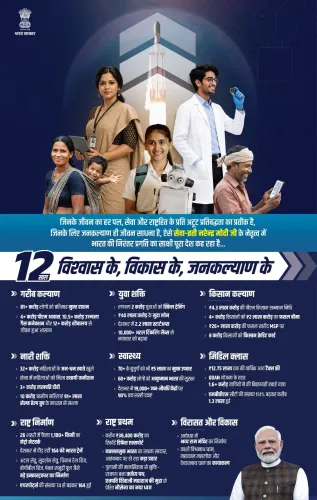
Seven development pillars highlighted: digital revolution, women's empowerment, farmer welfare, youth opportunity, health and education, modern infrastructure, and Aatmanirbhar Bharat .
The JAM trinity — Jan Dhan, Aadhaar, Mobile — underpins the DBT architecture scaled since 2014 .
Key schemes referenced include Swachh Bharat Mission (2014), Digital India (2015), and Aatmanirbhar Bharat Abhiyan (2020).
Upcoming CAG reports and Economic Survey data will be key benchmarks for independently assessing these governance claims.
Union Culture and Tourism Minister Gajendra Singh Shekhawat on Wednesday, 1 July 2026, posted a wide-ranging tribute to 12 years of Prime Minister Narendra Modi's governance, arguing that development under the current administration has moved beyond announcements to become visible, measurable change in the daily lives of crores of Indians.
Context
Writing in Hindi, Shekhawat invoked a pointed contrast: 'ek samay tha jab Delhi se bheje gaye ek rupaye mein se sirf 15 paise hi labhaarthi tak pahunch paate the' — 'there was a time when of every one rupee sent from Delhi, only 15 paise actually reached the beneficiary.' He argued that today, through Direct Benefit Transfer (DBT), the full amount reaches beneficiaries' bank accounts. The 15-paise figure is a reference to a remark attributed to former Prime Minister Rajiv Gandhi in the 1980s, which has since become a standard BJP talking point on welfare leakage.
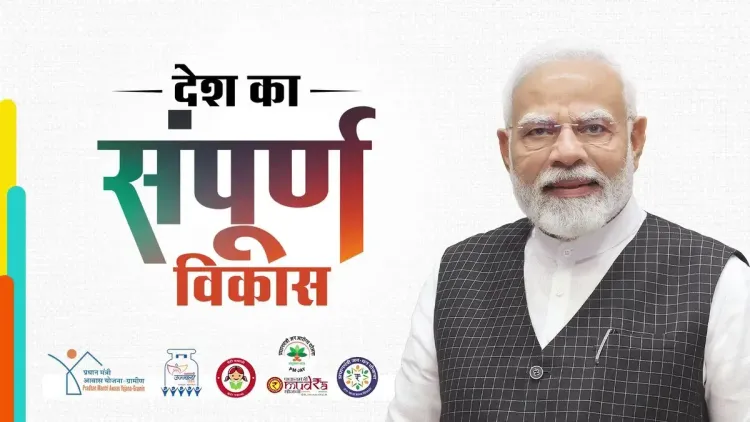
The post, accompanied by a video, lists seven pillars of what Shekhawat calls 'new India's story': digital revolution, women's empowerment, farmer welfare, youth opportunity, health and education reforms, modern infrastructure, and strides toward Aatmanirbhar Bharat. He invites readers to discover achievements 'from A to Z' that have given India's development a new identity.
Policy Backdrop
The DBT architecture was substantially scaled after 2014 through the JAM trinity — Jan Dhan bank accounts, Aadhaar biometric IDs, and Mobile connectivity — enabling direct electronic transfers that bypassed earlier multi-layered intermediary chains. The government has periodically cited DBT as a tool for eliminating ghost beneficiaries and reducing leakages across schemes ranging from LPG subsidies to MGNREGS wages.
The broader governance shift Shekhawat describes encompasses the Swachh Bharat Mission, launched on 2 October 2014, which targeted rural and urban sanitation; the Digital India programme, approved in 2015 to expand e-governance and digital public infrastructure; and the Aatmanirbhar Bharat Abhiyan, announced in May 2020 with fiscal and manufacturing self-reliance goals.
Stakeholders and Impact
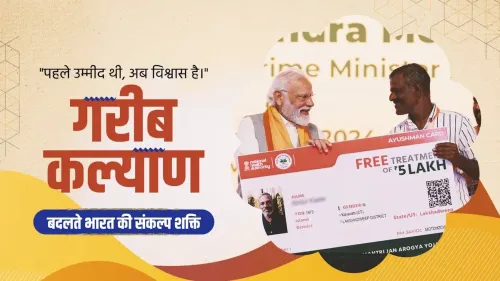
The primary beneficiaries cited in this governance narrative are rural households, women self-help groups, farmers, and MSMEs — constituencies that have been central to BJP's political mobilisation since 2014. DBT alone covers dozens of central schemes and has, according to government data, transferred funds worth several lakh crore rupees directly into beneficiary accounts over the past decade.
Women's empowerment features prominently in the post's checklist, consistent with flagship schemes such as Beti Bachao Beti Padhao, PM Ujjwala Yojana, and the expansion of Jan Dhan accounts among women. Youth opportunity references align with skilling initiatives and the Startup India push that have been central to the administration's economic messaging.
What's Next
The post arrives as the Modi government enters what would be the second year of its third term, a period when governance record-setting and milestone communication typically intensify ahead of state election cycles. Upcoming Economic Survey data and CAG audit reports on DBT effectiveness are expected to either bolster or complicate the efficiency claims being amplified by party leaders like Shekhawat.
Parliamentary debate on the Digital Personal Data Protection Act's implementation will also test the government's commitment to citizen-centric e-governance — a key plank of the 'new India' narrative being promoted across party platforms.
Point of View
Framing the BJP decade-plus as a structural break from Congress-era inefficiency. By listing seven broad pillars rather than specific scheme metrics, the post prioritises political messaging over verifiable data, which is consistent with how ruling-party leaders have used social media to shape perception ahead of state election cycles. Independent audit findings on DBT and digital infrastructure will ultimately determine how durable this narrative proves to be.
NationPress
1 Jul 2026
Frequently Asked Questions
What is the '15 paise' remark Shekhawat referenced in his post?
The '15 paise' reference alludes to a remark attributed to former Prime Minister Rajiv Gandhi in the 1980s, suggesting that of every rupee meant for welfare, only 15 paise reached the intended beneficiary. The BJP has long used this figure to contrast past welfare leakages with the current Direct Benefit Transfer system.
What is Direct Benefit Transfer (DBT) and how does it work?
Direct Benefit Transfer is a central government mechanism that electronically transfers subsidies and welfare payments directly into beneficiaries' bank accounts, bypassing intermediaries. It is built on the JAM trinity of Jan Dhan accounts, Aadhaar biometric IDs, and Mobile connectivity, and covers dozens of central schemes.
What are the seven pillars of 'new India' mentioned by Shekhawat?
Shekhawat listed digital revolution, women's empowerment, farmer welfare, youth opportunity, improvements in health and education, modern infrastructure, and progress toward Aatmanirbhar Bharat (self-reliant India) as the seven pillars of development under the Modi government.
What is Aatmanirbhar Bharat and when was it launched?
Aatmanirbhar Bharat Abhiyan, or Self-Reliant India Mission, was announced by PM Modi in May 2020 with a large fiscal package aimed at boosting domestic manufacturing, reducing import dependence, and strengthening key economic sectors.
Why is Gajendra Singh Shekhawat posting about governance if he is the Culture and Tourism Minister?
As a senior BJP leader and Lok Sabha MP from Jodhpur, Shekhawat regularly uses his social media platforms to amplify the ruling party's broader governance narrative, not just his own ministerial portfolio. Such posts are common practice among cabinet ministers during political milestone moments.