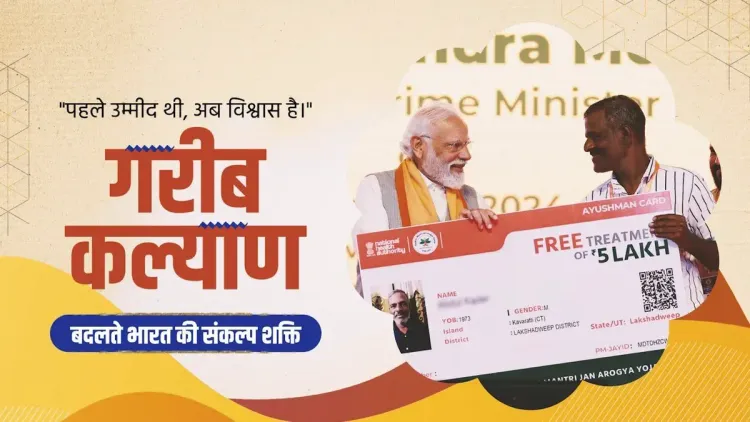
Shekhawat hails Modi's 12-year Garib Kalyan record
Synopsis
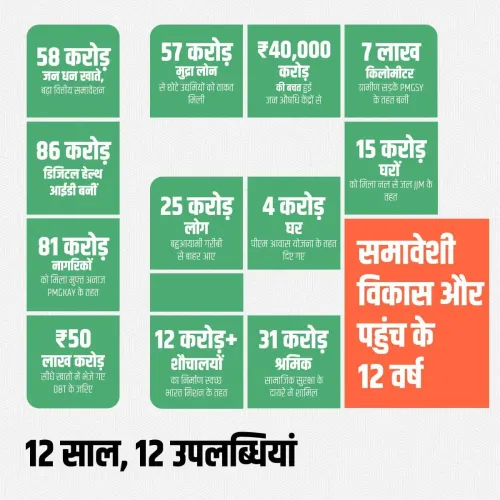
Union Minister Gajendra Singh Shekhawat on 8 June 2026 marked 12 years of PM Modi's Garib Kalyan governance, citing Jan Dhan, Ujjwala, Ayushman Bharat, PMAY and Jal Jeevan Mission as pillars of a welfare model rooted in the Antyodaya principle.
Key Takeaways
Gajendra Singh Shekhawat , Union Culture and Tourism Minister, posted on 8 June 2026 marking 12 years of PM Modi's Garib Kalyan governance model.
He cited five flagship schemes: Jan Dhan Yojana (banking), Ujjwala Yojana (LPG for women), Ayushman Bharat (healthcare), PMAY (housing), and Har Ghar Jal (tap water).
The post was part of the BJP's #12YearsOfGaribKalyan campaign marking the party's 12th year in power at the Centre.
Pradhan Mantri Awas Yojana (Gramin) was launched in November 2015 with a target of 2.95 crore rural pucca houses.
The welfare cluster is built around Aadhaar-linked direct benefit transfers and the Antyodaya principle of prioritising the weakest sections.
Upcoming Union Budget allocations and a mid-term review of Jal Jeevan Mission targets will be key indicators of continued commitment to this model.
Union Culture and Tourism Minister Gajendra Singh Shekhawat on Monday, 8 June 2026, praised Prime Minister Narendra Modi's welfare governance record, marking 12 years of what he termed the 'Modi Yatra' of reaching development to the last person in the queue. Shekhawat invoked the Sanskrit verse 'Sarve bhavantu sukhinah, sarve santu niramayah' ('May all be happy, may all be free from illness') to frame the government's welfare philosophy.
Context
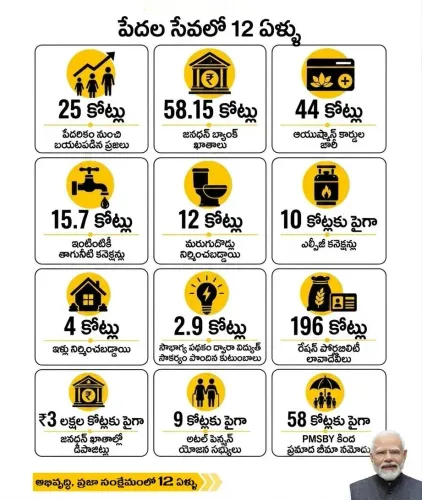
In his post, Shekhawat listed five flagship schemes as the pillars of the BJP government's Garib Kalyan model: Pradhan Mantri Jan Dhan Yojana for banking access, Pradhan Mantri Ujjwala Yojana for LPG connections to women, Ayushman Bharat for healthcare, Pradhan Mantri Awas Yojana for housing, and Har Ghar Jal Yojana for tap water. He described these as having 'infused new hope and confidence in the lives of crores of poor families.'
The post was tagged with #12YearsOfGaribKalyan, indicating a coordinated BJP communication push marking the party's 12th year in power at the Centre since the May 2014 general election victory.
Policy Backdrop
Pradhan Mantri Jan Dhan Yojana, launched in August 2014, was the government's first major financial inclusion drive, aimed at bringing unbanked households into the formal banking system. It was followed by Pradhan Mantri Ujjwala Yojana in May 2016, which targeted women from below-poverty-line families with subsidised LPG connections to replace biomass cooking fuels.
Ayushman Bharat, announced in August 2018, combined a health insurance component with primary wellness centres to extend coverage to economically vulnerable households. Pradhan Mantri Awas Yojana (Gramin), launched in November 2015, set a target of 2.95 crore rural pucca houses. The Jal Jeevan Mission, started in 2019, aims to provide tap water connections to all rural households under the Har Ghar Jal banner.
Collectively, these schemes are built around Aadhaar-linked direct benefit transfers and targeted subsidies, reflecting the Antyodaya principle of prioritising the weakest sections of society — a thread that has run consistently through successive Union Budgets since 2014.
Stakeholders and Impact
The primary beneficiaries of the schemes cited by Shekhawat are poor and rural families, women from below-poverty-line households, and unbanked or underserved communities across India. The convergence of financial inclusion, health, housing, and water access under a single welfare narrative has been the BJP's core electoral and governance argument at both national and state levels.
Shekhawat, a Lok Sabha MP from Jodhpur, Rajasthan, is among the senior BJP leaders amplifying the party's anniversary messaging. His framing of the welfare push as rooted in cultural and spiritual values — citing a classical Sanskrit benediction — reflects an effort to connect social policy with civilisational identity.
What's Next
The #12YearsOfGaribKalyan campaign is likely to build through June 2026 as the BJP marks the anniversary of its first full term. Analysts will watch for fresh data releases or mid-term reviews on Jal Jeevan Mission coverage targets and housing completion figures under Pradhan Mantri Awas Yojana. The next Union Budget's allocations to these flagship schemes will be a key test of whether the welfare-first narrative translates into sustained fiscal commitment.
Point of View
Lending a civilisational weight to what are essentially administrative programmes. The coordinated use of #12YearsOfGaribKalyan signals a party-wide anniversary push designed to consolidate the narrative that the Modi government's decade-plus in power has been defined by pro-poor governance rather than ideological polarisation. For a senior minister from Rajasthan, a state where the BJP has faced competitive electoral cycles, amplifying this welfare record also serves a local political purpose. The broader arc points to Garib Kalyan remaining the BJP's primary shield against opposition attacks on economic inequality heading into future electoral cycles.
NationPress
22 Sept 2026
Frequently Asked Questions
What is the #12YearsOfGaribKalyan campaign about?
The #12YearsOfGaribKalyan campaign is a BJP communication initiative marking 12 years of PM Narendra Modi's government at the Centre since May 2014, highlighting welfare schemes such as Jan Dhan, Ujjwala, Ayushman Bharat, PMAY, and Jal Jeevan Mission as evidence of pro-poor governance.
What welfare schemes did Shekhawat mention in his post?
Shekhawat cited Pradhan Mantri Jan Dhan Yojana (bank accounts), Pradhan Mantri Ujjwala Yojana (LPG for women), Ayushman Bharat (health coverage), Pradhan Mantri Awas Yojana (housing), and Har Ghar Jal Yojana (tap water) as the pillars of Modi's Garib Kalyan model.
When was Pradhan Mantri Jan Dhan Yojana launched?
Pradhan Mantri Jan Dhan Yojana was launched in August 2014 as the Modi government's flagship financial inclusion drive to bring unbanked households into the formal banking system.
What is the Antyodaya principle in Indian welfare policy?
The Antyodaya principle, meaning 'upliftment of the last person,' prioritises the poorest and most marginalised sections of society in welfare delivery. The BJP government has used it as the philosophical foundation for its cluster of direct-benefit schemes since 2014.
Who is Gajendra Singh Shekhawat?
Gajendra Singh Shekhawat is the Union Minister of Culture and Tourism, a senior BJP leader, and a Lok Sabha MP from Jodhpur, Rajasthan . He has held multiple cabinet portfolios in the Modi government.