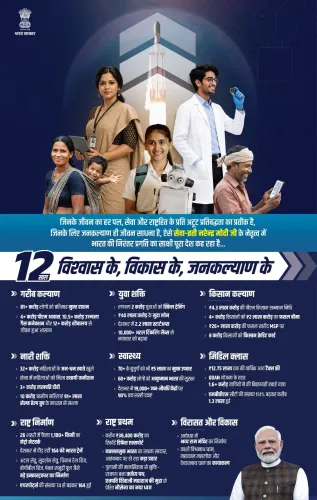
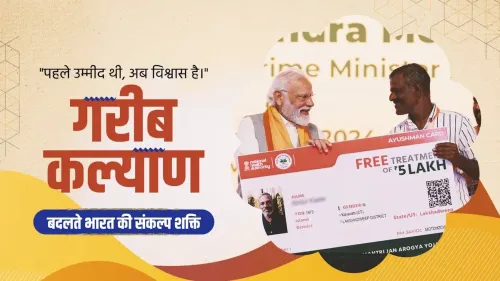
Shekhawat highlights 12 years of farm welfare under Modi
Synopsis
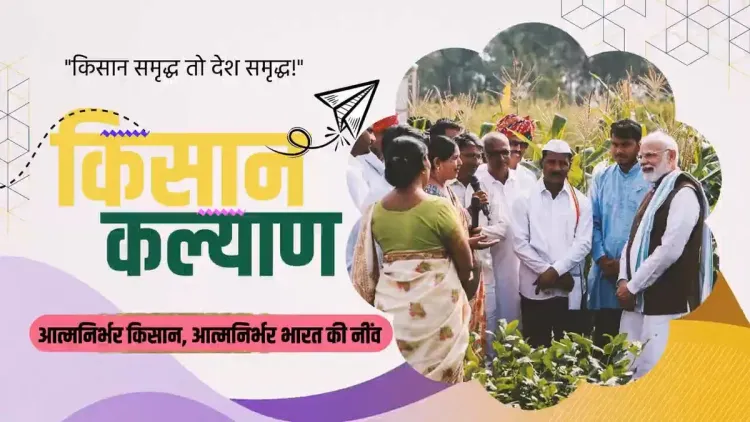
Union Minister Gajendra Singh Shekhawat invoked #12YearsOfKisanSamriddhi on 11 June 2026, citing PM-KISAN, e-NAM, Soil Health Cards and the Matsya Sampada Yojana as proof that farmers have moved from seed to market prosperity under 12 years of Prime Minister Modi's leadership.
Key Takeaways
Gajendra Singh Shekhawat posted on 11 June 2026 under the hashtag #12YearsOfKisanSamriddhi to mark 12 years of the Modi government's agricultural welfare drive.
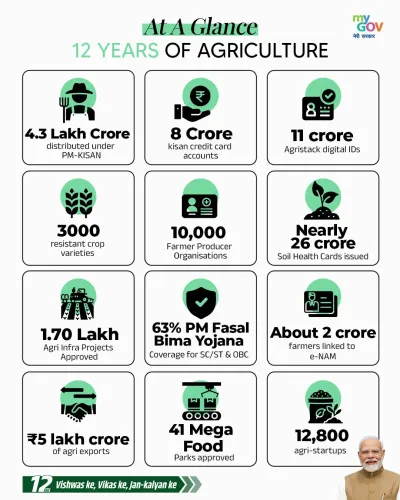
PM-KISAN provides Rs 6,000 per year in direct income support to eligible landholding farmers through three instalments since its February 2019 launch. e-NAM , introduced in 2016 , connects agricultural mandis electronically to expand market access for farmers across states.
The Soil Health Card scheme (launched 2015 ) and Pradhan Mantri Matsya Sampada Yojana (approved 2020 ) address input quality and fisheries modernisation respectively.
The messaging explicitly ties farm welfare to the government's Viksit Bharat (Developed India) vision targeting 2047 .
Parliamentary scrutiny of scheme utilisation and fresh budgetary allocations will be key indicators of policy continuity going forward.
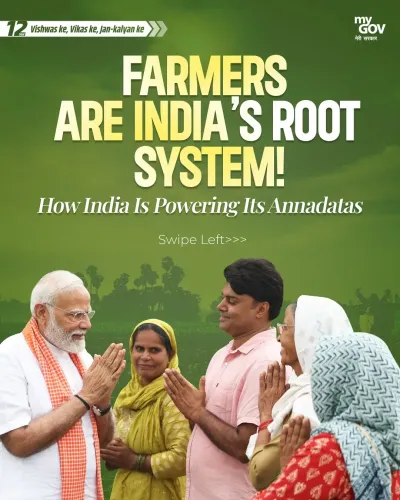
Union Culture and Tourism Minister Gajendra Singh Shekhawat on Thursday, 11 June 2026, invoked the hashtag #12YearsOfKisanSamriddhi to mark what the ruling dispensation describes as a transformative decade-plus for Indian farmers under Prime Minister Narendra Modi, citing flagship schemes spanning direct income support, electronic market access, soil science and fisheries development.
Context
Posting in Hindi, Shekhawat wrote that 'बीज से बाजार तक किसान खुशहाली का बदलाव देख रहे हैं' — 'from seed to market, farmers are witnessing a change in prosperity.' The post frames the last 12 years as a period of structural transformation for what he calls the annadata — the provider of food — a term of reverence widely used in political discourse for the farming community. He concluded by calling on citizens to join the journey of 'respect and prosperity' for farmers.
The messaging aligns with a political outreach cycle tied to the 12-year anniversary of the Modi government, which took office in May 2014. Shekhawat, a senior BJP leader and Lok Sabha MP from Jodhpur, Rajasthan, is one of several Union Ministers amplifying the anniversary narrative across social media platforms.
Policy Backdrop
The post specifically names four policy instruments. PM-KISAN, launched in February 2019, provides a direct income transfer of Rs 6,000 per year to eligible landholding farmers in three equal instalments. e-NAM, introduced in 2016, is an electronic trading platform designed to link agricultural mandis across states, giving farmers access to a wider, more competitive market.
The Soil Health Card scheme, rolled out nationally in 2015, distributes soil nutrient reports and fertiliser advisories to promote scientific farming. Pradhan Mantri Matsya Sampada Yojana, approved in 2020, targets modernisation of the fisheries value chain, covering infrastructure, sustainable production and market linkages. Together, these programmes represent the government's integrated approach: improving input quality, reducing market intermediation, managing crop risk and expanding allied activities like fisheries.
Shekhawat also referenced crop insurance as a pillar of farmer security, a reference to the Pradhan Mantri Fasal Bima Yojana, which provides subsidised insurance cover against crop loss due to natural calamities, pests and diseases.
Stakeholders and Impact
The primary beneficiaries of the schemes cited are landholding farmers across India's rural heartland and the fisheries sector, which employs millions in coastal and inland regions. Rajasthan, Shekhawat's home state, has a large agrarian population with a significant share of smallholder and dryland farmers who are the stated target of programmes like PM-KISAN and Soil Health Cards.
The post's use of the phrase 'aatmnirbhar hokar Viksit Bharat ki taakat' — 'becoming self-reliant and the strength of a Developed India' — explicitly links agricultural welfare to the government's broader Viksit Bharat (Developed India) vision, a long-term national development framework the administration has been promoting ahead of 2047.
What's Next
Parliamentary scrutiny of scheme utilisation rates, beneficiary coverage and fund disbursement under PM-KISAN and Matsya Sampada Yojana is expected to intensify in coming sessions. Any fresh budgetary allocations or impact assessments in the next economic survey will be closely watched by farm-sector analysts and opposition benches alike.
As the ruling party continues its anniversary messaging campaign, the government's ability to demonstrate verifiable on-ground outcomes — from mandi integration under e-NAM to soil card adoption rates — will determine how effectively the #12YearsOfKisanSamriddhi narrative translates into sustained political capital in rural constituencies.
Point of View
Designed to consolidate the BJP's rural support base ahead of future electoral cycles. By stringing together PM-KISAN, e-NAM, Soil Health Cards and Matsya Sampada Yojana in a single narrative arc, the messaging attempts to present disparate welfare programmes as a coherent, farmer-first policy doctrine. The invocation of 'Viksit Bharat' signals a deliberate effort to embed agricultural welfare within the government's long-term nation-building vocabulary, raising the stakes for measurable delivery. Whether the anniversary narrative gains traction will depend on how effectively the administration can demonstrate verifiable outcomes in scheme coverage and rural income data.
NationPress
22 Sept 2026
Frequently Asked Questions
What is PM-KISAN and how much money do farmers get?
PM-KISAN is a central government scheme that provides Rs 6,000 per year in direct income support to eligible landholding farmer families, paid in three equal instalments of Rs 2,000 directly into their bank accounts. It was launched in February 2019 .
What is e-NAM and how does it help Indian farmers?
e-NAM (Electronic National Agriculture Market) is a pan-India online trading platform launched in 2016 that connects agricultural mandis across states, allowing farmers to access a larger pool of buyers and more competitive prices for their produce.
What is the Soil Health Card scheme in India?
The Soil Health Card scheme, rolled out nationally in 2015 , provides farmers with a report card on the nutrient status of their soil along with recommendations on appropriate fertiliser dosages, helping reduce input costs and improve yields.
What is Pradhan Mantri Matsya Sampada Yojana?
Pradhan Mantri Matsya Sampada Yojana , approved in 2020 , is a central scheme aimed at modernising India's fisheries sector by improving infrastructure, strengthening value chains and promoting sustainable fish production to boost incomes in the sector.
What is #12YearsOfKisanSamriddhi?
#12YearsOfKisanSamriddhi is a social media hashtag used by BJP leaders and Union Ministers in June 2026 to mark 12 years of the Modi government and highlight agricultural welfare programmes launched since 2014 for India's farming community.