CM Pema Khandu Visits NEEPCO Colony Posa After Devastation
Synopsis
Arunachal Pradesh CM Pema Khandu, alongside Union Ministers Shivraj Chouhan and Kiren Rijiju, assessed devastation at the NEEPCO colony in Posa on July 1, 2026, and visited relief camps, pledging to restore normalcy and build long-term disaster resilience.
Key Takeaways
Arunachal Pradesh CM Pema Khandu conducted aerial and ground damage assessments at the NEEPCO Ltd Colony, Posa on July 1, 2026 .
Union Ministers Shivraj Singh Chouhan and Kiren Rijiju accompanied the Chief Minister during the joint assessment.
NEEPCO Ltd is a central public sector undertaking operating hydropower projects across Northeast India; its Posa colony houses employees and families.
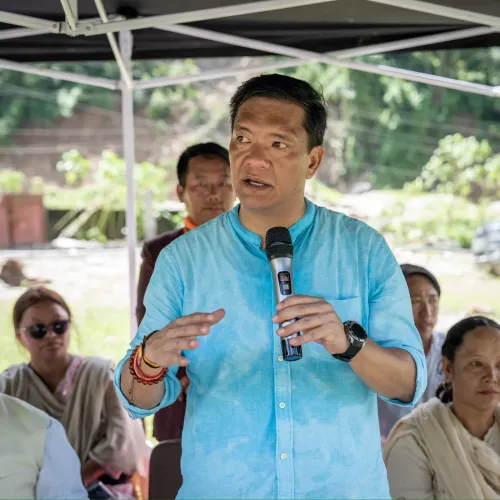
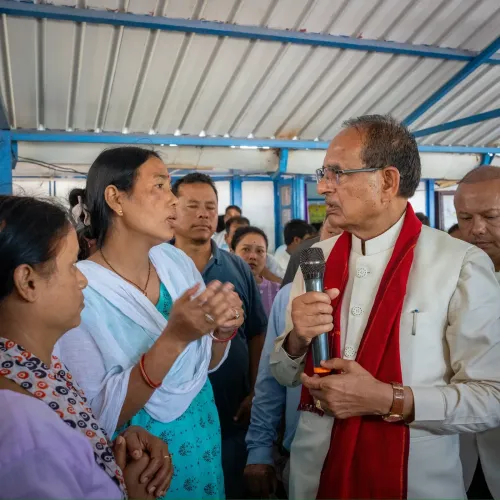
CM Khandu visited the relief camp and met displaced families, pledging firm government support for recovery.
The government committed to 'restoring normalcy, rebuilding lives, and strengthening resilience against future disasters.' Central relief packages and NDRF deployment reports are expected in the weeks following the ministerial assessment visit.
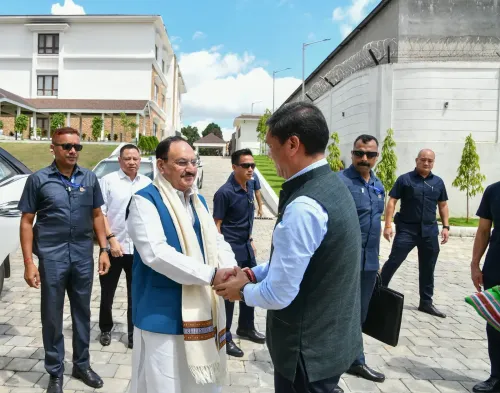
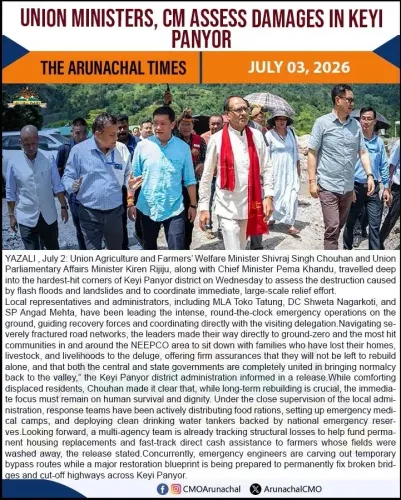
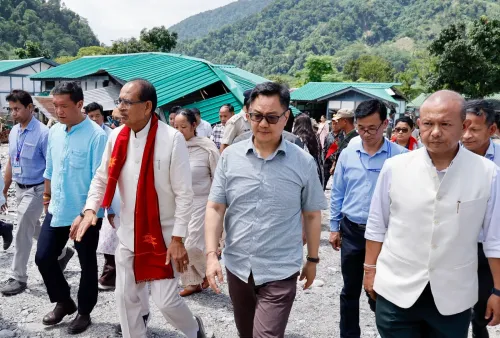
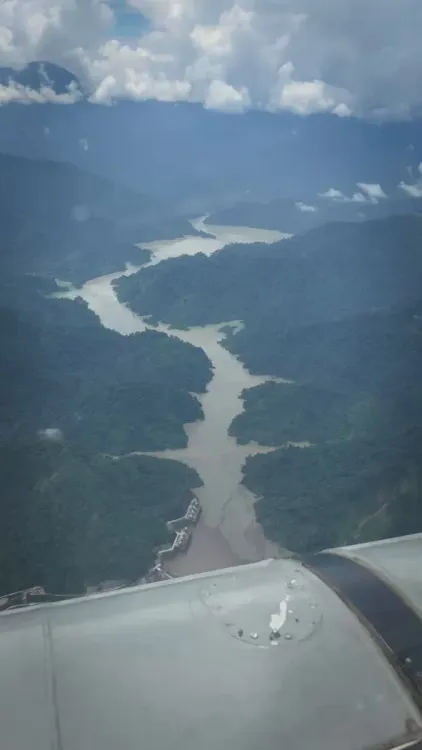
Arunachal Pradesh Chief Minister Pema Khandu on Wednesday, July 1, 2026, conducted both aerial and ground assessments of the disaster-hit NEEPCO Ltd Colony at Posa, accompanied by Union Ministers Shivraj Singh Chouhan and Kiren Rijiju, and subsequently visited a relief camp to meet families displaced by the devastation.
Context
Describing the situation as 'heartbreaking', Chief Minister Khandu posted that the scale of devastation at the North Eastern Electric Power Corporation (NEEPCO) colony in Posa was assessed from the air and on the ground alongside the two Union Ministers. He also visited the relief camp to directly interact with affected families. 'We stand firmly with every affected family and are committed to restoring normalcy, rebuilding lives, and strengthening resilience against future disasters,' Khandu wrote.
The presence of two senior Union Ministers alongside the Chief Minister signals the severity of the event and underscores the Centre's direct involvement in the relief and assessment effort.
Policy Backdrop
NEEPCO Ltd — the North Eastern Electric Power Corporation Limited — is a central public sector undertaking that operates multiple hydropower projects across Northeast India. Its residential colonies, including the one at Posa, are typically situated along river valleys for operational proximity to power installations, making them structurally exposed to monsoon-season hazards such as flash floods, landslides, and river erosion.
Arunachal Pradesh's hilly terrain and heavy annual monsoon rainfall have historically made the state one of the most disaster-prone regions in the country. Under the Disaster Management Act, 2005, the National Disaster Management Authority (NDMA) is mandated to coordinate responses to such calamities, and joint central-state aerial assessments have become standard protocol for expediting relief funding and reconstruction approvals following major events.
Kiren Rijiju, a Union Minister and senior BJP leader, represents Arunachal Pradesh at the national level, giving him a direct stake in the state's disaster response. Shivraj Singh Chouhan, a Union Minister with extensive administrative experience as former Chief Minister of Madhya Pradesh, brings additional institutional weight to the joint assessment.
Stakeholders and Impact
The most immediately affected are NEEPCO employees and their families residing in the Posa colony, who have been displaced and are currently housed in relief camps. Broader communities in the surrounding area of Posa, Arunachal Pradesh are also impacted by the destruction of local infrastructure.
Hydropower generation capacity in the region could face disruption depending on the extent of damage to NEEPCO's operational assets, with downstream effects on power supply across the Northeast. Central and state government agencies, along with the National Disaster Response Force (NDRF), are among the key institutional stakeholders now engaged in the response.
What's Next
The joint ministerial visit is expected to be followed by the release of central relief packages and formal NDRF deployment assessments in the coming weeks. State budget allocations for slope stabilisation measures and early-warning systems are likely to come under renewed scrutiny given the scale of the damage.
Chief Minister Khandu's explicit commitment to 'strengthening resilience against future disasters' points toward longer-term infrastructure hardening as a policy priority, a pattern consistent with how the state government has responded to previous monsoon-season calamities in Arunachal Pradesh.
Point of View
Which is a prerequisite for releasing funds under national disaster relief norms. For Kiren Rijiju, whose constituency is Arunachal Pradesh, the visit reinforces his role as a conduit between the state and New Delhi on critical infrastructure protection. The focus on a NEEPCO colony is significant: damage to central government assets creates a parallel accountability track beyond the state's own disaster management machinery. Khandu's explicit language around 'resilience against future disasters' suggests the administration is preparing to position long-term slope stabilisation and early-warning investments as a budget priority in the coming fiscal cycle.
NationPress
30 Sept 2026
Frequently Asked Questions
What happened at NEEPCO colony Posa in Arunachal Pradesh?
The NEEPCO Ltd residential colony at Posa in Arunachal Pradesh suffered significant devastation, prompting a joint aerial and ground assessment by Chief Minister Pema Khandu and Union Ministers Shivraj Singh Chouhan and Kiren Rijiju on July 1, 2026. The exact trigger event has not been officially confirmed, but the region is highly vulnerable to monsoon-related flash floods and landslides.
Who is NEEPCO and why does it have a colony in Posa?
NEEPCO, or the North Eastern Electric Power Corporation Limited, is a central public sector undertaking that operates hydropower projects across Northeast India. Its residential colonies, including the one at Posa, house employees and their families close to operational project sites, which are typically located along river valleys.
Why did Union Ministers visit Arunachal Pradesh after the Posa disaster?
Union Ministers Shivraj Singh Chouhan and Kiren Rijiju joined Chief Minister Pema Khandu for a joint assessment of the damage at Posa. Such central-state joint visits are standard protocol under India's disaster management framework and are often a prerequisite for expediting the release of central relief funds and NDRF resources.
What relief measures are being taken for families affected at NEEPCO Posa?
A relief camp has been set up for displaced families from the NEEPCO colony, which Chief Minister Khandu visited on July 1, 2026. The government has committed to restoring normalcy and rebuilding lives, with central relief packages and formal NDRF deployment expected to follow the ministerial assessment.
Is Arunachal Pradesh frequently hit by monsoon disasters?
Yes. Arunachal Pradesh's hilly terrain and heavy monsoon rainfall make it one of the most disaster-prone states in India, with districts regularly experiencing landslides, flash floods, and river erosion that damage both civilian and infrastructure assets, including power-sector townships.