CM Bhajanlal Orders GPS Tracking for Rajasthan's Mobile Vet Units
Synopsis
The Chief Minister's Office of Rajasthan on 21 July 2026 ordered GPS and photo-based tracking for all mobile veterinary units and directed that adequate stocks of prescribed medicines be maintained, strengthening accountability in rural animal healthcare delivery.
Key Takeaways
The Chief Minister's Office of Rajasthan issued a directive on 21 July 2026 for GPS and photo-based tracking of all mobile veterinary units.
Each mobile unit must maintain adequate stocks of all prescribed medicines, per the order.
The directive was addressed to Chief Minister Bhajan Lal Sharma under the #आपणो_अग्रणी_राजस्थान campaign.
Mobile Veterinary Units provide on-site animal healthcare in remote rural districts where fixed infrastructure is limited.
The move extends a broader national trend of GPS-based accountability for government field units, with roots in the Livestock Health and Disease Control Programme of the 12th Five Year Plan .
Implementation will require procurement of GPS devices and a backend monitoring system by the Rajasthan Animal Husbandry Department .
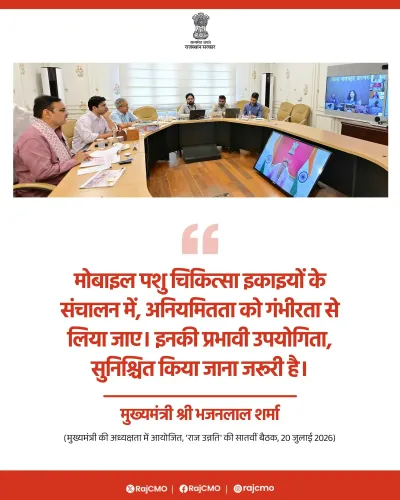
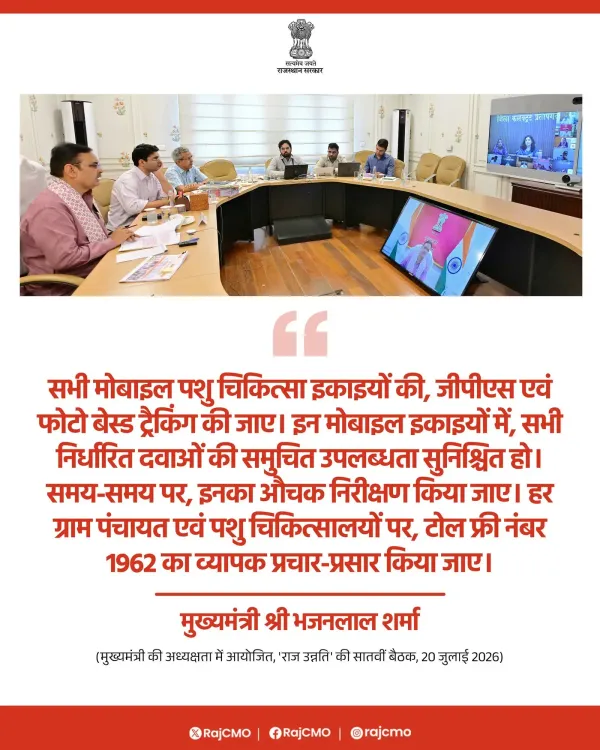
The Chief Minister's Office of Rajasthan directed on Tuesday, 21 July 2026 that all mobile veterinary units in the state be brought under GPS and photo-based tracking, and that each unit maintain adequate stocks of all prescribed medicines. The directive was addressed to Chief Minister Bhajan Lal Sharma and posted under the campaign hashtag #आपणो_अग्रणी_राजस्थान ('Our Leading Rajasthan').
Context
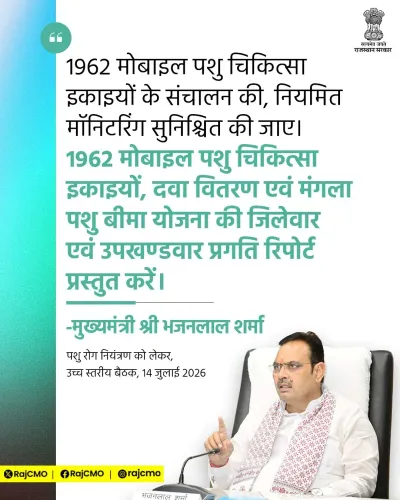
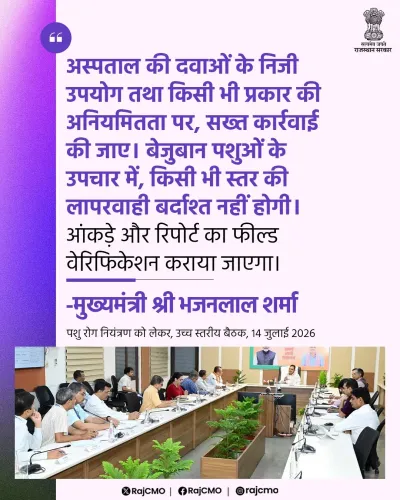
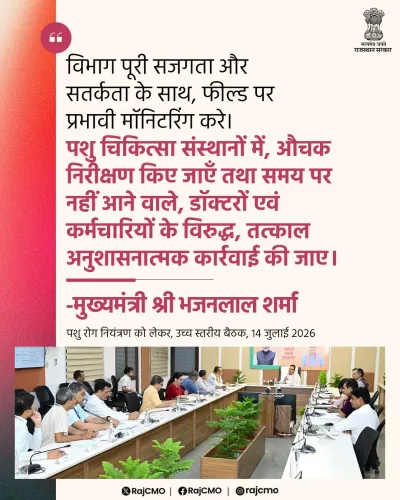
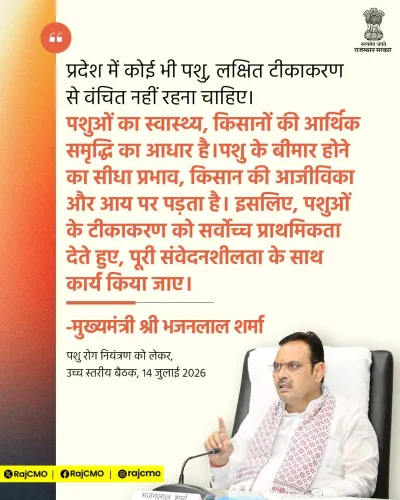
The post, shared from the official @RajCMO account, instructs that 'सभी मोबाइल पशु चिकित्सा इकाइयों की, जीपीएस एवं फोटो बेस्ड ट्रैकिंग की जाए' — 'all mobile veterinary units should be brought under GPS and photo-based tracking.' It further mandates that 'सभी निर्धारित दवाओं की समुचित उपलब्धता सुनिश्चित हो' — 'adequate availability of all prescribed medicines must be ensured' in these units.
Mobile Veterinary Units are field-level vehicles that deliver on-site animal healthcare to livestock farmers in remote and rural districts, where fixed veterinary infrastructure is often absent or limited.
Policy Backdrop
The foundation for mobile veterinary units in Indian states was laid under the Livestock Health and Disease Control Programme during the 12th Five Year Plan, through which the Government of India supported state-level deployment of such units. Rajasthan, with one of the country's largest livestock populations, has maintained these units as a core part of its animal husbandry infrastructure.
The use of GPS-based tracking for government vehicles and field health units has been adopted across several Indian states since the mid-2010s as a tool to improve accountability, reduce service gaps, and ensure last-mile delivery. The current directive extends this digital-monitoring approach to Rajasthan's veterinary services. The move also aligns with Chief Minister Bhajan Lal Sharma's broader administrative focus on rural development and technology-enabled governance since he assumed office in December 2023.
Stakeholders and Impact
The primary beneficiaries of this directive are livestock farmers across Rajasthan's rural districts, who depend on mobile units for timely veterinary care. GPS and photo-based tracking is intended to verify that units are physically reaching designated locations rather than remaining stationary, directly addressing concerns about service delivery gaps.
The requirement for adequate medicine stocks targets a recurring on-ground problem: mobile units arriving at remote locations without the medicines needed to treat animals, rendering the visit ineffective. Veterinary field staff will face tighter operational accountability under the new monitoring framework.
What's Next
Implementation will depend on procurement and installation of GPS devices across all operational mobile veterinary units, as well as the establishment of a backend monitoring system to process photo-based attendance and location data. Observers will watch for follow-up orders from the Rajasthan Animal Husbandry Department and any related budgetary allocations in the state's upcoming financial planning cycle.
The directive signals that the government intends to hold field-level veterinary services to measurable, verifiable standards — a shift that could set a template for similar accountability mechanisms in other rural welfare departments across the state.
Point of View
The order targets two of the most common failure points in last-mile rural health delivery. It also fits neatly into the ruling party's 'Aapno Agrani Rajasthan' narrative, framing technology adoption as evidence of a proactive, farmer-first government. Whether the directive translates into operational change will hinge on the speed of hardware procurement and the robustness of the monitoring backend — factors that have historically determined whether such orders remain on paper.
NationPress
20 Oct 2026
Frequently Asked Questions
What did the Rajasthan CMO order about mobile veterinary units?
The Chief Minister's Office of Rajasthan directed on 21 July 2026 that all mobile veterinary units be tracked via GPS and photo-based systems, and that each unit carry adequate stocks of all prescribed medicines.
What are mobile veterinary units in Rajasthan?
Mobile Veterinary Units are government-operated vehicles that travel to remote and rural areas to provide on-site healthcare to livestock, serving farmers who lack access to fixed veterinary facilities.
Why is GPS tracking being introduced for mobile vet units?
GPS and photo-based tracking is intended to verify that units are physically reaching their designated locations and to improve accountability in field-level veterinary service delivery.
Who is Bhajan Lal Sharma and what is his role in this directive?
Bhajan Lal Sharma is the Chief Minister of Rajasthan, serving since December 2023. The CMO directive on mobile veterinary units was addressed to him as part of the state government's rural governance push.
What is the Aapno Agrani Rajasthan campaign?
Aapno Agrani Rajasthan, meaning 'Our Leading Rajasthan,' is a campaign hashtag used by the Rajasthan state government to highlight governance and development initiatives under the Bhajan Lal Sharma administration.