CM Bhajanlal pushes universal livestock vaccination in Rajasthan
Synopsis
The Rajasthan CMO, on 15 July 2026, directed that no livestock in the state be left out of targeted vaccination, linking animal health directly to farmers' economic prosperity and reinforcing the state's alignment with the central NADCP programme.
Key Takeaways
The Chief Minister's Office of Rajasthan issued a directive on 15 July 2026 calling for universal targeted livestock vaccination across the state.
CM Bhajanlal Sharma was directly tagged, signalling top-level political ownership of the animal health agenda.
The directive frames animal health as 'the foundation of farmers' economic prosperity,' linking livestock welfare to rural income policy.
Rajasthan has one of India's largest livestock populations, making vaccination coverage a significant economic issue for rural households.
The push aligns with the Central Government's National Animal Disease Control Programme (NADCP) , launched in 2019 for 100% cattle vaccination against FMD and Brucellosis.
District-wise coverage reports and potential supplementary budget announcements for 2026-27 will be the key indicators of follow-through.
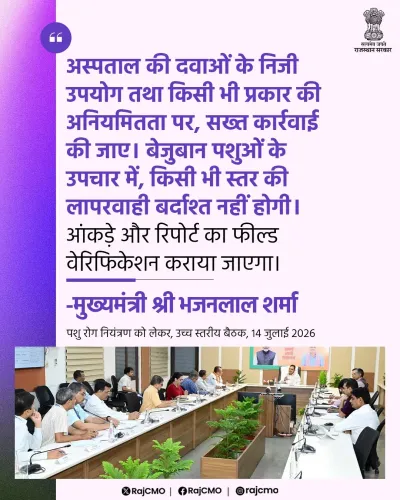
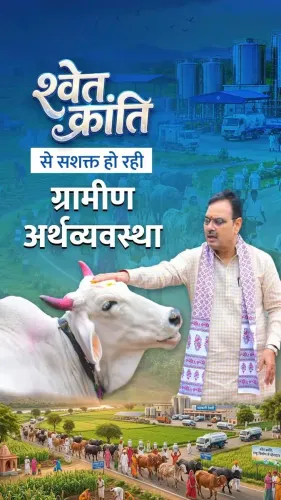
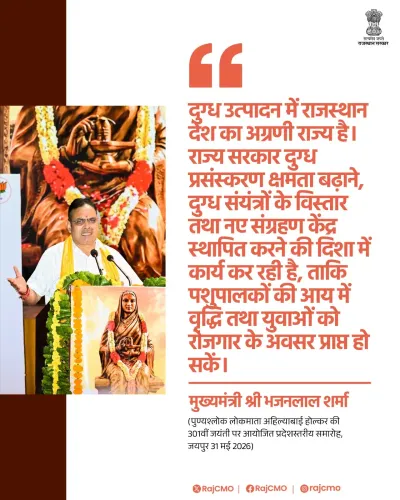
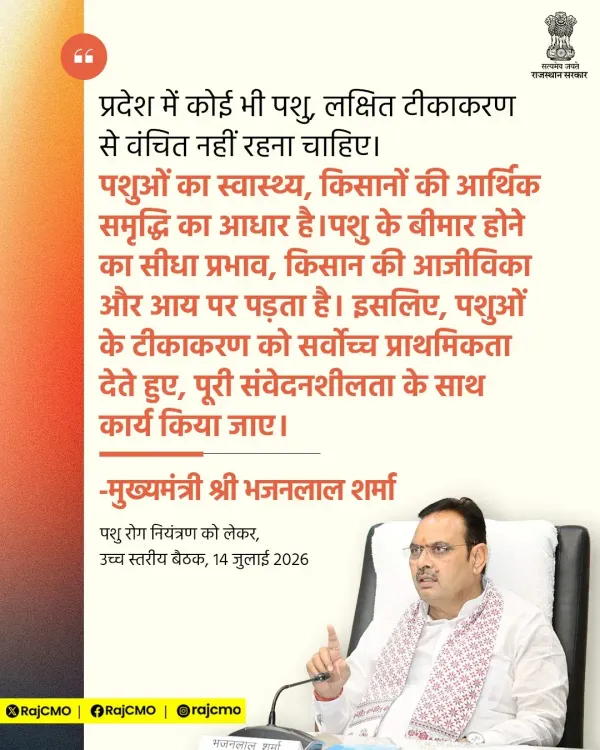
The Chief Minister's Office of Rajasthan, on behalf of Chief Minister Bhajanlal Sharma, issued a directive on Wednesday, 15 July 2026, calling for universal targeted vaccination of all livestock across the state, framing animal health as the foundation of farmers' economic prosperity.
The post, shared on the official CMO account and tagging CM Bhajanlal Sharma, stated: 'Pradesh mein koi bhi pashu, lakshit tikaaran se vanchit nahin rehna chahiye. Pashuon ka swasthya, kisanon ki aarthik samriddhi ka aadhar hai.' ('No animal in the state should be left out of targeted vaccination. Animal health is the foundation of farmers' economic prosperity.')
Context
Rajasthan holds one of India's largest livestock populations, and animal husbandry is a critical pillar of rural incomes across the state's semi-arid districts. Diseases such as Foot and Mouth Disease (FMD) directly reduce milk output and impair draught animals, causing measurable income losses for small and marginal farmers. The CMO's directive signals a push to eliminate gaps in existing vaccination coverage, with the hashtag #आपणो_अग्रणी_राजस्थान ('Our Leading Rajasthan') reinforcing the state government's branding around farmer welfare.
Policy Backdrop
The Central Government launched the National Animal Disease Control Programme (NADCP) in 2019, targeting 100% vaccination coverage of cattle against FMD and Brucellosis across all states, including Rajasthan. The programme provides vaccines free of cost to farmers and mandates systematic district-level drives through state animal husbandry departments. The Rajasthan government's renewed emphasis on 'no animal left out' aligns with the NADCP's universal-coverage mandate and continues a long-standing state practice of integrating central livestock health schemes with local farmer welfare messaging.
Successive Rajasthan governments have treated livestock vaccination as an agricultural policy priority, given that dairy and draught-animal productivity are directly tied to rural household incomes. The current BJP administration under CM Sharma has sought to position animal husbandry alongside crop support as a dual pillar of its agrarian agenda since taking office in December 2023.
Stakeholders and Impact
The primary beneficiaries of expanded vaccination coverage are livestock farmers and dairy producers across Rajasthan's rural districts. For smallholder farmers who depend on a single milch animal or a pair of bullocks, a single disease outbreak can eliminate a season's income. Universal vaccination also supports the broader dairy supply chain, protecting milk procurement volumes for cooperatives and private processors operating in the state.
Animal husbandry department field staff and veterinary officers at the block and panchayat level will be central to executing any intensified drive, as last-mile vaccination requires physical outreach to remote pastoral communities and tribal belts where coverage has historically lagged.
What's Next
Attention will now turn to the Rajasthan Animal Husbandry Department's district-wise vaccination schedules and whether the state tables supplementary budget allocations for the 2026-27 fiscal year to support intensified outreach. Progress reports on coverage metrics across Rajasthan's 33 districts will indicate whether the CMO's directive translates into measurable on-ground action. The government's ability to close existing coverage gaps — particularly in remote and tribal areas — will be the real test of this stated commitment to universal animal health protection.
Point of View
Using farmer welfare as a unifying theme ahead of rural outreach cycles. By personally tagging CM Bhajanlal Sharma, the post places executive accountability at the top — a deliberate signal to the bureaucracy that vaccination gaps will carry political weight. The 'no animal left out' framing mirrors the language of social-inclusion campaigns, effectively extending welfare-state vocabulary into the livestock sector. Whether this translates into measurable coverage improvement will depend on last-mile veterinary infrastructure, which remains the persistent weak link in Rajasthan's animal husbandry delivery chain.
NationPress
13 Oct 2026
Frequently Asked Questions
What did the Rajasthan CMO say about livestock vaccination?
The Rajasthan CMO stated on 15 July 2026 that no animal in the state should be left out of targeted vaccination, and that animal health is the foundation of farmers' economic prosperity.
What is the National Animal Disease Control Programme?
The National Animal Disease Control Programme (NADCP) is a Central Government scheme launched in 2019 to achieve 100% vaccination of cattle against Foot and Mouth Disease and Brucellosis, with vaccines provided free of cost to farmers across all states including Rajasthan.
Why is livestock vaccination important for Rajasthan farmers?
Rajasthan has one of India's largest livestock populations, and diseases like FMD reduce milk output and impair draught animals, directly cutting rural household incomes. Universal vaccination protects both smallholder farmers and the broader dairy supply chain.
Who is Bhajanlal Sharma and what is his role in this?
Bhajanlal Sharma is the Chief Minister of Rajasthan, sworn in December 2023 from the BJP. He was directly tagged in the CMO post, placing top-level political accountability on the livestock vaccination drive.
What should we watch for after this Rajasthan livestock vaccination directive?
Key things to watch include the Rajasthan Animal Husbandry Department's district-wise vaccination schedules, any supplementary budget allocations for 2026-27, and coverage data from the state's 33 districts — especially remote and tribal areas where gaps have historically been highest.