Rajasthan CMO directs regular CLG meetings in all districts
Synopsis
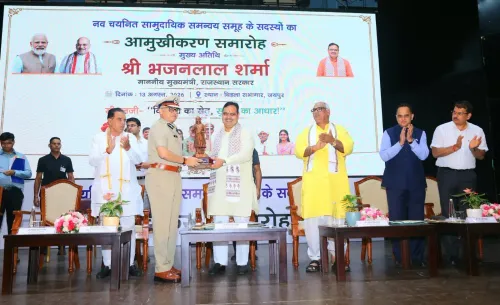
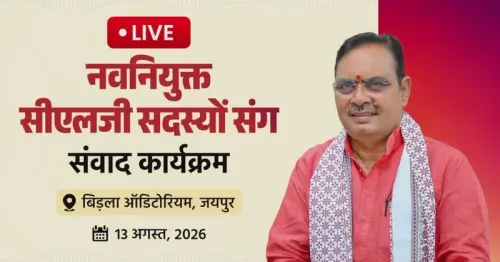
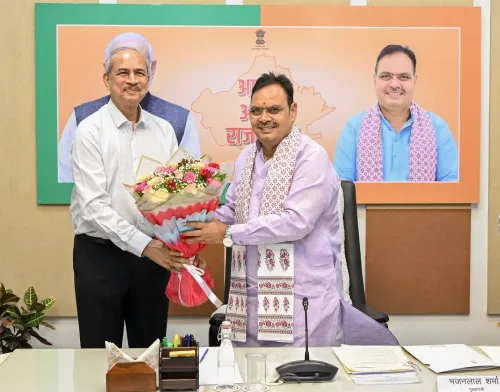
The Chief Minister's Office of Rajasthan has directed that Community Liaison Group meetings be held regularly in all districts of the state. The directive, addressed to CM Bhajan Lal Sharma, aligns with the BJP government's push for stronger district-level administrative coordination under the 'Aapno Agrani Rajasthan' vision.
Key Takeaways
The Chief Minister's Office of Rajasthan issued a directive on 14 July 2026 for regular Community Liaison Group (CLG) meetings in all districts.
The instruction was addressed to Chief Minister Bhajan Lal Sharma via the official post.
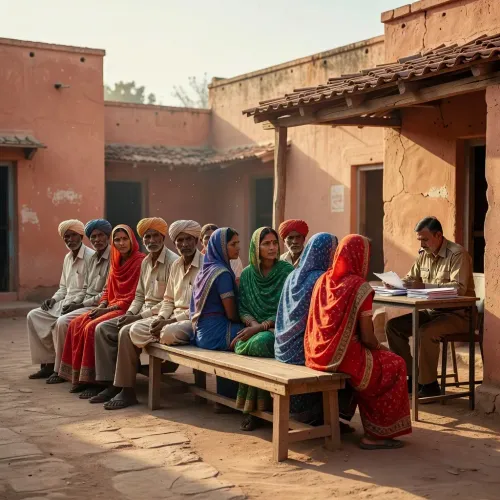
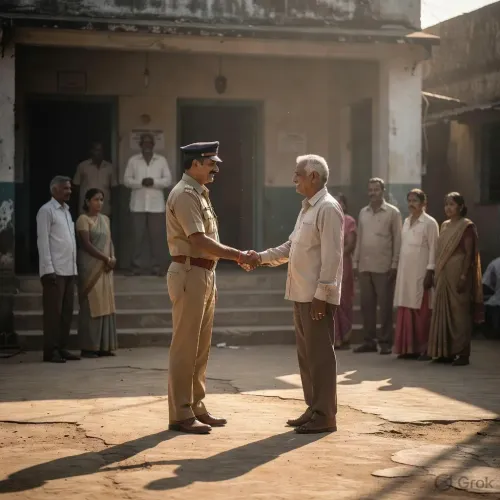
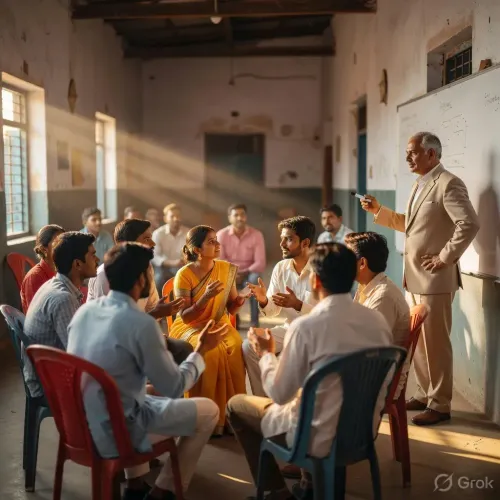
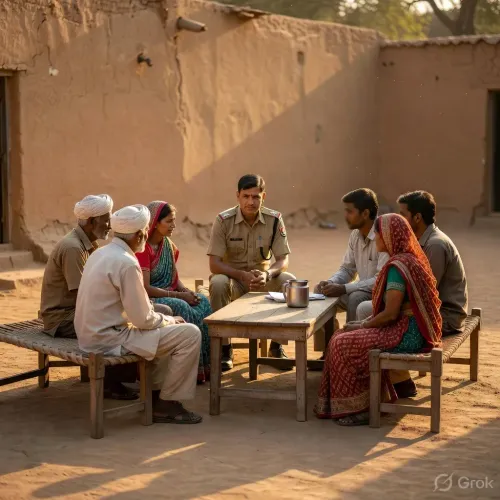
CLGs function as a bridge between district administrations and local communities for grievance redressal and scheme feedback.
Rajasthan has 33 districts , making uniform CLG activity a significant administrative undertaking.
The directive is consistent with the BJP government's broader pattern of issuing operational coordination guidelines to field officers since December 2023 .
Compliance by district collectors and subsequent state-level review will determine the directive's on-ground impact.
The Chief Minister's Office of Rajasthan, in a directive addressed to Chief Minister Bhajan Lal Sharma, called on Tuesday, 14 July 2026 for Community Liaison Group (CLG) meetings to be held regularly across all districts of the state.
Context
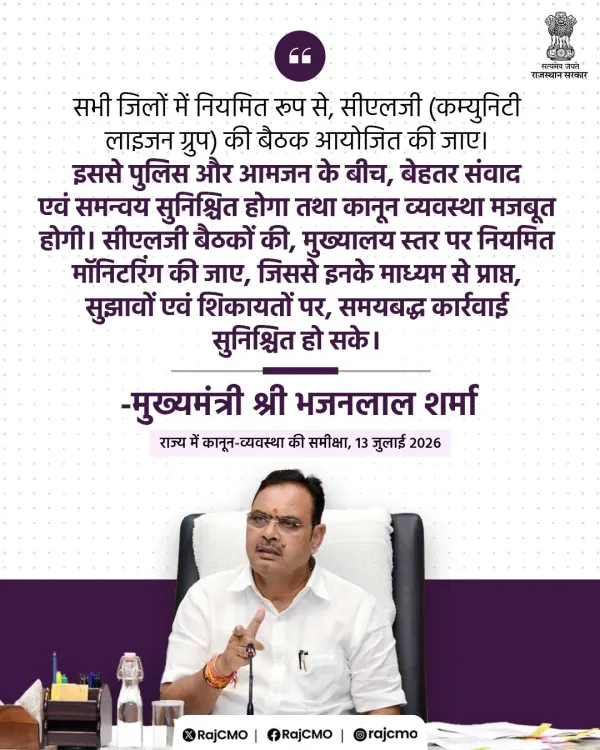
The official post, shared under the hashtag #आपणो_अग्रणी_राजस्थान ('Our Pioneering Rajasthan'), issued a clear administrative instruction: 'सभी जिलों में नियमित रूप से, सीएलजी (कम्युनिटी लाइजन ग्रुप) की बैठक आयोजित की जाए' — meaning 'Community Liaison Group meetings should be organised regularly in all districts.' The directive was addressed directly to @BhajanlalBjp, the official handle of Chief Minister Bhajan Lal Sharma, signalling that the instruction carries the weight of the Chief Minister's Office.
Policy Backdrop
Community Liaison Groups are district-level bodies designed to serve as a bridge between local administration and residents, enabling two-way communication on civic grievances, law-and-order matters, and scheme implementation. Rajasthan has 33 districts, and ensuring consistent CLG activity across all of them is a standard administrative challenge that successive state governments have grappled with.
Since Chief Minister Bhajan Lal Sharma assumed office in December 2023 following the BJP's victory in the state assembly elections, the government has repeatedly issued operational guidelines to district-level field officers aimed at improving administrative responsiveness. This directive fits squarely within that broader pattern of top-down coordination mandates.
Stakeholders and Impact
District collectors and their administrative teams are the primary recipients of this directive, as they are responsible for convening and facilitating CLG meetings at the ground level. For local communities, regular CLG meetings provide a structured forum to raise concerns directly with officials, potentially accelerating resolution of civic issues.
A consistent CLG schedule across all 33 districts would also improve the state government's ability to gather real-time feedback on the delivery of flagship schemes and welfare programmes, making district administrations more accountable to residents.
What's Next
The key measure of this directive's effectiveness will be the compliance reports submitted by district collectors on CLG meeting schedules. Observers will watch for any state-level review mechanism that tracks whether meetings are being held regularly and whether community feedback fed through CLGs is translating into administrative action.
If the directive is followed through with monitoring and reporting requirements, it could strengthen the government's stated goal of making Rajasthan a model of responsive district-level governance — the very aspiration captured in the hashtag #आपणो_अग्रणी_राजस्थान.
Point of View
Via an official social media post tagged to the Chief Minister, adds a layer of political accountability that an internal circular would not. This fits the BJP government's broader communication strategy of using public-facing digital channels to reinforce administrative discipline. Whether the directive translates into measurable outcomes will depend entirely on the monitoring architecture the state puts in place behind it.
NationPress
12 Oct 2026
Frequently Asked Questions
What is a Community Liaison Group (CLG) in Rajasthan?
A Community Liaison Group (CLG) is a district-level body that facilitates direct communication between local administration and residents, covering civic grievances, scheme delivery, and community feedback.
Why has the Rajasthan CMO directed regular CLG meetings?
The Chief Minister's Office issued the directive to ensure that CLG meetings are held consistently across all 33 districts, strengthening administrative responsiveness and public interface at the ground level.
Who is the Chief Minister of Rajasthan in 2026?
Bhajan Lal Sharma of the BJP has been serving as Chief Minister of Rajasthan since December 2023, following the party's victory in the state assembly elections.
How many districts does Rajasthan have?
Rajasthan has 33 districts , and the directive calls for CLG meetings to be held regularly in every one of them.
What does 'Aapno Agrani Rajasthan' mean?
Aapno Agrani Rajasthan translates to 'Our Pioneering Rajasthan' and is a hashtag used by the state government to frame its governance and development initiatives under the current BJP administration.