Rajasthan CMO sets $350bn by 2030, $4.3tn by 2047 economy target
Synopsis
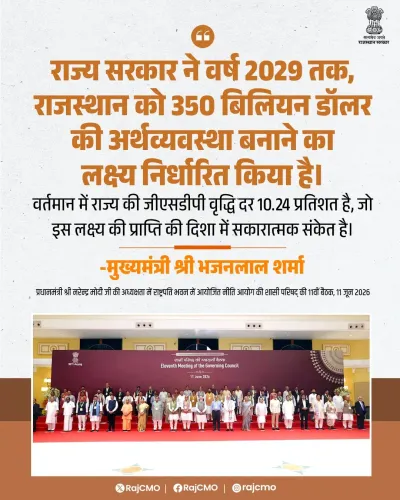
The Chief Minister's Office of Rajasthan announced on 17 August 2026 that the state targets a $350 billion economy by 2030 and $4.3 trillion by 2047, aligning with India's Viksit Bharat framework and signalling a major push across mining, renewables, tourism and manufacturing.
Key Takeaways
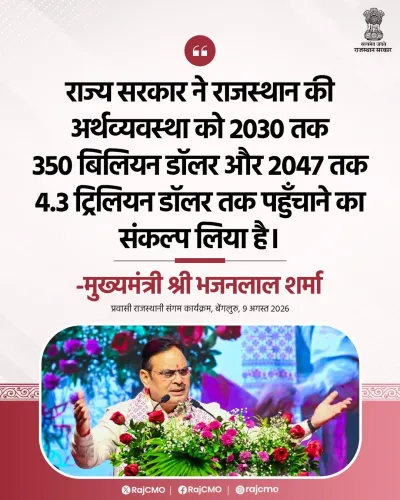
Rajasthan's CMO declared a target of $350 billion economy by 2030 and $4.3 trillion by 2047 .
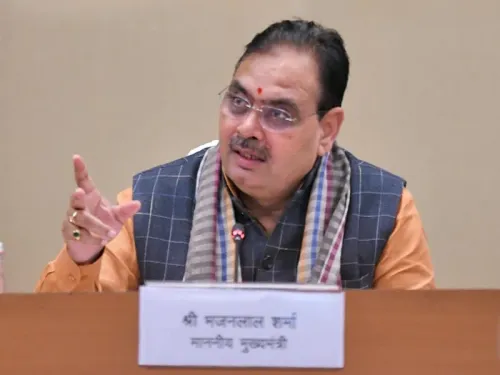
The announcement is tagged to Chief Minister Bhajan Lal Sharma , who took office in December 2023 .
The targets align with India's national Viksit Bharat@2047 development framework.
Rajasthan's economy is anchored in agriculture, mining, tourism, and renewable energy .
Concrete policy action — investor summits, industrial policy updates, single-window reforms — will be the next test of these ambitions.
India's largest state by area has drawn a bold line in the sand. The Chief Minister's Office of Rajasthan declared on Monday, 17 August 2026 that the state is committed to growing its economy to $350 billion by 2030 and a staggering $4.3 trillion by 2047 — targets that would place Rajasthan among the most consequential regional economies on the planet.
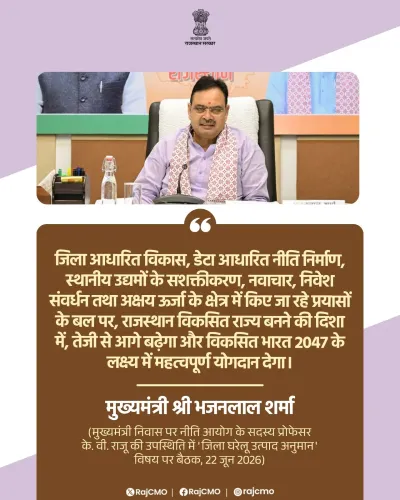
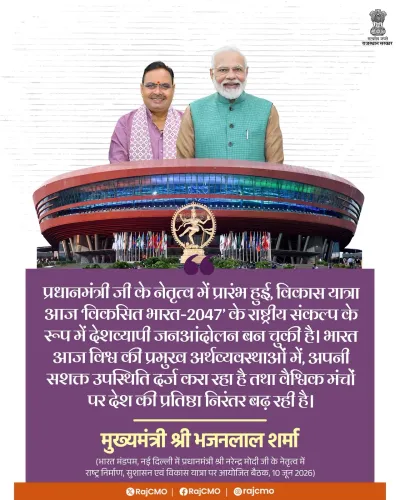
The post, attributed to Chief Minister Bhajan Lal Sharma and tagged under the hashtag #आपणो_अग्रणी_राजस्थान ('Our Leading Rajasthan'), is a declaration of ambition — not just a number. It plants Rajasthan squarely inside the national Viksit Bharat@2047 framework, Prime Minister Narendra Modi's overarching vision to transform India into a fully developed economy by the centenary of independence.
Why 2047 is the year every Indian state is racing toward
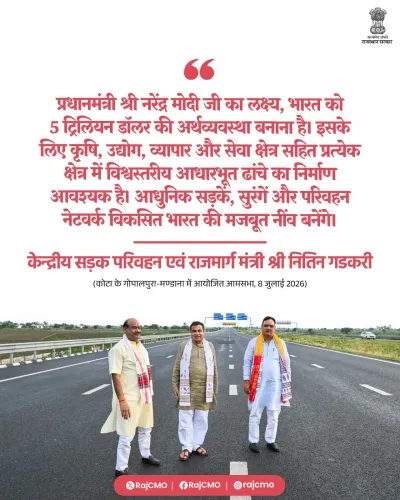
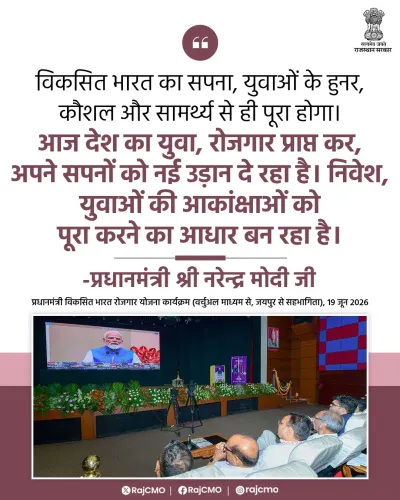
The Viksit Bharat vision, first seeded by India's $5 trillion economy goal announced in 2019, has since evolved into a comprehensive national framework. States are now expected to contribute proportionate slices of that ambition — and Rajasthan, with its vast mineral reserves, booming renewable energy corridor, and heritage tourism industry, is positioning itself as a heavyweight contributor.
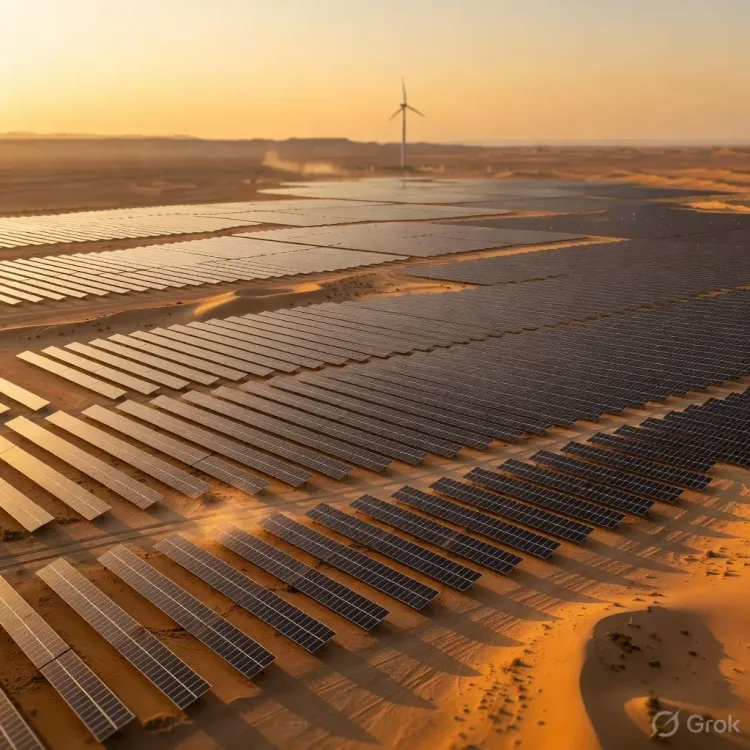
Rajasthan's economic base today rests on four pillars: agriculture, mining, tourism, and emerging manufacturing. The state holds some of India's richest deposits of zinc, lead, and limestone, and has emerged as a frontrunner in solar and wind energy capacity. Any credible roadmap to $350 billion by 2030 will require these sectors to fire simultaneously — alongside aggressive investment attraction and infrastructure buildout.
What Bhajan Lal Sharma's government must now deliver
CM Bhajan Lal Sharma, who took office in December 2023 after the BJP's return to power in the state, has made economic acceleration a centrepiece of his administration's identity. Announcements of this scale typically precede concrete policy action: updated industrial policies, single-window clearance reforms, and high-profile investor summits where targets get translated into signed MoUs.
The pattern is well-established across Indian states — a headline target sets the political clock ticking, and the budget cycle and investment conclaves that follow are where the real architecture gets built. For Rajasthan, watchers will look to upcoming state budget presentations and any investment summit announcements for sector-specific incentives and measurable milestones.
A $4.3 trillion economy by 2047 would represent a transformation of historic proportions for a state that has long punched below its geographic weight. The ambition is now public. The roadmap is what Rajasthan owes its investors — and its people.
Point of View
Giving CM Bhajan Lal Sharma a long-arc story to tell investors and voters alike. The 2030 milestone — just four years away — is the more politically loaded of the two, since it falls within a plausible electoral accountability window. Historically, Indian states that announce such targets without accompanying investor summits or revised industrial policies see them fade into the background; the pressure is now on Rajasthan's government to convert this declaration into a pipeline of deals and infrastructure commitments. If the roadmap materialises, Rajasthan's mineral and renewable energy advantages could make it a genuine growth outlier — but the gap between aspiration and execution remains the story to watch.
NationPress
17 Aug 2026
Frequently Asked Questions
What is Rajasthan's GDP target for 2030?
The Chief Minister's Office of Rajasthan has announced a target of $350 billion for the state's economy by 2030 , as declared on 17 August 2026.
What is Rajasthan's economy target for 2047?
Rajasthan has set an economic target of $4.3 trillion by 2047 , aligning with India's Viksit Bharat@2047 national development vision.
Who is the Chief Minister of Rajasthan in 2026?
Bhajan Lal Sharma of the Bharatiya Janata Party is the Chief Minister of Rajasthan, having been sworn in in December 2023 .
What is Viksit Bharat and how does Rajasthan fit in?
Viksit Bharat@2047 is the Government of India's framework to make India a fully developed economy by 2047. Rajasthan's long-term economic targets are designed to contribute to this national ambition.
What sectors will drive Rajasthan's economic growth?
Rajasthan's growth is expected to be driven by agriculture, mining, tourism, and renewable energy , with the state being a major holder of mineral reserves and solar and wind energy capacity.