Rajasthan CM Bhajanlal Sharma Claims State Free from Paper Leaks
Synopsis
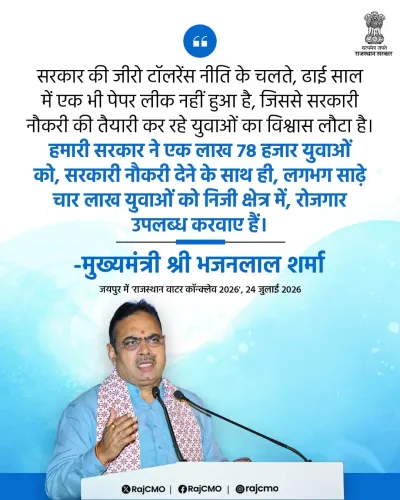
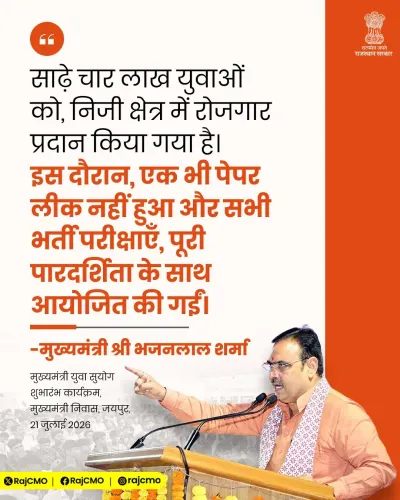
The Chief Minister's Office of Rajasthan declared on 14 August 2026 that CM Bhajanlal Sharma's government has freed the state's youth from paper leak incidents in public recruitment examinations — a claim that targets one of Rajasthan's most politically charged governance failures.
Key Takeaways
The Chief Minister's Office of Rajasthan posted on 14 August 2026 that the state has been freed from paper leaks in recruitment exams.
CM Bhajanlal Sharma was credited directly for the achievement in the post.
The BJP government identified paper leak reform as a priority when it took office in December 2023 .
Paper leak scandals have been a recurring national problem, triggering protests and demands for systemic reform across multiple Indian states.
The post was tagged #आपणो_अग्रणी_राजस्थान ('Our Leading Rajasthan') and timed to the eve of Independence Day.
The durability of the claim will be tested by the integrity record of future recruitment examinations in the state.
For years, Rajasthan's job aspirants lived under the shadow of a single dread: that months of preparation could be undone overnight by a leaked question paper. The Chief Minister's Office of Rajasthan declared on Friday, 14 August 2026 that this era is now over — crediting Chief Minister Bhajanlal Sharma with delivering the state's youth from that ordeal.
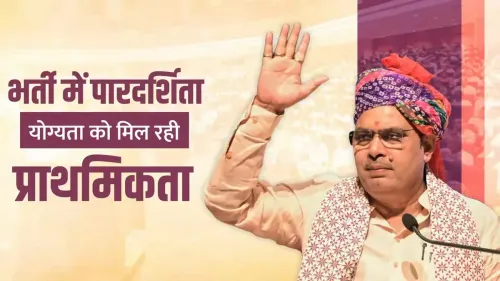
The post, shared under the hashtag #आपणो_अग्रणी_राजस्थान ('Our Leading Rajasthan'), carried a pointed message: 'Our government has freed the youth of the state from the sting of paper leaks.' The declaration is aimed squarely at one of the most politically charged governance failures that defined Rajasthan's recent past.
A wound that ran deep for Rajasthan's exam aspirants
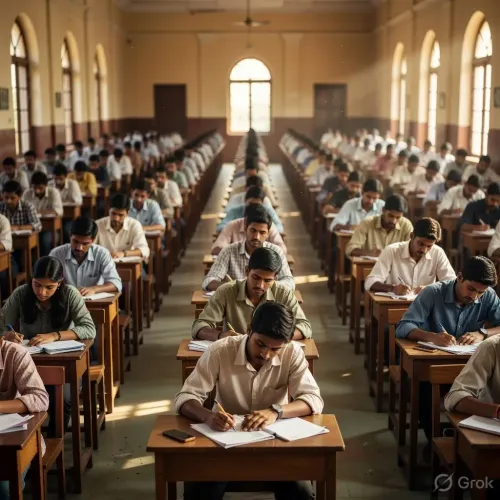
Paper leak scandals are not unique to Rajasthan — they have convulsed states across India, triggering street protests and eroding trust in public recruitment systems. But Rajasthan became a particularly visible flashpoint, with repeated incidents in competitive examinations drawing outrage from lakhs of students who had spent years preparing for government jobs.
When the BJP government came to power in Rajasthan in December 2023, restoring the integrity of recruitment examinations was flagged as a priority governance commitment. CM Bhajanlal Sharma inherited both the political liability of the issue and the expectation of reform.
What the government's claim signals
The CMO's assertion, timed to the eve of Independence Day, frames exam integrity as a freedom delivered — a deliberate rhetorical choice that ties governance credibility to national sentiment. It positions the Sharma administration as having closed a chapter that cost thousands of aspirants their time, money, and faith in the system.
Across India, state governments responding to paper leak crises have moved on multiple fronts: new legislation with stricter penalties, technology-driven examination protocols, and tighter supply-chain controls for question papers. Whether Rajasthan's specific measures have produced durable results will be tested by the integrity record of subsequent recruitment cycles conducted by state agencies.
The youth constituency at the centre of it all
Job aspirants — students spending years preparing for posts in teaching, police, administration, and other government services — are the direct audience of this message. For them, a paper leak is not an abstraction; it means a cancelled exam, a reset calendar, and lost opportunity. A government that credibly ends that cycle earns political capital that is difficult to manufacture any other way.
The real verdict on this claim will come not from a social media post but from the uninterrupted conduct of clean examinations in the months and years ahead. Rajasthan's youth are watching — and so is the rest of India.
Point of View
A constituency that carries enormous electoral weight. Paper leak reform is one of the few governance issues that cuts across caste and class lines, making it a high-value claim for any ruling party. However, the Sharma government's credibility on this front rests entirely on the clean conduct of future examinations; a single high-profile leak would reverse the narrative instantly. This post is as much a promise as it is a proclamation, and Rajasthan's aspirants will hold the government to it.
NationPress
28 Sept 2026
Frequently Asked Questions
Has Rajasthan stopped paper leaks in government exams?
The Chief Minister's Office of Rajasthan claimed on 14 August 2026 that the Bhajanlal Sharma government has freed the state's youth from paper leaks in recruitment examinations. The long-term credibility of this claim depends on the clean conduct of future exams.
What did CM Bhajanlal Sharma do about paper leaks in Rajasthan?
When the BJP government led by Bhajanlal Sharma came to power in December 2023, it identified paper leak reform in public recruitment exams as a priority governance issue. The CMO credited him with resolving the problem as of August 2026.
Why are paper leaks a big issue in Rajasthan?
Rajasthan experienced repeated paper leak incidents in competitive and government recruitment exams, costing thousands of aspirants years of preparation and triggering widespread public protests demanding systemic reform.
What is #AapnoAgraniRajasthan?
Aapno Agrani Rajasthan ('Our Leading Rajasthan') is a hashtag used by the Rajasthan government and BJP to brand the state's development narrative under Chief Minister Bhajanlal Sharma.
Is paper leak a problem in other Indian states too?
Yes. Multiple Indian states have faced recurring paper leak scandals in competitive and recruitment examinations, prompting state governments to introduce new legislation, technology-based safeguards, and stricter penalties to restore credibility.