CM Bhajan Lal's Rajasthan Pursues Zero-Tolerance Anti-Graft Drive
Synopsis
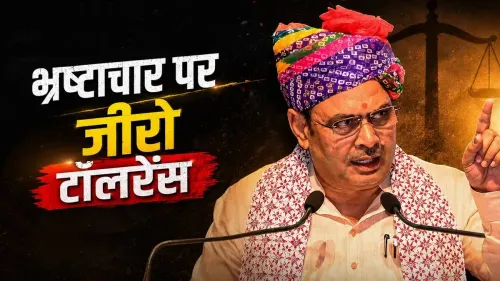
The Chief Minister's Office of Rajasthan on June 12, 2026 declared that CM Bhajanlal Sharma's government is enforcing a zero-tolerance policy against corruption, with strict action being taken against corrupt public servants across the state.
Key Takeaways
The Chief Minister's Office of Rajasthan posted on June 12, 2026 reaffirming a zero-tolerance stance on corruption.
CM Bhajanlal Sharma , in power since December 2023 , was directly tagged in the official statement.
The government pledged strict action against corrupt public servants ( bhrasht loksevakon ) across the state.
The Rajasthan Anti-Corruption Bureau (ACB) is the primary enforcement body responsible for investigating and prosecuting graft cases.
The post was part of the broader #आपणो_अग्रणी_राजस्थान ('Our Leading Rajasthan') governance campaign.
No specific cases, statistics, or individual names of accused officials were cited in the official communication.
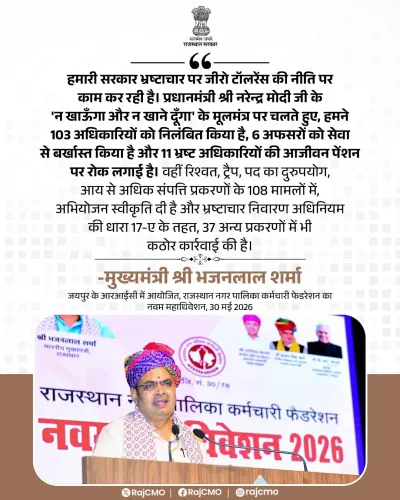
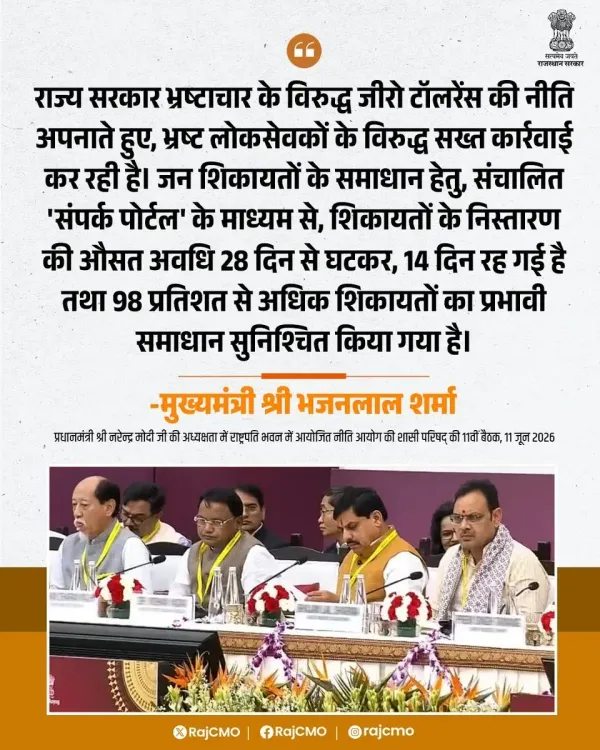
The Chief Minister's Office of Rajasthan reaffirmed on Friday, June 12, 2026, that the state government is pursuing a zero-tolerance policy against corruption and taking strict action against corrupt public servants, citing the administration of Chief Minister Bhajanlal Sharma.
The post, shared from the official CMO handle, stated in Hindi: 'राज्य सरकार भ्रष्टाचार के विरुद्ध जीरो टॉलरेंस की नीति अपनाते हुए, भ्रष्ट लोकसेवकों के विरुद्ध सख्त कार्रवाई कर रही है' ('The state government, adopting a zero-tolerance policy against corruption, is taking strict action against corrupt public servants'), tagging CM Bhajanlal Sharma under the campaign hashtag #आपणो_अग्रणी_राजस्थान ('Our Leading Rajasthan').
Context
The statement comes more than two years after the BJP swept the Rajasthan assembly elections in December 2023, bringing Bhajanlal Sharma to power as Chief Minister. Since assuming office, the government has repeatedly signalled an intent to distinguish its administration from its predecessor on issues of governance and official accountability.
The hashtag #आपणो_अग्रणी_राजस्थान has been used as a broader branding exercise for the state's development and governance agenda, anchoring individual policy messages within a larger narrative of progress under the current dispensation.
Policy Backdrop
The Rajasthan Anti-Corruption Bureau (ACB) serves as the primary state agency for investigating and prosecuting graft cases involving public officials. The bureau has operated across successive governments, conducting periodic high-profile raids and registering cases against officials at various levels of the administration.
The BJP, both at the national level and across state governments it leads, has consistently positioned anti-corruption action as a central governance pillar. Departmental inquiries, suspensions of accused officials, and intensified vigilance drives have been recurring features of this messaging, particularly in the months following election victories.
Stakeholders and Impact
Rajasthan's public servants — numbering in the lakhs across departments including revenue, police, and public works — are the primary constituency affected by any escalation in anti-corruption enforcement. Citizens who interact with government services stand to benefit directly if stricter accountability measures translate into reduced bribery and maladministration at the grassroots level.
State vigilance agencies, including the ACB, would be at the operational centre of any intensified drive, requiring adequate resources, independence, and legal backing to pursue cases through to conviction rather than merely registration.
What's Next
Observers will watch for quarterly data from the Rajasthan Anti-Corruption Bureau on case registrations, suspensions, and conviction rates as a measure of whether the zero-tolerance declaration translates into sustained enforcement. Possible legislative steps — such as strengthened whistle-blower protections or mandatory asset disclosure rules for state employees — could give the policy commitment a more durable institutional form.
The credibility of the zero-tolerance posture will ultimately rest on the consistency and impartiality of action taken, particularly in cases involving officials from within the ruling establishment.
Point of View
Deployed across multiple states to signal administrative seriousness in the post-election phase. The absence of specific case details or measurable targets in the statement, however, keeps it firmly in the realm of political messaging rather than policy announcement. For the commitment to carry weight, it will need to be backed by verifiable ACB data — case registrations, charge-sheets, and convictions — rather than periodic declarations. The broader test is whether enforcement extends impartially across the official hierarchy, including to those affiliated with the ruling establishment.
NationPress
26 Oct 2026
Frequently Asked Questions
What is Rajasthan's zero-tolerance anti-corruption policy?
The Rajasthan government under CM Bhajanlal Sharma has declared a zero-tolerance policy against corruption, meaning strict departmental and legal action is to be taken against public servants found guilty of corrupt practices, with the Anti-Corruption Bureau as the primary enforcement agency.
Who is Bhajanlal Sharma and when did he become Rajasthan CM?
Bhajanlal Sharma is a BJP politician who became Chief Minister of Rajasthan in December 2023 after the party won the state assembly elections, replacing the previous Congress government.
What does the Rajasthan Anti-Corruption Bureau do?
The Rajasthan Anti-Corruption Bureau (ACB) is a state agency that investigates and prosecutes corruption cases involving public officials, conducting raids, registering cases, and pursuing prosecutions across government departments.
What is the #आपणो_अग्रणी_राजस्थान campaign?
'Aapno Agrani Rajasthan' ('Our Leading Rajasthan') is a governance and development branding campaign used by the current BJP state government to communicate policy achievements and administrative priorities to citizens.
Has the Rajasthan government taken any specific anti-corruption actions recently?
The official CMO post on June 12, 2026 did not cite specific cases, names, or statistics. Concrete enforcement data — such as ACB case registrations and suspensions — would need to be sourced from official bureau reports.