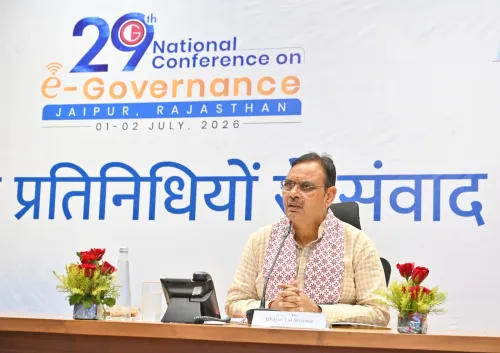
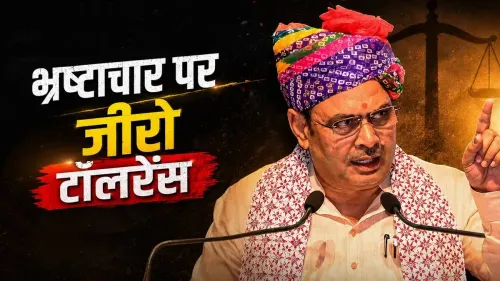
CM Bhajan Lal reaffirms Rajasthan's zero-tolerance on cybercrime
Synopsis
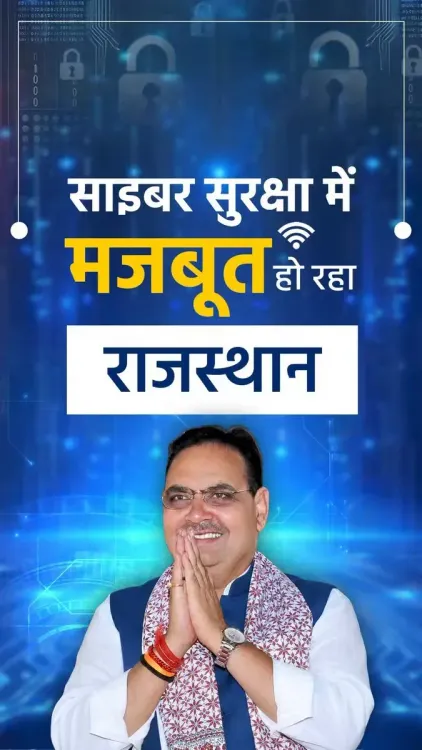
Rajasthan Chief Minister Bhajan Lal Sharma has reaffirmed a zero-tolerance stance against cybercrime, committing to modern technology and a robust security framework to ensure a safe, trustworthy digital environment for every citizen of the state.
Key Takeaways
CM Bhajan Lal Sharma publicly reaffirmed Rajasthan's zero-tolerance policy against cybercrime on 28 May 2026 .
The government has pledged a secure, trustworthy, and fear-free digital environment for all citizens through modern technology.
India's IT Act, 2000 and National Cyber Security Policy, 2013 form the legal backbone for state-level cybercrime enforcement.
State police cyber cells are the primary operational arm tasked with implementing the zero-tolerance approach.
Coordination with the national Indian Cyber Crime Coordination Centre (I4C) remains a key pillar of the broader enforcement strategy.
Sustained citizen awareness alongside enforcement action will determine the real-world impact of the government's commitment.
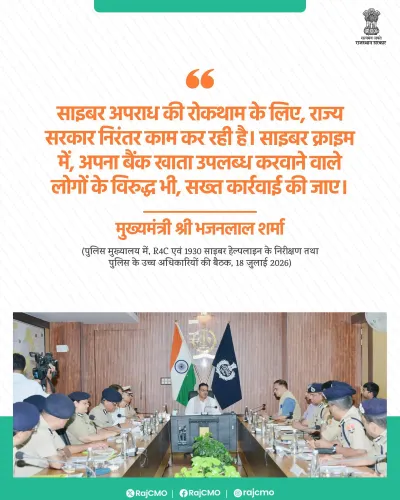
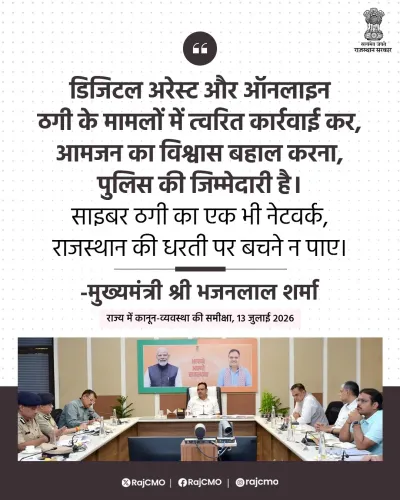
Rajasthan Chief Minister Bhajan Lal Sharma on Thursday, 28 May 2026 reaffirmed his government's commitment to a 'zero tolerance' policy against cybercrime, pledging to deliver a safe, trustworthy, and fear-free digital environment for every citizen of the state through modern technology and a robust security apparatus.
Context
In a post on X, CM Sharma stated — 'राजस्थान सरकार साइबर अपराध के खिलाफ Zero Tolerance नीति के तहत लगातार सख्त और प्रभावी कार्रवाई कर रही है' ['The Rajasthan government is continuously taking strict and effective action against cybercrime under a Zero Tolerance policy']. He added that the government is committed to providing every citizen a secure, reliable, and fear-free digital environment through modern technology and a strong security framework.
The statement comes as digital transactions and online services have expanded rapidly across Rajasthan and the rest of India since the mid-2010s, driving a parallel rise in online fraud, financial scams, and identity theft targeting ordinary citizens.
Policy Backdrop
India's legal architecture for combating cybercrime rests on the Information Technology Act, 2000, which established the primary framework for prosecuting digital offences nationwide. The National Cyber Security Policy, 2013 subsequently set out a coordinated approach for protecting critical information infrastructure, encouraging states to build dedicated enforcement capacity.
State governments across India have progressively expanded cyber cells and technology-based monitoring units in response to growing caseloads. Rajasthan's publicly stated zero-tolerance posture follows similar commitments made by several other states seeking to deter organised online fraud networks. At the national level, the Indian Cyber Crime Coordination Centre (I4C) serves as the nodal body linking state-level efforts to a centralised response mechanism.
Stakeholders and Impact
The primary beneficiaries of a strengthened cybercrime enforcement regime are Rajasthan's millions of internet users — including rural residents increasingly accessing banking, welfare, and government services through smartphones. Online financial fraud and social-media-based scams have disproportionately affected first-time digital users who may lack awareness of common threat vectors.
State police cyber units are the principal operational arm of this policy. Greater political emphasis on zero-tolerance enforcement typically translates into increased resource allocation for cyber cells, faster case registration, and more proactive coordination with central agencies and digital platforms.
What's Next
Observers will watch for concrete follow-through in the form of upgraded Rajasthan-specific cybercrime reporting portals, expanded helpline capacity, and deeper coordination with the I4C and central investigative agencies. The government's ability to convert its stated zero-tolerance stance into measurable reductions in cybercrime complaints will be the key test of this commitment.
As digital public infrastructure deepens across the state, sustained investment in citizen awareness campaigns alongside enforcement action will be critical to building the 'trustworthy digital environment' CM Sharma has promised.
Point of View
Portal responsiveness, and coordination depth with central agencies. Without measurable metrics attached to the commitment, the statement risks remaining aspirational rather than actionable.
NationPress
11 Oct 2026
Frequently Asked Questions
What is Rajasthan's zero tolerance cybercrime policy?
Rajasthan's zero tolerance cybercrime policy is a stated commitment by the state government under CM Bhajan Lal Sharma to take strict, continuous action against all forms of cybercrime using modern technology and a robust law enforcement framework.
What did Bhajan Lal Sharma say about cybercrime on 28 May 2026?
CM Bhajan Lal Sharma posted on X that the Rajasthan government is consistently taking strict and effective action under a zero-tolerance policy against cybercrime, and is committed to providing every citizen a safe and fear-free digital environment.
Which law governs cybercrime cases in Rajasthan?
Cybercrime cases in Rajasthan are primarily governed by the Information Technology Act, 2000 at the national level, supplemented by the National Cyber Security Policy, 2013 and coordination with the Indian Cyber Crime Coordination Centre (I4C).
How can Rajasthan citizens report cybercrime?
Citizens can report cybercrime through the national cybercrime reporting portal and the dedicated helpline number 1930, both of which are linked to the Indian Cyber Crime Coordination Centre and accessible to residents of Rajasthan.
Is cybercrime increasing in Rajasthan?
Cybercrime complaints have risen across India, including in Rajasthan, as digital transactions and online services have expanded rapidly since the mid-2010s, making enforcement and awareness initiatives increasingly important for state governments.