CM Bhajan Lal reaffirms zero-tolerance on corruption in Rajasthan
Synopsis
Rajasthan Chief Minister Bhajan Lal Sharma reaffirmed on 30 May 2026 that his government is committed to zero tolerance on corruption, working to build a transparent and accountable Rajasthan. The statement reinforces the BJP administration's core governance messaging since taking office in December 2023.
Key Takeaways
Bhajan Lal Sharma publicly reaffirmed zero tolerance on corruption on 30 May 2026 .
The BJP government in Rajasthan has held this anti-corruption stance as a central policy priority since its formation in December 2023 .
Institutional tools cited in the broader policy context include the Anti-Corruption Bureau , Lokayukta , e-procurement systems, and online grievance portals.
The statement targets both citizens of Rajasthan and state government officials as key stakeholders of the accountability framework.
Key indicators to watch: tabling of the annual vigilance report and any expansion of the Anti-Corruption Bureau or Lokayukta mandate in the assembly.
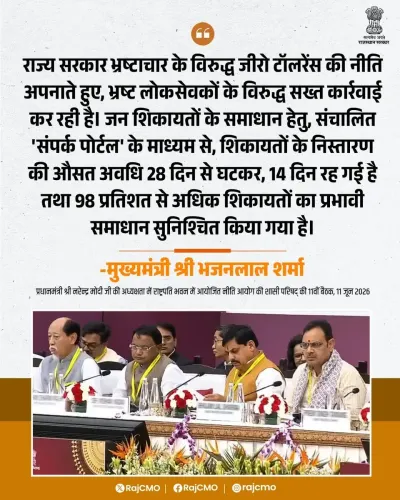
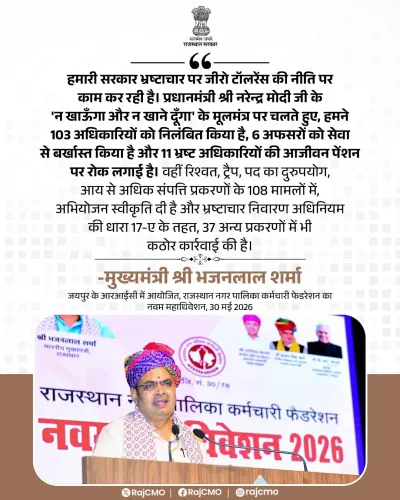
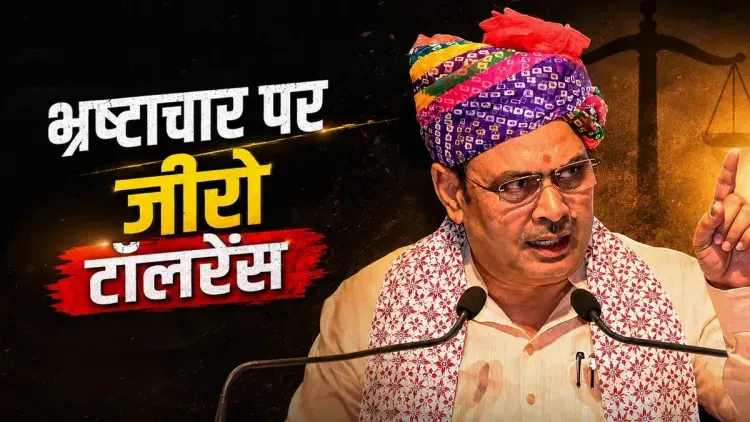
Rajasthan Chief Minister Bhajan Lal Sharma on Saturday, 30 May 2026 reiterated his government's commitment to building a transparent, accountable and corruption-free Rajasthan, stating that the administration continues to work with an unwavering zero-tolerance policy against corruption.
In a post on X, the Chief Minister wrote: 'भ्रष्टाचार के प्रति जीरो टॉलरेंस की नीति के साथ हमारी सरकार पारदर्शी, जवाबदेह और भ्रष्टाचार मुक्त राजस्थान के निर्माण हेतु निरंतर प्रतिबद्धता के साथ कार्य कर रही है।' ('With a policy of zero tolerance towards corruption, our government is continuously working with commitment to build a transparent, accountable and corruption-free Rajasthan.')
Context
Bhajan Lal Sharma was sworn in as Chief Minister of Rajasthan in December 2023 after the Bharatiya Janata Party secured a majority in the state assembly elections, succeeding the previous Congress-led government. Since assuming office, the administration has publicly placed anti-corruption and transparent governance at the centre of its policy agenda. Saturday's post is consistent with that positioning and signals continued official emphasis on accountability as a governance priority.
Policy Backdrop
Following its formation, the Bhajan Lal Sharma government initiated reviews of legacy cases through the state's vigilance machinery and reaffirmed the role of institutional mechanisms such as the Anti-Corruption Bureau and the Lokayukta in enforcing accountability. The BJP's governance framework — applied across multiple states — has consistently combined public messaging on zero tolerance with structural tools including e-procurement systems, direct-benefit transfers, and online grievance redressal portals. These instruments were first scaled at the national level after 2014 and have since been adapted at the state level, including in Rajasthan.
The state's vigilance commission and anti-corruption infrastructure form the institutional backbone behind such public commitments. Periodic reviews of these bodies and their mandates have been a recurring feature of BJP-governed states seeking to signal administrative seriousness on the issue.
Stakeholders and Impact
The primary stakeholders of this governance posture are the citizens of Rajasthan — particularly those who interact with state services — and the state government officials whose conduct falls under the ambit of vigilance and anti-corruption bodies. For ordinary residents, a credible zero-tolerance policy translates into more reliable access to public services, reduced rent-seeking at the grassroots level, and greater confidence in government schemes. For officials, it signals that accountability mechanisms remain active and enforceable.
The statement also carries political significance: with Rajasthan having a history of alternating governments, the ruling BJP has strong incentive to differentiate its administrative record from its predecessor's tenure on precisely these grounds.
What's Next
Observers will watch for the tabling of the annual vigilance report in the Rajasthan assembly, as well as any fresh notifications that expand the mandate or operational capacity of the Anti-Corruption Bureau or Lokayukta. Concrete institutional moves — such as new e-governance integrations, whistleblower protection measures, or high-profile prosecution outcomes — would lend legislative and administrative weight to the Chief Minister's public messaging. The degree to which such actions follow this statement will shape public and political assessments of the government's anti-corruption record ahead of future electoral cycles.
Point of View
The statement positions the current government in deliberate contrast to the preceding Congress administration, a comparison that carries electoral resonance in a state known for its pendulum politics. The real test, however, will lie in measurable institutional outcomes: prosecution rates, vigilance report disclosures, and the operational independence of the Lokayukta. Until such metrics are publicly established, the statement remains a reaffirmation of intent rather than a record of achievement.
NationPress
16 Sept 2026
Frequently Asked Questions
What is Bhajan Lal Sharma's zero-tolerance corruption policy in Rajasthan?
Chief Minister Bhajan Lal Sharma has committed his government to a zero-tolerance policy on corruption since taking office in December 2023, using institutional mechanisms such as the Anti-Corruption Bureau, Lokayukta, and e-governance tools to enforce accountability across the state administration.
When did Bhajan Lal Sharma become Chief Minister of Rajasthan?
Bhajan Lal Sharma was sworn in as Chief Minister of Rajasthan in December 2023, after the BJP won a majority in the state assembly elections, succeeding the previous Congress-led government.
What institutions handle anti-corruption enforcement in Rajasthan?
The primary institutional bodies are the Rajasthan Anti-Corruption Bureau and the Lokayukta, which investigate and prosecute corruption cases involving state government officials. These are supplemented by e-procurement systems and online grievance portals.
What did Rajasthan CM Bhajan Lal Sharma post on X on 30 May 2026?
He posted in Hindi affirming that his government is working with continuous commitment and a zero-tolerance policy towards corruption to build a transparent, accountable and corruption-free Rajasthan.
What should we watch for next on Rajasthan's anti-corruption agenda?
Key developments to monitor include the tabling of the annual vigilance report in the Rajasthan assembly and any government notifications expanding the mandate or capacity of the Anti-Corruption Bureau or Lokayukta.