Rajasthan CM Office flags Yamuna dam projects as future water windfall
Synopsis
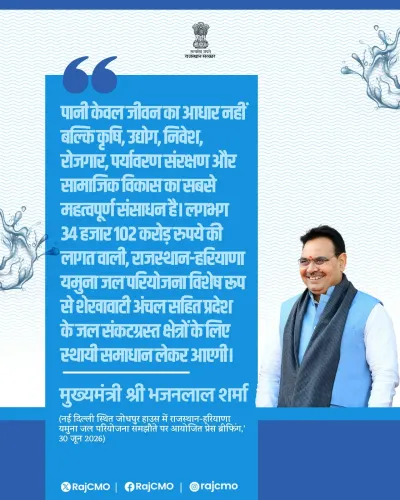
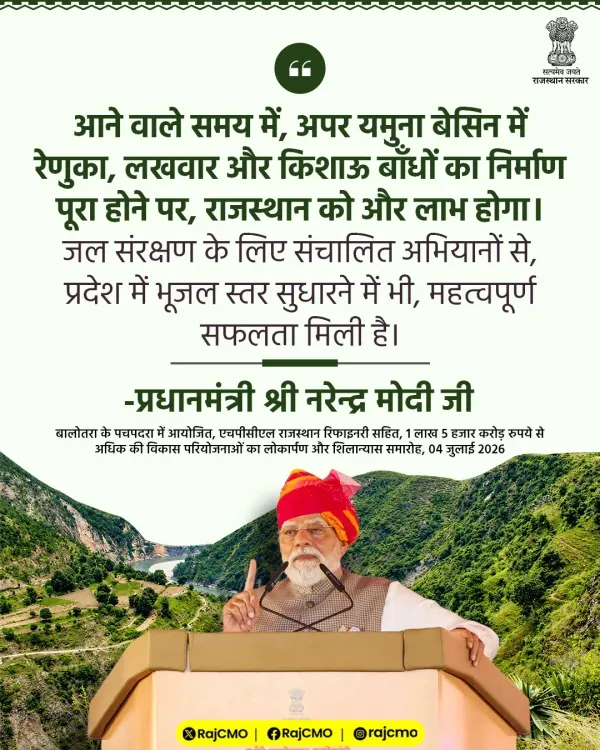
The Chief Minister's Office of Rajasthan has highlighted that the state will gain further water benefits once the Renuka, Lakhwar and Kishau dams in the Upper Yamuna Basin are completed, tagging Prime Minister Narendra Modi in the post dated 5 July 2026.
Key Takeaways
The Rajasthan CMO posted on 5 July 2026 that completion of Renuka, Lakhwar and Kishau dams in the Upper Yamuna Basin will bring additional benefits to Rajasthan.
All three are long-pending Himalayan storage projects involving Himachal Pradesh and Uttarakhand , designed for water storage, irrigation, and hydropower.
A 1994 MoU among Upper Yamuna basin states governs water-sharing principles from new storage infrastructure.
Eastern Rajasthan districts and farmers are the primary expected beneficiaries of increased regulated water releases.
Interstate coordination and clearance delays have historically slowed progress on all three dam projects.
The post tagged Prime Minister Narendra Modi , framing central government support as key to Rajasthan's water security gains.
The Chief Minister's Office of Rajasthan, in an official post on Sunday, 5 July 2026, highlighted that the state stands to gain significantly from the completion of three major upstream dam projects — Renuka, Lakhwar, and Kishau — in the Upper Yamuna Basin, tagging Prime Minister Narendra Modi in the message.
The post, written in Hindi, states: 'Aane wale samay mein, Upar Yamuna Basin mein Renuka, Lakhwar aur Kishau baadhon ka nirman poora hone par, Rajasthan ko aur laabh hoga.' In English: 'In the coming period, once the construction of the Renuka, Lakhwar and Kishau dams in the Upper Yamuna Basin is complete, Rajasthan will benefit further.' The message was shared under the hashtags #PMModi4ViksitRajasthan and #AapnoAgraniRajasthan, framing the dam projects as part of a broader vision for a developed and leading Rajasthan.
Context
Rajasthan is a lower riparian state with limited local surface water resources, making it heavily dependent on inter-state river agreements and upstream storage for reliable irrigation and drinking water supply. The Upper Yamuna Basin spans Himachal Pradesh, Uttarakhand, Haryana, Delhi, Uttar Pradesh, and Rajasthan, and is governed by coordinated water-management arrangements among these states. The CMO's post signals the state government's expectation that federal-level momentum on these long-pending projects will translate into tangible downstream gains for Rajasthan.Policy Backdrop
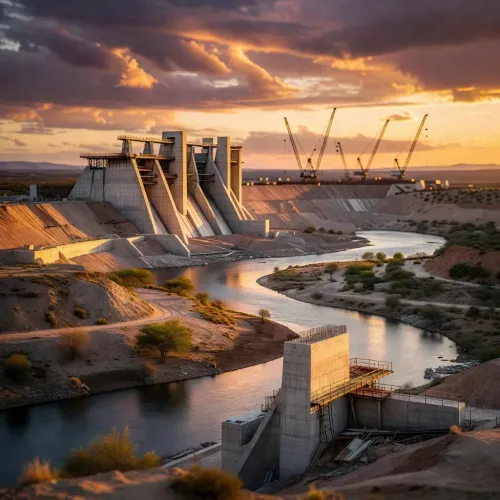
All three dam projects have long histories. The Renuka Dam is a multipurpose project on the Giri river in Himachal Pradesh, designed for water storage, irrigation, and hydropower. The Kishau Dam is a proposed storage structure on the Tons river, a joint project of Uttarakhand and Himachal Pradesh. The Lakhwar Dam sits on the Yamuna river itself in Uttarakhand and is planned for hydropower generation and downstream water supply augmentation. A 1994 Memorandum of Understanding among Upper Yamuna basin states established the water-sharing principles that underpin how allocations from new storage projects are to be distributed. Successive central governments have sought to advance these dams, but interstate coordination challenges and clearance delays have kept them in the pipeline for decades.Stakeholders and Impact
The primary beneficiaries within Rajasthan are expected to be farmers and residents of eastern Rajasthan districts, which are geographically closest to the Yamuna system and most likely to receive augmented irrigation and drinking water flows once upstream reservoirs become operational. For a state that frequently faces water scarcity, increased regulated releases from Himalayan storage projects could ease pressure on groundwater and existing canal networks. The CMO's framing of the announcement alongside a tag to Prime Minister Modi positions the central government's infrastructure push as a direct enabler of Rajasthan's water security.What's Next
Progress on land acquisition, funding releases, and construction milestones for the three dams will be the key variables to watch. The Upper Yamuna River Board may also undertake revised water accounting as storage capacity increases. For Rajasthan, the realisation of these benefits depends on how quickly the upstream projects move from planning and partial execution to completion — a timeline that has historically been subject to delays. If the current central-state coordination holds, the dams could represent a structural shift in how reliably Rajasthan accesses Yamuna waters in the decades ahead.Point of View
The state government simultaneously credits the Centre and signals to its own constituents that long-pending water promises are on track. This fits a broader pattern in which BJP-governed states publicly align their development narratives with central flagship infrastructure pushes, reinforcing the 'Viksit Bharat' arc ahead of electoral cycles. The choice to highlight downstream water benefits — rather than power generation or construction timelines — is deliberately calibrated for an agrarian audience in water-scarce eastern Rajasthan. Whether the dams advance on schedule will ultimately determine if this messaging holds, given that all three projects have a history of delays spanning multiple governments.
NationPress
5 Oct 2026
Frequently Asked Questions
What are the Renuka, Lakhwar and Kishau dams?
Renuka, Lakhwar and Kishau are three major multipurpose dam projects in the Upper Yamuna Basin. Renuka Dam is on the Giri river in Himachal Pradesh, Lakhwar Dam is on the Yamuna river in Uttarakhand, and Kishau Dam is on the Tons river involving Uttarakhand and Himachal Pradesh. All three are designed for water storage, irrigation and hydropower.
How will Rajasthan benefit from these dams?
Rajasthan, as a lower riparian state, is expected to receive augmented and more regulated water releases once upstream storage capacity increases. This could ease irrigation needs and drinking water supply, particularly in eastern Rajasthan districts closest to the Yamuna system.
What is the Upper Yamuna Basin?
The Upper Yamuna Basin is the catchment area covering parts of Himachal Pradesh, Uttarakhand, Haryana, Delhi, Uttar Pradesh and Rajasthan. Water sharing among these states is governed by a 1994 Memorandum of Understanding.
Why have these dam projects been delayed?
Interstate coordination challenges, land acquisition hurdles and clearance delays have historically slowed progress on the Renuka, Lakhwar and Kishau projects. They have remained in planning or partial execution phases across multiple central governments.
What did the Rajasthan CMO post say about PM Modi?
The Rajasthan CMO tagged Prime Minister Narendra Modi in the post, framing the central government's support for these Himalayan dam projects as a key driver of future water benefits for Rajasthan, under the hashtag #PMModi4ViksitRajasthan.