Rajasthan CM Bhajan Lal forms panel on promotion anomalies
Synopsis
The Chief Minister's Office of Rajasthan announced on August 19, 2026 that a high-level committee will be formed to examine promotion anomalies and pay-scale discrepancies affecting state government employees, tagging CM Bhajan Lal Sharma in the announcement.
Key Takeaways
The Chief Minister's Office of Rajasthan announced a high-level committee on August 19, 2026 to address employee promotion and pay-scale anomalies.
Chief Minister Bhajan Lal Sharma of the BJP was tagged in the announcement, indicating his direct endorsement of the move.
The committee will consider both anomalies and demands ( माँगें ) related to promotions and pay scales from state government employees.
Specific details — committee composition, scope of employee categories, and reporting timeline — have not yet been disclosed.
The announcement was made under the hashtag #आपणो_अग्रणी_राजस्थान , linking the step to the government's broader 'Progressive Rajasthan' agenda.
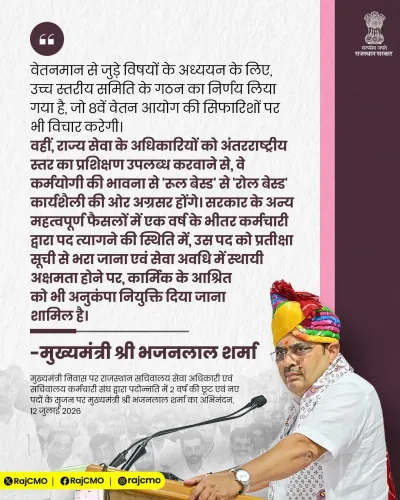
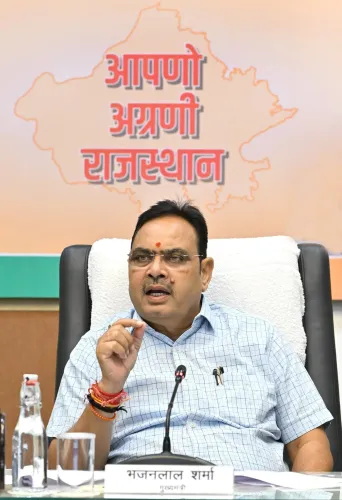
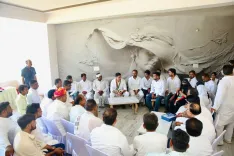
A long-standing frustration for thousands of Rajasthan government employees moved a step closer to resolution on Wednesday, August 19, 2026, when the Chief Minister's Office of Rajasthan announced the formation of a high-level committee to examine anomalies in promotions and pay scales — a signal that the Bhajan Lal Sharma government is ready to confront one of the most persistent sources of bureaucratic discontent in the state.
The Chief Minister's Office posted on X, tagging Chief Minister Bhajan Lal Sharma, that a 'high-level committee' (उच्च स्तरीय समिति) is being constituted to consider grievances and demands related to promotion anomalies and pay-scale discrepancies. The hashtag #आपणो_अग्रणी_राजस्थान — meaning 'Our Progressive Rajasthan' — framed the move as part of the government's broader development agenda.
The grievance that refused to go away
Promotion and pay-scale anomalies have been a recurring flashpoint between state governments and their employees across India. In Rajasthan, these disputes typically involve employees stuck in the same grade for years despite fulfilling service requirements, or colleagues in similar roles drawing sharply different salaries due to legacy classification decisions. Such anomalies accumulate over time — often across government reorganisations and pay-commission cycles — and can affect morale, productivity, and even legal challenges that clog administrative tribunals. The decision to route resolution through a high-level committee rather than a departmental order signals that the issues are either complex enough to require cross-departmental authority, or politically sensitive enough to need a structured, defensible process before implementation.What a high-level committee typically means in practice
In the Indian administrative tradition, a 'high-level committee' usually comprises senior IAS officers, finance department representatives, and sometimes subject-matter experts. Its mandate is to hear representations, examine service records and pay structures, and recommend corrective measures — which the government then accepts, modifies, or defers. The committee's composition, the timeline it is given, and the scope of employee categories it covers will determine whether this announcement translates into tangible relief or another prolonged process. Chief Minister Bhajan Lal Sharma, who led the BJP to power in Rajasthan after the 2023 assembly elections, has positioned his administration on a platform of administrative efficiency and employee welfare. Addressing promotion and pay grievances — even through a committee stage — sends a visible signal to a large and organised constituency of state government workers ahead of future political cycles. The details that matter most now: which departments are in scope, who chairs the committee, and how quickly it is expected to report. Those answers will tell employees — and observers — whether this is a genuine course correction or a structured delay.Point of View
Which is still consolidating its administrative identity after the 2023 election win, this signals responsiveness to a large, organised bloc of state employees. The real test will be the committee's terms of reference and timeline: a broad mandate with a short deadline suggests genuine intent, while a narrow scope or open-ended timeline would indicate the government is managing pressure rather than resolving it. Either way, the move fits a wider BJP pattern of using structured processes to demonstrate governance credentials to non-farmer, salaried constituencies.
NationPress
5 Oct 2026
Frequently Asked Questions
Why has Rajasthan formed a high-level committee for government employees?
The Rajasthan government is forming a high-level committee to examine and address long-standing anomalies in promotions and pay scales affecting state government employees, as announced by the Chief Minister's Office on August 19, 2026.
Who is Bhajan Lal Sharma and why is he tagged in this announcement?
Bhajan Lal Sharma is the Chief Minister of Rajasthan from the BJP, who assumed office after the party's victory in the 2023 state assembly elections. He was tagged to signal his personal endorsement of the committee's formation.
What are promotion and pay-scale anomalies in the Indian government context?
These are discrepancies where employees in similar roles receive different pay, or are denied promotions despite meeting eligibility criteria — often arising from legacy classification decisions across successive pay commission cycles.
Which Rajasthan government employees will be covered by this committee?
The specific categories of employees covered have not been disclosed yet. The committee's scope will become clear once its formal terms of reference are published.
What happens after a high-level committee submits its report in India?
The government reviews the committee's recommendations and then decides to accept, modify, or defer them — often alongside a budgetary assessment of the fiscal impact before any pay revision or promotion order is issued.