Rajasthan CM Bhajan Lal Launches Youth Suyog Portal and New Youth Policy

Synopsis
The Rajasthan government under CM Bhajan Lal Sharma has launched the Mukhyamantri Yuva Suyog Portal and enacted the New Rajasthan Youth Policy, aiming to connect youth with sports, education, skill development, and employment while fostering leadership and civic responsibility.
Key Takeaways
The Mukhyamantri Yuva Suyog Portal has been launched by the Rajasthan government as a single-window platform for youth opportunities in sports, education, skill development, and employment.
The New Rajasthan Youth Policy has been enacted alongside the portal, focused on promoting leadership, innovation, and responsible citizenship.
Chief Minister Bhajan Lal Sharma , in office since December 2023 , is the face of both initiatives.
The twin launch aligns with the national framework set by the National Youth Policy 2014 and complements central programmes like Skill India .
Measurable outcomes — portal registrations, skill certifications, and employment placements — will be the real benchmark for success in future budget reviews.
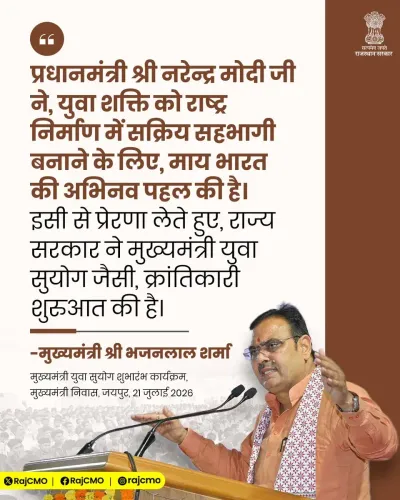
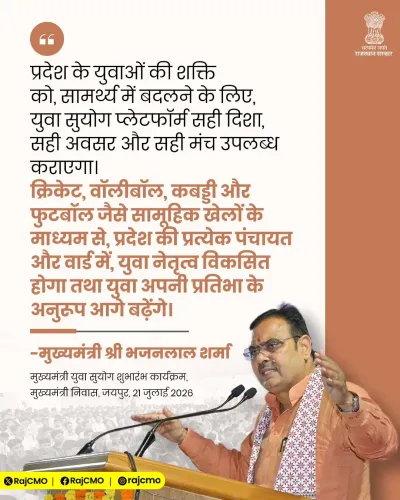
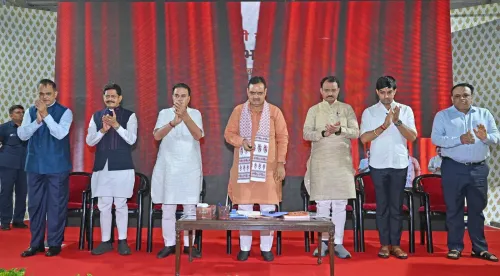
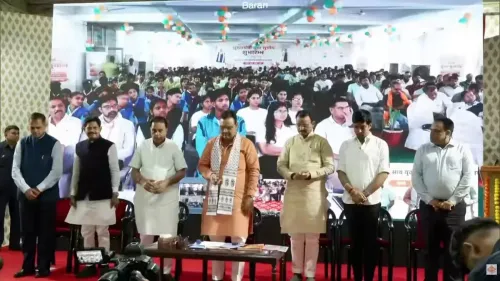
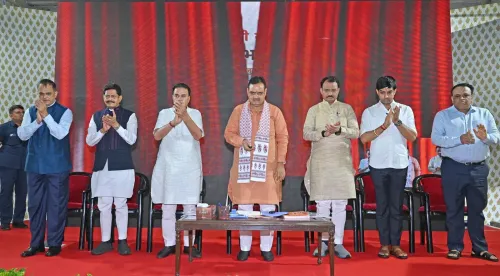
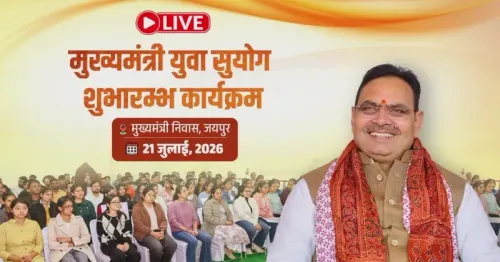
Rajasthan is making a structured bet on its young population. The Chief Minister's Office of Rajasthan announced on Monday, August 3, 2026, that the state government has launched the 'Mukhyamantri Yuva Suyog Portal' and enacted the 'Nai Rajasthan Yuva Niti' (New Rajasthan Youth Policy) — a twin initiative designed to connect youth with sports, education, skill development, and employment, while also nurturing leadership and civic responsibility.
What the Suyog Portal and Youth Policy promise
The Mukhyamantri Yuva Suyog Portal is positioned as a single-window platform linking Rajasthan's young people to opportunities across four pillars: sports, education, skill development, and employment. Alongside it, the New Rajasthan Youth Policy sets the ideological and programmatic direction — promoting leadership, innovation, and what the government calls 'responsible citizenship.' Together, they represent the Bhajan Lal Sharma administration's most consolidated youth-facing governance tool since the BJP came to power in December 2023.
The post, attributed to the Chief Minister's Office and tagging @BhajanlalBjp, carried the hashtag #आपणो_अग्रणी_राजस्थान — 'Our Leading Rajasthan' in Rajasthani — signalling the government's branding of youth welfare as central to its vision of a forward-moving state.
How this fits Rajasthan's post-2023 governance push
The move is consistent with a broader pattern of state-level youth interventions that complement national programmes like Skill India. Rajasthan's new policy draws from the framework established by the National Youth Policy 2014, which urged states to anchor youth development around education, skilling, and employment generation. What distinguishes the Suyog Portal is its attempt to consolidate these verticals under one digital roof — reducing friction for young job-seekers and students navigating multiple government schemes.
For the BJP government in Rajasthan, the youth cohort is both a governance priority and a political constituency. Announcements like these — a named portal, a formal policy document — are designed to be trackable, and the real test will come in subsequent state budget reviews: portal registration numbers, skill certifications issued, and actual employment placements will determine whether the initiative delivers beyond the launch.
Point of View
Trackable schemes. Anchoring youth policy around four concrete pillars (sports, education, skills, employment) gives the government clear metrics to defend in future elections. However, Rajasthan's history of scheme announcements that stall at implementation means the portal's real credibility will be built — or lost — in registration numbers and job placement data, not launch-day optics. The civic citizenship angle in the Youth Policy also hints at a longer-term effort to cultivate an ideologically aligned young voter base ahead of the next state election cycle.
NationPress
17 Sept 2026
Frequently Asked Questions
What is the Mukhyamantri Yuva Suyog Portal in Rajasthan?
The Mukhyamantri Yuva Suyog Portal is a state government platform launched by the Rajasthan government to connect young people with opportunities in sports, education, skill development, and employment under a single digital interface.
What is the New Rajasthan Youth Policy?
The New Rajasthan Youth Policy is a policy document enacted by the Bhajan Lal Sharma government to promote leadership, innovation, and responsible citizenship among the youth of Rajasthan.
Who launched the Yuva Suyog Portal in Rajasthan?
The portal was launched by the Rajasthan state government led by Chief Minister Bhajan Lal Sharma of the BJP, who has been in office since December 2023.
How does the Rajasthan Youth Policy relate to the National Youth Policy?
The New Rajasthan Youth Policy draws from the framework of the National Youth Policy 2014, which established education, skill development, and employment generation as core pillars for state-level youth interventions.
What does Aapno Agrani Rajasthan mean?
'Aapno Agrani Rajasthan' is a Rajasthani phrase meaning 'Our Leading Rajasthan,' used by the BJP government as a branding slogan for its development and governance agenda in the state.