CM Himanta Tells Rahul, INDI Bloc: Apologise for 1984
Synopsis
Assam CM Himanta Biswa Sarma called out Rahul Gandhi and INDI bloc leaders on the 42nd anniversary of the 1984 anti-Sikh violence, demanding a public apology from their Delhi rally stage and two minutes of silence for over 3,000 Sikh lives lost.
Key Takeaways
Assam CM Himanta Biswa Sarma posted a direct demand on 1 November 2026 asking Rahul Gandhi and INDI bloc leaders to apologise to the Sikh community from their rally stage.
He cited the 1984 anti-Sikh violence in which official estimates record over 2,700 deaths in Delhi alone, with broader national figures cited at 3,000-plus .
Sarma linked Rajiv Gandhi by name, stating the killings occurred 'under the leadership of your father and his associates' following Indira Gandhi's assassination .
He described holding an opposition rally in Delhi on this specific date as 'rubbing salt into the wounds' of the Sikh community.
The Shiromani Gurdwara Parbandhak Committee and INDI bloc leaders' response remain key developments to watch.
BJP leaders have consistently raised the 1984 riots on anniversary dates as part of a broader historical accountability debate with the Congress.
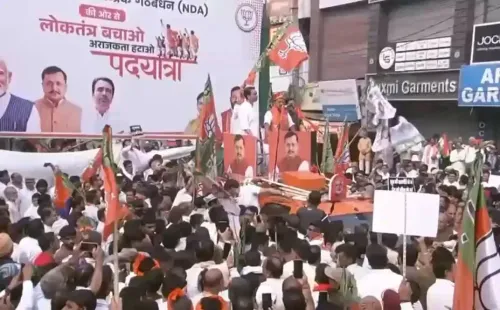
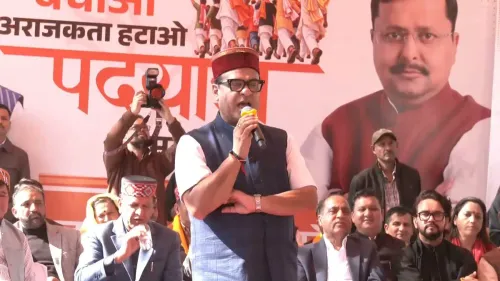
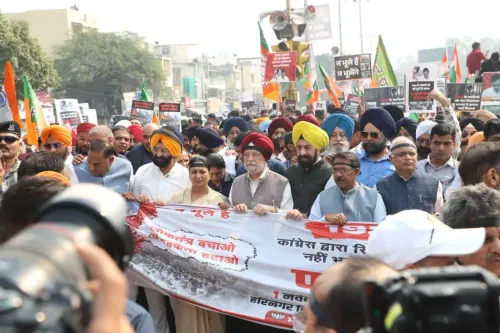
On the 42nd anniversary of the 1984 anti-Sikh violence, Assam Chief Minister Himanta Biswa Sarma turned a razor-sharp message at Rahul Gandhi and the entire INDI bloc leadership on Sunday, 1 November 2026 — demanding a public apology from the stage of their ongoing rally in Delhi and two minutes of silence for the Sikh lives lost.
The demand from the dais: apologise now, then carry on
Sarma's post, written in Hindi, opens as a formal anurodh (request) but lands as an unambiguous political charge. 'Staging this commotion in Delhi on this very day,' he wrote, 'is no less than rubbing salt into the wounds of the country's Sikh community.' He acknowledged the leaders were already gathered in one place and asked them to do two things before continuing their programme: seek forgiveness from the Sikh community from the microphone and observe a two-minute silence.
The language sharpened further when Sarma invoked the direct line of events. 'In the fire of revenge for your grandmother's assassination,' he wrote, referring to the killing of Prime Minister Indira Gandhi on 31 October 1984, 'more than 3,000 Sikhs were massacred under the leadership of your father and his associates.' The phrasing places Rajiv Gandhi — Rahul Gandhi's father — at the centre of responsibility for the riots that followed.
The 1984 wound that never fully closed
Indira Gandhi was assassinated by her Sikh bodyguards on 31 October 1984. What followed in Delhi and several other states was one of independent India's darkest chapters — days of organised mob violence targeting Sikh families, their homes, and their gurdwaras. Official figures have cited over 2,700 deaths in the capital alone; other estimates place the nationwide toll above 3,000. Decades of litigation, multiple commissions of inquiry, and belated convictions have kept the wounds open in the Sikh community's memory.
The Congress party has over the years expressed regret, and former Prime Minister Manmohan Singh offered a formal apology in Parliament in 2005, calling the riots 'a national shame.' But the demand for fuller accountability — naming leaders alleged to have directed the violence — has never been conclusively settled in court or in the public record, and it remains a recurring fault line in Indian politics every time 1 November arrives.
A recurring BJP playbook — and why this moment sharpens it
Sarma's intervention follows a well-established pattern: BJP leaders consistently return to the 1984 riots on the anniversary dates to press the Congress on historical accountability. What makes this post notable is its directness — it does not merely reference the events as history; it names Rahul Gandhi personally, links his family lineage to the violence, and attaches a specific, time-bound demand to an ongoing political event happening at that very moment.
The sting in Sarma's closing line is in its framing: 'Being insensitive to Sikhs is perhaps in your DNA.' That phrase, whether accepted or rejected, is designed to stick — and to force a response from INDI bloc leaders or Sikh religious bodies such as the Shiromani Gurdwara Parbandhak Committee, whose reaction will shape where this conversation goes next.
An apology offered — or conspicuously withheld — from that rally stage could define the political news cycle for days. The Sikh community, with decisive electoral weight in Punjab and sizeable presence in Delhi, Haryana, and the diaspora, is watching.
Point of View
Public, and time-bound demand to an ongoing rally, he forces the alliance either to respond — and risk dominating headlines for the wrong reasons — or stay silent and absorb the charge of insensitivity. The 'DNA' framing is particularly pointed, aiming to make Congress's relationship with the Sikh community a permanent liability rather than a settled historical chapter. With Punjab's assembly elections always on the horizon and Sikh voters a key constituency across northern India, this kind of intervention carries electoral voltage well beyond a single news cycle.
NationPress
1 Nov 2026
Frequently Asked Questions
What did Himanta Biswa Sarma say about Rahul Gandhi and the 1984 anti-Sikh riots?
Sarma demanded that Rahul Gandhi and INDI bloc leaders apologise to the Sikh community from their Delhi rally stage and observe two minutes of silence on 1 November 2026, the anniversary of the 1984 anti-Sikh violence, saying holding a rally on this date was 'rubbing salt into the wounds' of Sikhs.
What happened in the 1984 anti-Sikh riots?
After Prime Minister Indira Gandhi was assassinated by her Sikh bodyguards on 31 October 1984, large-scale anti-Sikh violence erupted across Delhi and several other states. Official estimates cite over 2,700 deaths in Delhi alone, with broader national figures exceeding 3,000.
Why does the BJP keep raising the 1984 riots against Congress?
BJP leaders raise the 1984 anti-Sikh violence, particularly on its anniversary, to question the Congress party's record on protecting minorities and to hold its leadership historically accountable — a recurring feature of the political debate between the two formations.
Has Congress ever apologised for the 1984 anti-Sikh violence?
Former Prime Minister Manmohan Singh offered a formal apology in Parliament in 2005, calling the riots 'a national shame.' However, demands for fuller accountability naming specific leaders alleged to have directed the violence have remained unresolved.
Who is Himanta Biswa Sarma?
Himanta Biswa Sarma is the Chief Minister of Assam and a senior BJP leader. He also serves as the convenor of the North-East Democratic Alliance (NEDA), making him one of the party's most prominent regional voices.