CM Majhi ends contract hiring, pushes for regular jobs in Odisha
Synopsis
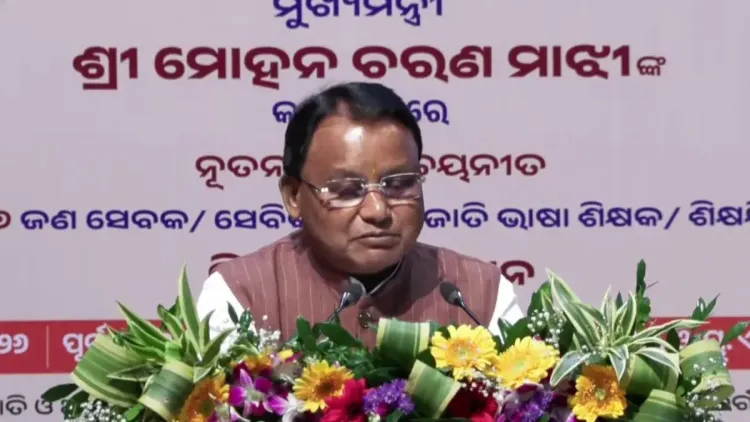
Odisha Chief Minister Mohan Charan Majhi declared on November 1, 2026 that his government is ending the contractual and outsourcing hiring system inherited from the Naveen Patnaik era, initiating a process to make all public-sector employment permanent and regular.
Key Takeaways
CM Mohan Charan Majhi announced the formal end of the 'out-in' contractual and outsourcing employment system in Odisha on November 1, 2026 .
The BJP government has begun the process of converting all such posts to permanent, regular appointments .
The contractual hiring system expanded significantly during Naveen Patnaik's 24-year BJD rule (2000–2024) across Odisha's public sector.
Regularisation of contractual workers was a key BJP commitment ahead of Odisha's June 2024 assembly elections .
Formal government orders, revised recruitment rules, and budgetary provisions are still awaited to operationalise the announcement.
The move mirrors a broader national pattern of state governments regularising contract workers after changes in ruling parties.
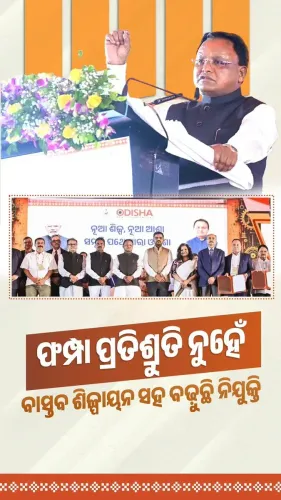
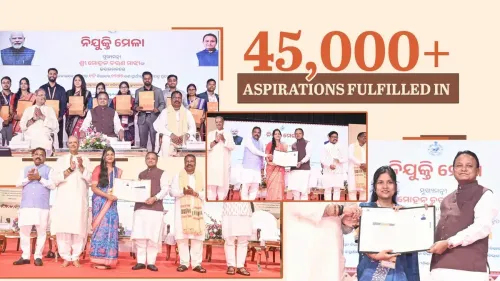
Odisha's contractual workforce just got the most consequential news in two decades: Chief Minister Mohan Charan Majhi announced on Sunday, November 1, 2026 that his government has formally begun the process of ending the 'out-in' contractual and outsourcing employment system that defined public-sector hiring under the previous administration — replacing it entirely with permanent, regular appointments.
In the Odia-language post, Majhi declared — 'ଆଉ ଆଉଟ୍-ଇନ୍ ନାହିଁ, ପୂରା ଫିକ୍ସ, ପୂରା ରେଗୁଲାର୍' ['No more out-in, fully fixed, fully regular'] — drawing a sharp line between his BJP-led government and the 24-year BJD tenure of former Chief Minister Naveen Patnaik, during which contractual and outsourced hiring became the norm across Odisha's public sector.
What the 'out-in' system meant for Odisha's workers
For a generation of Odisha government employees, the 'out-in' label captured an exhausting reality: hired on short-term contracts or through third-party outsourcing agencies, workers received no permanent status, minimal benefits, and perpetual insecurity. The system expanded steadily between 2000 and 2024, absorbing thousands of employees in sectors from health to revenue administration — without converting them to the regular payroll.
The pressure to reform was not invented by the BJP's 2024 victory. For years, contractual employees across multiple Indian states have mobilised for regularisation, citing Supreme Court precedents that acknowledge the rights of long-serving temporary workers. Odisha was no exception, with employee unions repeatedly demanding permanency through the Patnaik era.
BJP's 2024 mandate and the regularisation promise
When the BJP swept Odisha's June 2024 assembly elections — ending Patnaik's unbroken five-term run — regularisation of contractual workers was among the most concrete governance commitments made on the campaign trail. Majhi's announcement signals the administration has moved from intent to active process, even if the formal government orders, recruitment-rule amendments, and budgetary provisions are still awaited.
The shift is structurally significant. Absorbing large cohorts of contract workers into permanent service means reworked service rules, revised pay structures, and fresh liability in state budgets — changes that will test the government's administrative bandwidth in the months ahead.
What to watch as the process unfolds
The critical next markers are the issuance of formal government orders specifying which categories of employees qualify, the timeline for conversion, and how the Odisha state budget accommodates the additional recurring expenditure. An Odisha Assembly session or supplementary budget notification would be the natural vehicle for these announcements. Until those orders land, the government's claim rests at the announcement stage — consequential in intent, still to be tested in execution.
For tens of thousands of contractual employees in Odisha, the wait for permanent status may finally have an end date. The state's next budget session will tell us exactly how real that promise is.
Point of View
Fully regular,' the CM is targeting a large, organised bloc of aggrieved workers ahead of future electoral cycles. However, the credibility of the move now hinges entirely on whether formal orders and budgetary provisions follow; in multiple Indian states, similar announcements have stalled at the notification stage due to fiscal constraints. Odisha's ability to absorb the recurring salary burden of a regularised workforce will be the real test of whether this is structural reform or durable political symbolism.
NationPress
1 Nov 2026
Frequently Asked Questions
What did Odisha CM Mohan Majhi announce about contractual employees?
CM Mohan Charan Majhi announced on November 1, 2026 that his government is ending the contractual and outsourcing employment system and has begun the process of converting all such public-sector positions to permanent, regular appointments.
What was the 'out-in' system in Odisha?
The 'out-in' system referred to the practice of hiring government workers on short-term contracts or through outsourcing agencies, rather than as permanent employees — a model that expanded widely in Odisha during the 2000–2024 BJD government under Naveen Patnaik.
How many contractual employees could be affected in Odisha?
The exact number of eligible workers has not been officially specified yet. Formal government orders detailing which categories of employees qualify and the conversion timeline are still awaited.
When did BJP come to power in Odisha?
The BJP won the Odisha assembly elections in June 2024 , ending Naveen Patnaik's unbroken five-term, 24-year rule, and Mohan Charan Majhi was sworn in as Chief Minister.
Will Odisha's contractual workers get permanent jobs immediately?
Not immediately. The government has announced the start of the regularisation process, but formal government orders, revised recruitment rules, and budget allocations — the steps needed to make permanency operational — are yet to be issued.